
POWERING A SUSTAINABLE FUTURE
At the Max Planck Institute for Sustainable Materials in Düsseldorf, researchers are exploring ways to extend the lifespan of materials and develop more eco-friendly alternatives. Here, four of them provide insights into their work.
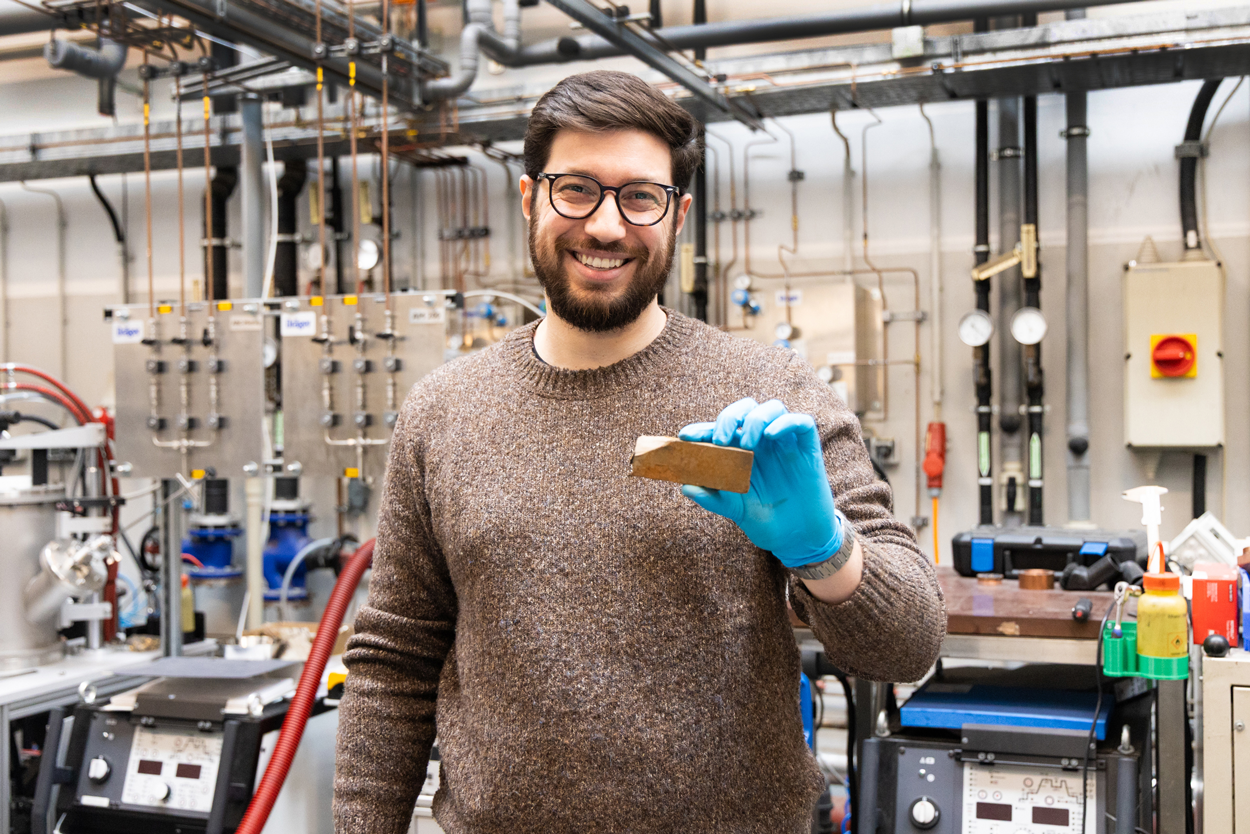
Dr Rafael Gitti Tortoretto Fim is a postdoctoral researcher in the ‘Sustainable Magnets and Recycling’ group. He conducts research on permanent magnets. These magnets can generate permanent magnetic fields without an external power supply and are indispensable for sustainable technologies. In electric motors, for example, they convert electrical current into motion, and in wind turbines, they convert mechanical energy into electricity. However, the problem is that they consist largely of rare earths, which are scarce in Europe, cause significant environmental damage during mining and are difficult to recycle. The EU therefore lists them as critical raw materials, among others. However, demand is high. In 2022, the market for permanent magnets was worth around 23 billion US dollars, and growth to around 40 billion US dollars by 2030 is expected. ‘Around 60 per cent of demand is accounted for by rare earth magnets,’ explains Dr Rafael Gitti Tortoretto Fim. Sustainable solutions are needed to meet this demand in the future. ‘We are pursuing two strategies. Firstly, we are developing new magnetic materials based on common elements such as iron, phosphorus, and carbon-based components. On the other hand, we are working on processing old magnets containing rare earths.’
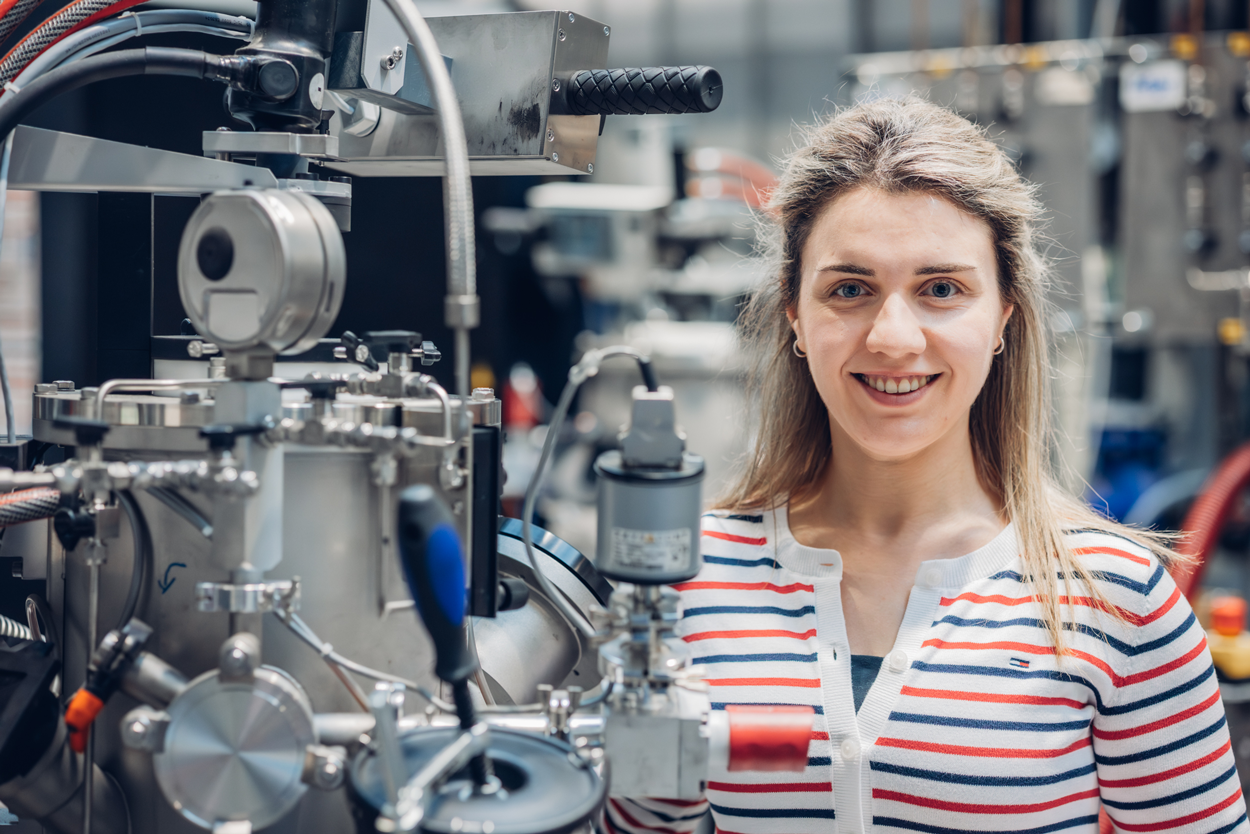
As project manager, Dr Tugce Beyazay is developing methods to recycle metals from waste streams and return them to the industrial cycle.
Dr Tugce Beyazay, a postdoctoral researcher and project manager in the ‘Sustainable Metallurgy and Alloy Design’ department, is developing recycling solutions too. She is focusing on recovering metals from galvanic sludge produced in the coating industry and from spent catalysts. In Europe alone, this amounts to tens of thousands of tonnes every year. ‘We want to use these materials as a source of raw materials and return the metals to the industrial cycle,’ she explains. Copper, cobalt and nickel are essential for renewable energy solutions, but producing them is very CO₂-intensive. This makes recycling metals from waste streams all the more important. Dr Beyazay uses high-temperature pyrolysis processes to efficiently recover these metals and convert them directly into usable alloys. Pyrolysis separates metals from plastics or binders, increasing purity and minimising melting losses. ‘Our goal is to reduce dependence on primary raw metals. My work is primarily experimental and fundamental, but our findings can be applied directly in industrial practice. Specifically, we are currently receiving galvanic sludge from a manufacturing company in the region. Using hydrogen enables us to recover metals and alloys from the waste without producing CO₂.’
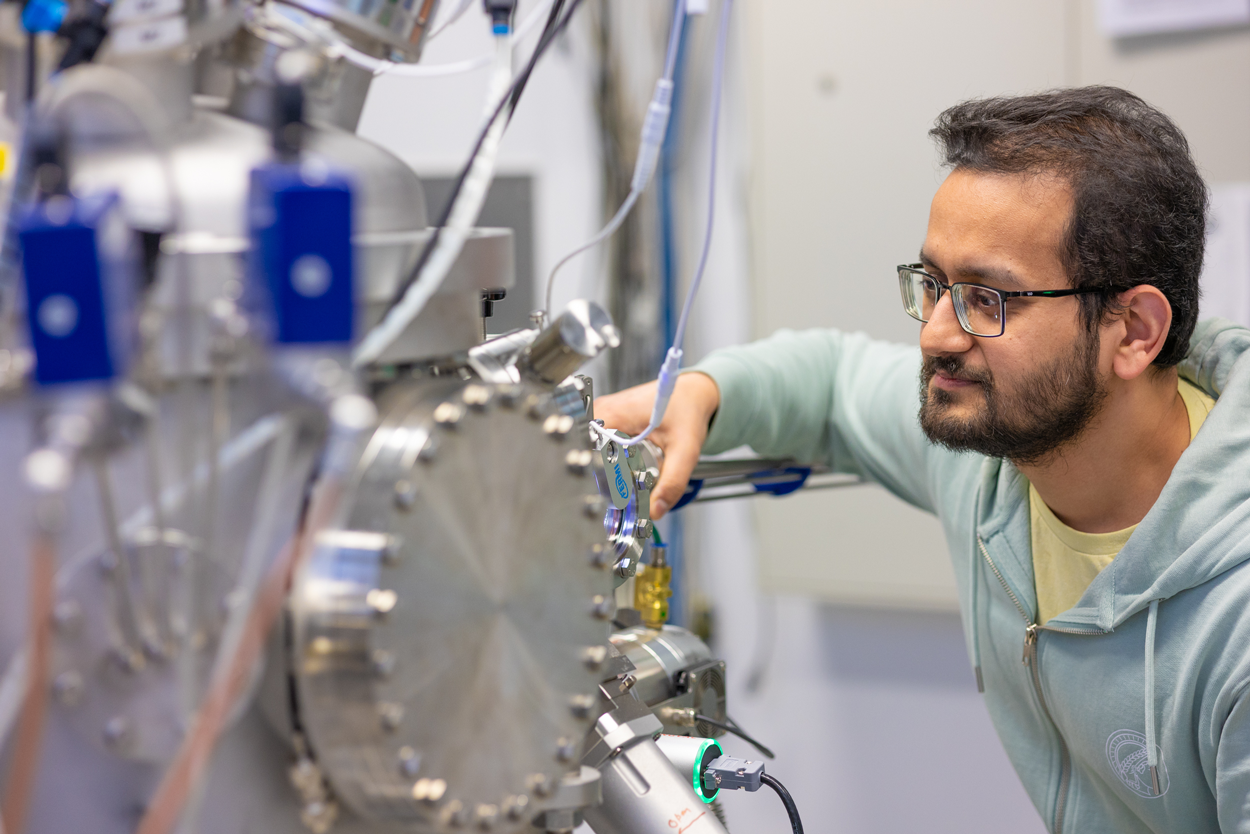
Dr Yug Joshi is working on new battery solutions with long service life and high storage capacity.
As infrastructure becomes more electrified, the demand for long-lasting, high-capacity batteries increases. Dr Yug Joshi heads the ‘Microstructure of Battery Materials’ group and is searching for such materials. ‘We are working on several solutions for storing energy and increasing its density. Nickel plays a particularly important role in this.' This research is supported by artificial intelligence. Dr Joshi explains, ‘We use an AIassisted method for accelerated material discovery to produce new battery materials and investigate whether their microstructure actually exhibits the desired properties, such as higher energy storage.’ In the future, the focus will be even more on extending the service life of batteries. The standard practice is to dismantle batteries into their individual components and separate them chemically. This process is expensive and energy-intensive, resulting in significant material loss. Instead, we want to use alternative recovery technologies, such as ultrasonic treatment, to enable microscopic structural regeneration and extend the batteries' lifespan,’ explains Dr Yug Joshi.
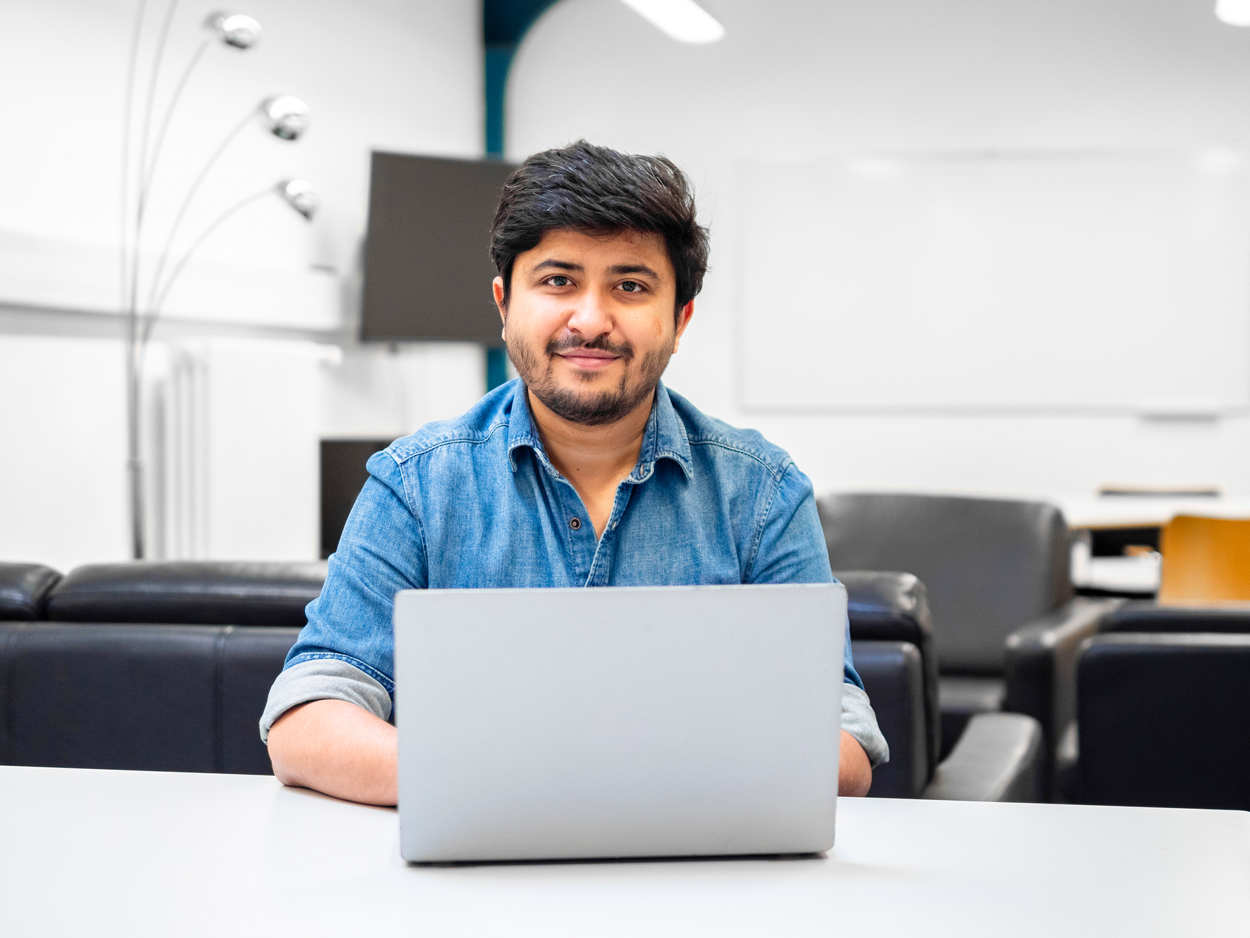
Dr. Anurag Bajpai forscht mithilfe von KI nach besseren Materialeigenschaften.
Dr Anurag Bajpai uses AI to analyse materials more effectively and determine which can be produced more cleanly and quickly. He heads the ‘AI in Materials Science’ group. One focus of his work is steel production using hydrogen. ‘We want to understand how the process dynamics work throughout the entire process. Currently, climate-friendly steel production is limited at various stages of the process. With AI, we can better understand what makes industrial-scale implementation difficult and how to make the individual phases more efficient.’ The group also uses AI to design new alloys. They investigate how to achieve better material properties, such as higher strength, and how to produce these materials more sustainably. ‘We want to demonstrate why certain results occur. This will give the industry more confidence in the models and encourage them to use the results in practice.’
All four researchers emphasise the excellent conditions at the location. These include the abundance of funding opportunities, the strong network of excellent research institutions, and the close cooperation with industry. ‘I was surprised at how open companies are to cooperating in basic research. I think this puts Germany in a good position in terms of sustainable research and long-term resource use,’ says Dr Tugce Beyazay. Düsseldorf plays a special role thanks to its favourable location in one of Europe's largest industrial regions. ‘The proximity to such a strong industrial ecosystem makes our work very meaningful, as cooperation and the transfer of research results into practice are much easier,’ explains Dr Yug Joshi. In addition, the city's internationality and openness provide an excellent environment in which to live and work. Dr Rafael Gitti Tortoretto Fim provides an outlook: ‘Düsseldorf is an innovation hub thanks to its location, the companies based there, and the opportunities the city offers. It is developing into a centre for sustainability, particularly in the fields of materials research, batteries, permanent magnets and AI. I am delighted to be able to contribute to this with my work.’ •
Words: Dominik Deden
Pictures: MAX-PLANCK-INSTITUT FÜR NACHHALTIGE MATERIALIEN GMBH