”GERMANY NEEDS MORE INVENTIVENESS AND COURAGE AGAIN – JUST GIVE IT A GO !“
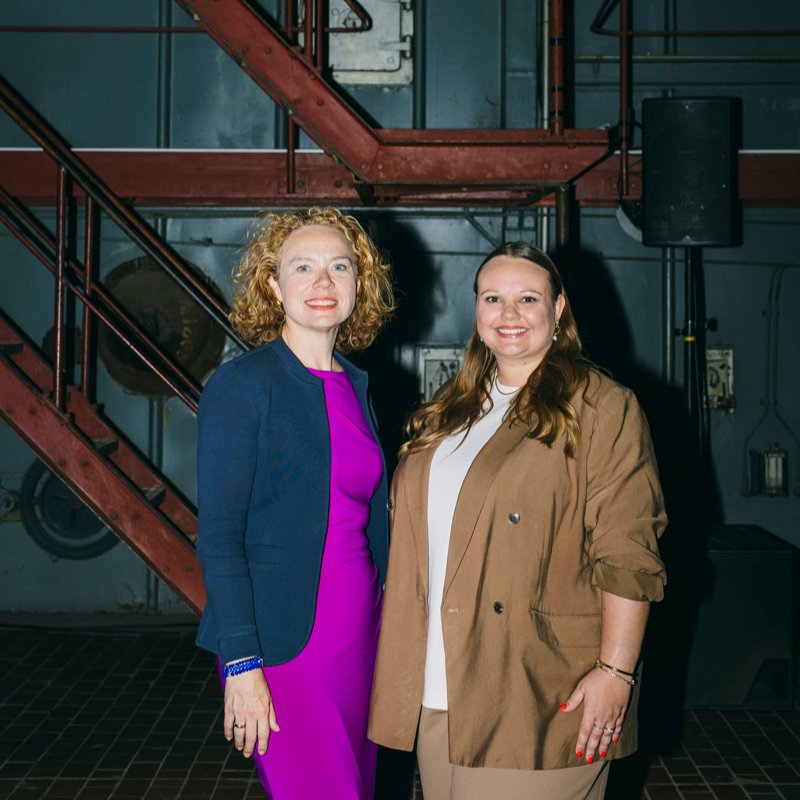
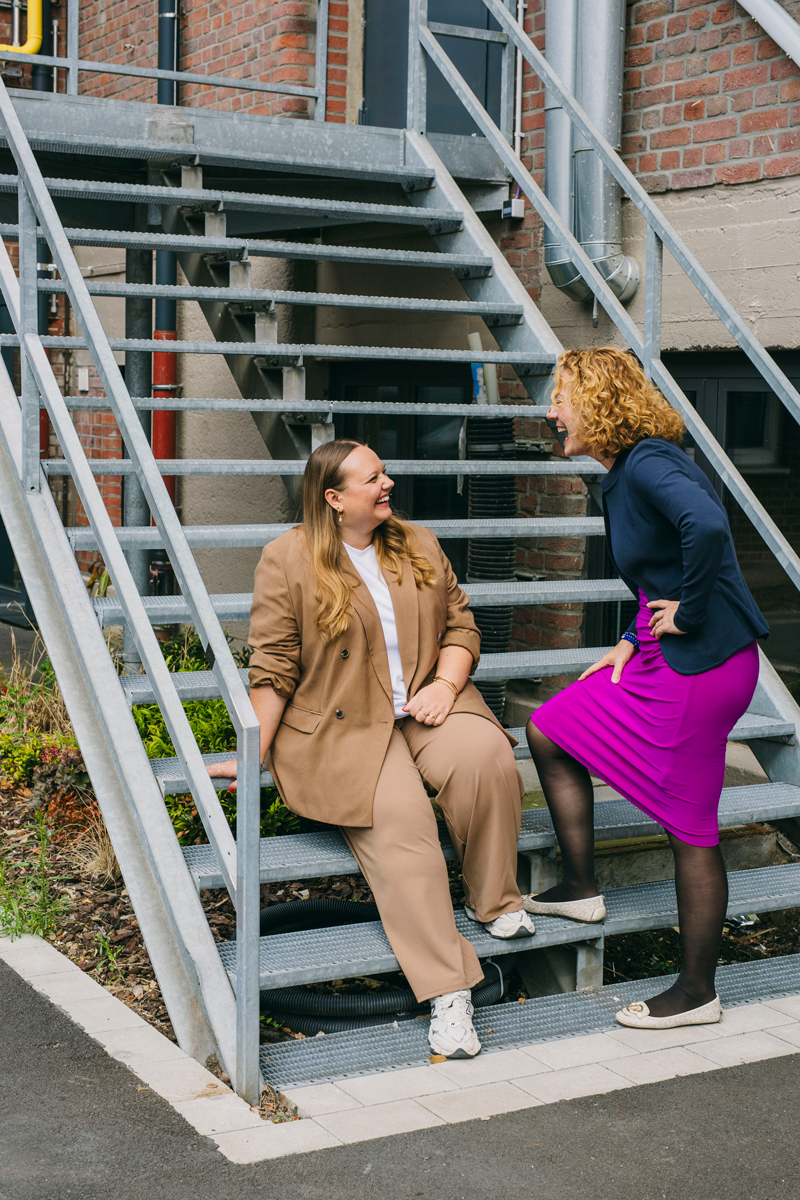
Nadine Thees and Lisa Brauer have been the new co-directors of the Digital Innovation Hub Düsseldorf/Rheinland (digihub) for just over six months now. In an interview with VIVID editor Rainer Kunst, they discussed their collaborative approach, the significance of the digihub as an innovation hub for North Rhine-Westphalia, the upcoming Future Tech Fest, the overhype surrounding AI, and the urgent need for Germany to become more optimistic again.
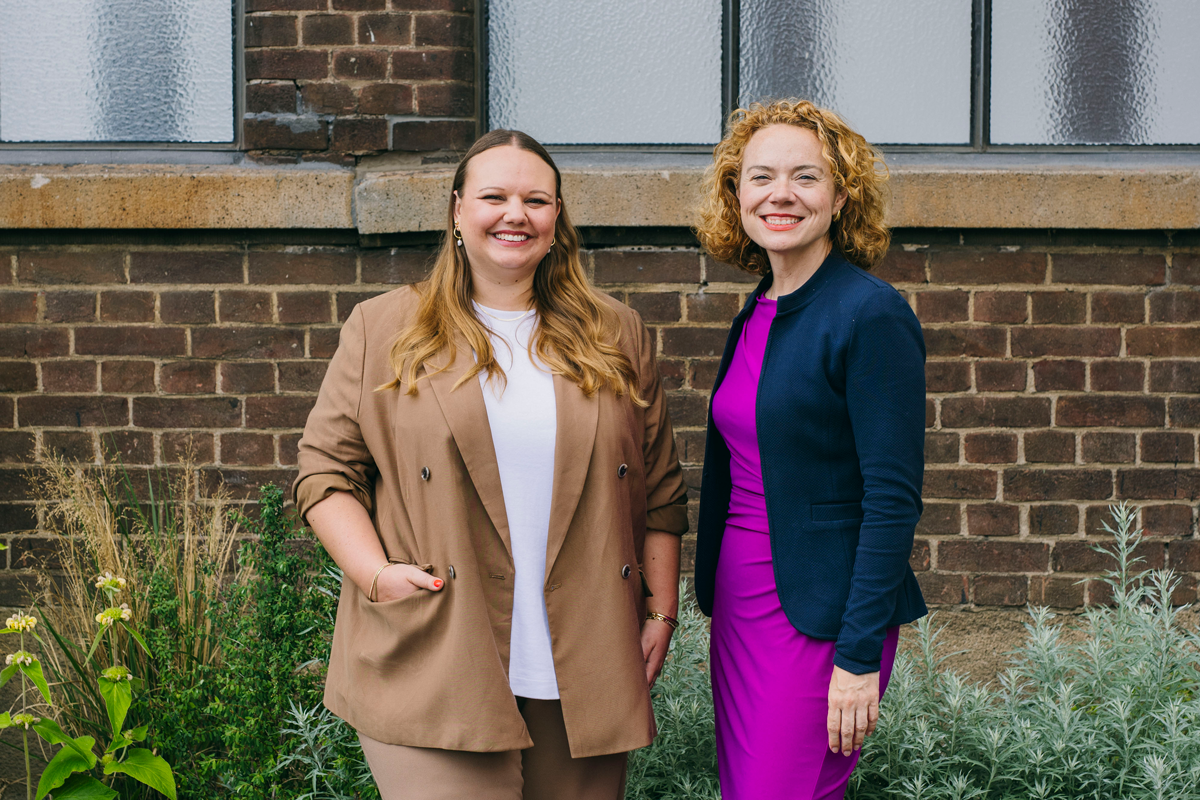
Dear Nadine and Lisa,You have now been the joint management team of the digihub for around six months. If you had to describe this time in three words, what would they be?
Nadine: Exciting, thrilling, innovative.
What has surprised you most during this time?
Nadine: I was surprised at how quickly we were able to get things moving with our partners, shareholders and the team. The foundations were already in place – the network, the trust and the shared vision – and we were able to build on these right from the outset. What has really inspired us is how open and constructive the collaboration with everyone involved has been. This has given us, as co-managers, a huge boost and confirmed that this model is exactly the right one for digihub.
Lisa: Absolutely. I’m also impressed by how vibrant and vast the innovation ecosystem is when you’re right in the thick of it. We were both familiar with the startup ecosystem beforehand, of course, but seeing just how many players, networks and companies are working together here from right at the heart of it is truly impressive.
What were you doing before?
Lisa: I was at CGI, a Canadian IT consultancy, where I developed the innovation and startup ecosystem. I also founded a tech start-
up at CGI and scaled it up internationally. This meant I already had plenty of contacts at digihub. I’ve also been active on the advisory board for the last few years.
Nadine: I was the coordinator of the startup unit at Düsseldorf Economic Development Agency. Prior to this, I worked in the start-up and technology sector for many years. Originally, however, I come from a background in management consultancy and finance, including a period working in New York. So, I’m familiar with both the corporate and startup worlds. This is extremely helpful, because founders have to navigate precisely between these two worlds.
How do you complement each other in your collaboration?
Lisa: We’re both extremely communicative and speak very openly with one another. That helps enormously. At the same time, we bring different perspectives to the table. Nadine has a strong background in finance and funding, while I know the corporate and partner world very well.
Nadine: We’ve also divided up our areas of focus. For example, I’m more involved with our Scale-up.NRW scaling programme, while Lisa focuses more closely on our Ignition seed accelerator. This means we each have our own areas of specialisation, but we remain closely aligned.
What role does digihub play in the innovation landscape of North Rhine-Westphalia today?
Nadine: We connect relevant stakeholders, particularly cities and companies that may not have extensive innovation structures of their own. Small and medium-sized enterprises and local authorities in particular benefit from the networking, visibility and impetus that we provide and which they would not have on their own. Today, the digihub is setting the pace for innovation in North Rhine-Westphalia.
Lisa: With the Future Tech Fest, we have a huge reach that extends far beyond North Rhine-Westphalia. International delegations come to Düsseldorf. We are also one of the 25 de:hubs selected in Germany. This raises the profile of North Rhine-Westphalia at the national level.
Nadine: To be honest, North Rhine-Westphalia is often underestimated. We are the most populous federal state and have a huge industrial presence, not to mention a wealth of hidden champions and young talent from our universities. It is therefore only natural that we are driving the innovation landscape forward.
Does the business landscape in the Rhineland play a special role in this?
Lisa: Definitely. We have an incredibly valuable mix of SMEs, industry, research and DAX-listed corporations here. That is precisely what makes the region special. Our startups don’t always need a large corporation straight away. Sometimes an SME is enough to run a pilot project with.
Nadine: We see huge potential, particularly in SMEs. Many companies are under pressure due to skills shortages, digitalisation and AI. There is a huge amount of untapped innovative potential, and we want to help them access it.
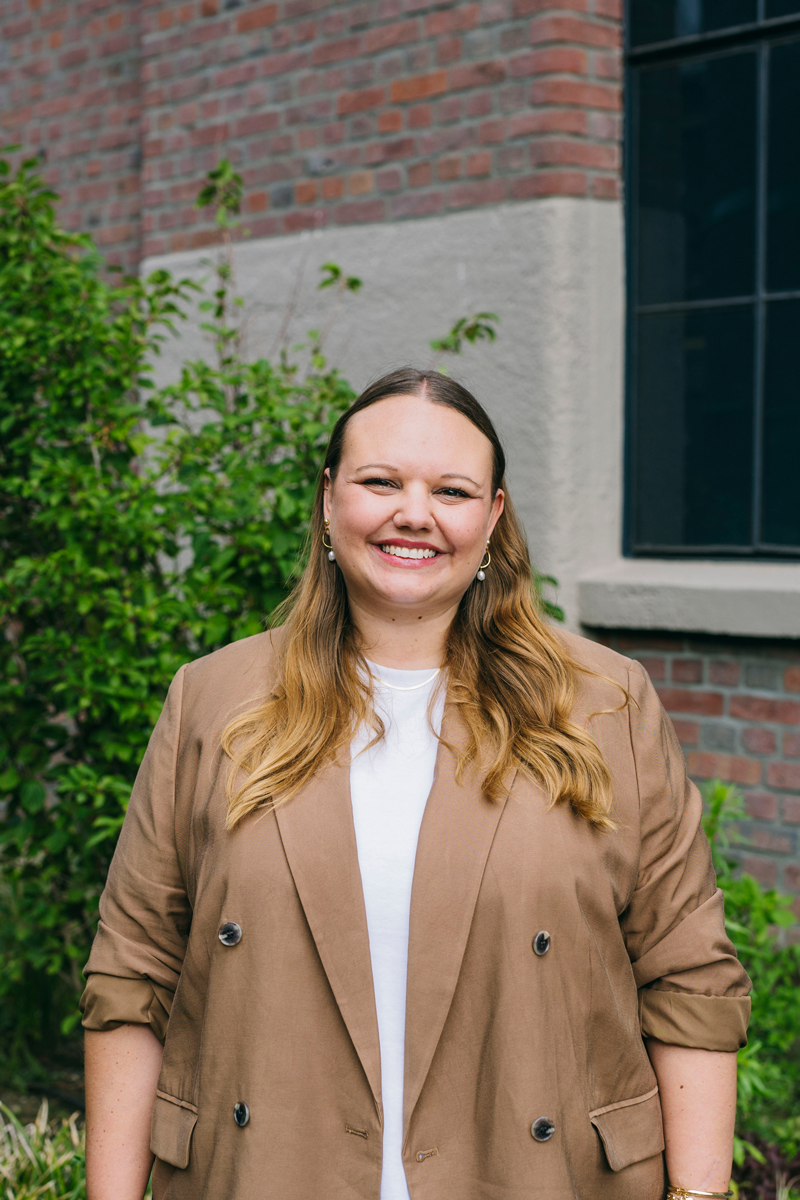
ABOUT LISA BRAUER
Professional experience
• Since December 2025: Managing Director, Digihub Düsseldorf/Rhineland
• 2020–2025: CGI – Executive Consultant
• 2018–2020: Pandora Jewellery – Store Manager
• 2012–2017: TARGOBANK – Dual Study Programme in Management of Digital Projects
Education/Field of Study/Qualification
• International Master's Programme with Dual Degree: MSc in International Marketing with Tourism & Events from Napier University (UK) and IPAG Business School (France), graduating in 2018
Special qualifications
• Founder of the corporate SaaS startup Door James
• Established the Unicorn Academy, CGI’s startup accelerator programme
• Active in the Düsseldorf startup scene since 2020 as a founder, corporate voice, jury member, mentor, ambassador for diversity and inclusion, guest lecturer on innovation, and member of the digihub advisory board
• Winner of the German Innovation Award 2023 and nominated for the Women’s IT Network Award 2021
• Founder of the GROWWW Startup Festival in Düsseldorf
• Interdisciplinary perspective and strong network in North Rhine-Westphalia with corporates and startups
• Long-standing ambassador and volunteer for diversity and inclusion (particularly female founding)
How do the various hubs in Germany actually work together?
Lisa: The collaboration thrives on active exchange and is very close-knit. In North Rhine-Westphalia, we are one of six funded hubs in the region, each with a different area of focus. For example, we specialise in green tech. Other hubs focus more on AI or security. This means we complement each other perfectly.
Nadine: It works in a similar way across the country. We don’t see ourselves as competitors, but as amplifiers for one another. We actively recommend exciting startups and solutions within the network, and experience the same in return. This means that the reach of each individual hub extends far beyond its own region.
Which areas would you like to develop further at digihub in future?
Nadine: International visibility is definitely a key area. The nationwide network opens up entirely new opportunities, such as international delegation trips and collaborations. At the same time, we want to give greater prominence to topics such as female entrepreneurship.
Lisa: And AI, of course. Although our view of it is much more nuanced than it was a few years ago.
In what way?
Lisa: We’re currently witnessing the first AI bubble burst. There were an incredible number of startups that simply developed some kind of AI solution. But AI alone isn’t a business model; it’s just a methodology.
Nadine: Otherwise, it becomes interchangeable. The interesting question is where the real added value lies. AI becomes interesting when it is combined with genuine specialist knowledge or industry expertise.
What challenges are startups currently grappling with most?
Nadine: Definitely growth. Many founders are realising that they can no longer run their business alone. Suddenly, they have 30, 50 or more employees and bear responsibility as employers, which is a huge step.
Lisa: We’re also seeing that the way companies approach internationalisation is changing. In the past, North America was often the first target. Today, however, many are looking more towards Europe or Asia. We work closely with India, Japan and Turkey, for example, and we are establishing innovation corridors.
„Preparation is important, but don’t wait for the perfect moment — just get started“
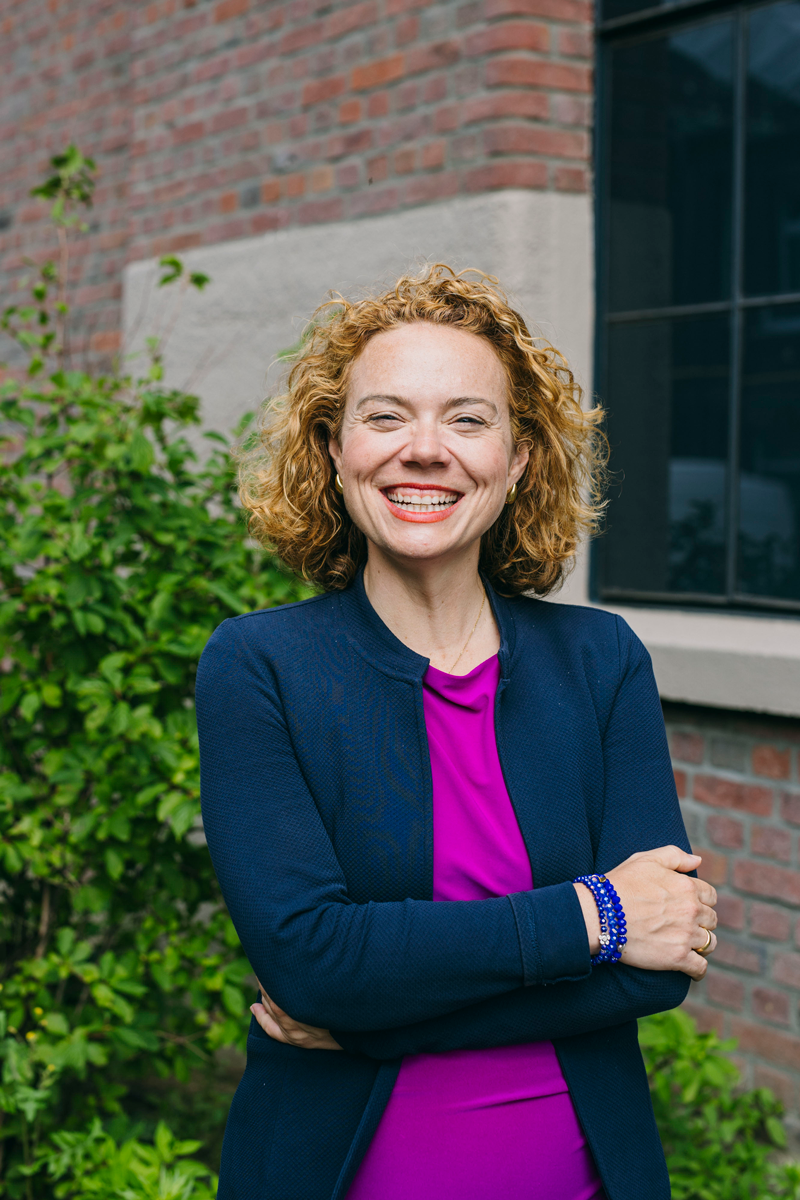
ABOUT NADINE THEES
Professional experience
• Since October 2025: Managing Director, digihub Düsseldorf/Rhineland
• 2025–2022: Düsseldorf Economic Development Agency – Coordinator, Startup Unit
• 2021–2018: Authorised Signatory at Solingen Business
• 2009–2010: Remy Cointreau, New York, USA – Senior Financial Analyst
• 2004–2008: Various positions in corporate finance
Education/Field of Study/Qualification
• 2000–2004: Bachelor of Business Administration, EBS
Special qualifications
• Over 10 years' startup expertise
• Extensive network in the North Rhine-Westphalian startup scene (particularly SG, DUS and CGN)
• Active role as a judge and mentor
• Project Manager for Scale-up.NRW since October 2025
• Member of the Digihub Advisory Board
• Primarily responsible for Startup Week Düsseldorf, Founders Dialogue and the Next Award
• Exist Women mentor across several cohorts for various universities and colleges
• Founder of Inspire Network.NRW, with Mona Neubaur as patron
• Scrum Master
Do policymakers sufficiently understand the needs of the startup scene?
Lisa: There are good initiatives and plenty of discussions. You can tell that Europe is set to become even stronger. However, it often takes a long time for programmes and funding to reach startups.
Nadine: The biggest problem remains bureaucracy. Applications often take far too long and are very labour-intensive. Some startups are now openly saying that it's no longer worth it for them.
What do you think needs to change fundamentally?
Lisa: As well as cutting red tape, what we need above all is more optimism. I think Germany has become rather pessimistic. Many founders are discouraged rather than encouraged. In the US, people are celebrated even after their twentieth failed startup because they keep going. Here, people often say after the very first failed attempt: 'I told you so.'
Nadine: We urgently need more courage. In the past, people were perhaps simply more daring and willing to try things out. That's exactly what's often missing today.
Is that also why events like the Future Tech Fest are becoming more important?
Nadine: Yes, and that’s no coincidence. In an age dominated by digital communication, real change happens when people come together in person. The Future Tech Fest is exactly that kind of place.
Lisa: That’s what makes the Future Tech Fest so special: the combination of familiar faces, new players and international guests, all sharing a sense of optimism.
Lisa: That’s what makes the Future Tech Fest so special: the combination of familiar faces, new players and international guests, all sharing a sense of optimism.
What will be new in 2026?
Nadine: We want to involve SMEs and hidden champions even more. Many startups are looking for these kinds of contacts. At the same time, topics such as green tech, cybersecurity, AI and resilience will be key.
Is there a particular moment you’re looking forward to?
Nadine: I’m especially looking forward to the moment when the stage opens and the hall is full. I’ve only ever experienced Future Tech Fest from the other side, as part of the behind-the-scenes team. This year, I’ll be up front myself, which feels like a real milestone. It’s going to be exciting!
Lisa: When the Future Tech Fest comes to life. What moves me even more this year is that, for the first time, we’ll be on stage together as a team – as digihub – presenting the exciting startup ecosystem of North Rhine-Westphalia. The feeling that runs through the whole event is something you have to experience.
Which startup or innovation story has particularly impressed you recently?
Nadine: I’ve been supporting the Co-Reactive team since the very beginning, it feels like. They’re now building a large production facility in Erkrath and developing CO₂-negative concrete. It’s brilliant to see how successfully they’re growing.
Lisa: For me, it’s Cognigy. We worked with them very early on. Back then, they were a small team, but today we’re talking about one of the biggest European AI deals ever. This really demonstrates what can be achieved.
Finally, what advice would you give to young people who want to make a difference?
Nadine: My advice: ‘trust your idea’, even if it isn’t perfect at first. Preparation is important, but don't wait for the perfect moment — just get started! Most ideas that are making a difference today started out small and incomplete. Having the courage to embrace the gaps is often the crucial first step.
Lisa: Invest in people, not just ideas. Networks aren’t built by collecting business cards, but by showing a genuine interest in one another. Those who listen attentively, remain curious, and give before they take will see opportunities arise they could never have imagined. •
Text: Tom Corrinth
Pictures: Celine Al-Mosawi