
AI BUSINESS MADE IN DÜSSELDORF
While the USA and China compete for AI supremacy, Europe is falling behind despite its considerable technological expertise. The challenge lies in translating existing potential into proprietary solutions to secure Europe's data sovereignty and competitiveness. How can the balance be struck between responsible regulation and forward-looking AI development? Experts from the Düsseldorf-based company sipgate and the XPONENTIAL Europe 2026 trade fair offer some insights.

Perfect conditions for creative ideas: the outdoor area at sipgate in Düsseldorf's Unterbilk district.
AI is in our DNA. With every decision we make, we ask ourselves: Can artificial intelligence help us here?' says Marcel Mellor, Product Lead at sipgate. He has worked for the Düsseldorf-based internet telephony provider for ten years. Over 40,000 companies use the service to make calls to their customers via computer, smartphone or tablet. They can now also benefit from AI: after each call, customer service agents automatically receive a summary of the most important information and tasks. AI agents go one step further and conduct customer calls independently. 'An AI agent can't answer everything, but it can pre-qualify the majority of calls. If it doesn't know what to do, it hands over to a human colleague,' says Mellor. sipgate conducted over a million customer conversations with AI in August 2025 alone.
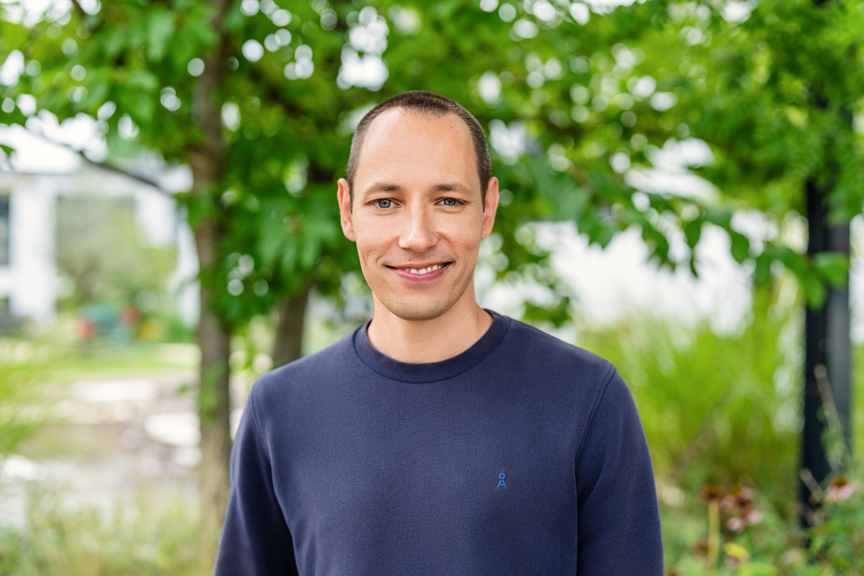
Marcel Mellor, Product Lead, Sipgate
Unlike many companies, sipgate relies on a mix of technologies for its developments. It does not use a single cloud-based provider for all its AI applications. Instead, sipgate uses the technologies that best suit its needs in terms of quality, maintainability, and openness. 'First, the spoken word has to be converted into text. We use open-source technology from OpenAI for this. For summaries, we let our customers decide whether to use OpenAI or Mistral, a European model. When the AI agent makes phone calls, we use open-source technologies, but we also often use tools that we have developed ourselves. This combination gives us more flexibility,’ explains Mellor. The sipgate expert adds that US providers are currently ahead in terms of foundation models — powerful AI base models trained with vast amounts of data. ‘That's why we don't resort to European solutions just for the sake of it. Speed is often an issue; even a half-second delay can feel unusual in a phone call. US models are simply better in this respect.'
He does not foresee foundation models having much potential for AI in Europe in the future either. In the medium term, it is likely that the market will agree on two to three accessible opensource models. ‘We should not replicate the foundation models from the US, but rather develop specialised solutions for specific industries in which Europe excels.’ Mellor also highlights the large amount of unused data in Europe: 'OpenAI and Co. do not know where to source new data with which to further train their models. In libraries, publishing houses, and companies, we have countless high-quality, non-digitised data that OpenAI does not have access to. A European data pipeline could be an excellent way to fine-tune AI models. Then we need to develop AI software that solves real problems and increases productivity.'
For Mellor, European AI regulation is both a challenge and an opportunity. ‘Regulating first and then creating innovation is difficult. Artificial intelligence is a new basic technology. Companies first have to try out what works and what doesn't.’ On the other hand, he says, demands for more transparency in AI decision- making are understandable. However, this could also drive innovation: 'OpenAI and others have no solution for making it comprehensible to users how AI arrives at its decisions. This is because AI models do not work like normal software. There is still a lot of innovation to be done here, and European basic research in this area is excellent. However, this research must then be transferred into applications rather than remaining as university projects that end up in the USA.’
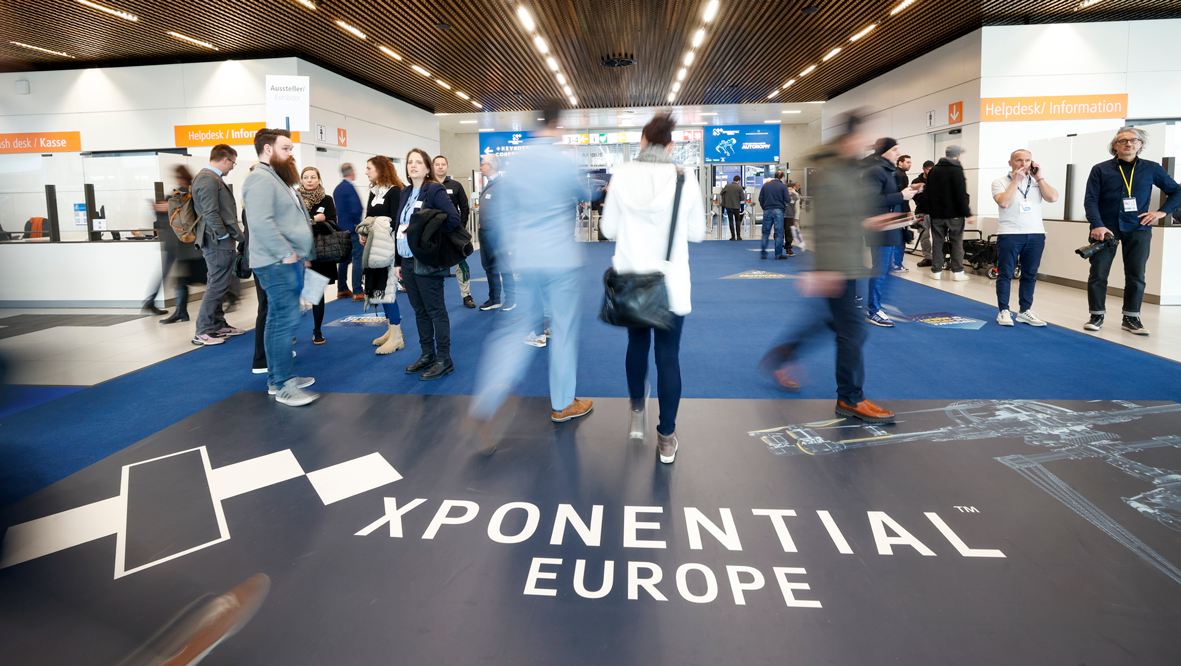
Auf der XPONENTIAL Europe kommen jedes Jahr internationale Expert:innen für autonome Systeme und Robotik zusammen, um die neuesten Lösungen zu präsentieren und zu diskutieren. KI ist dabei ein zentrales Thema.
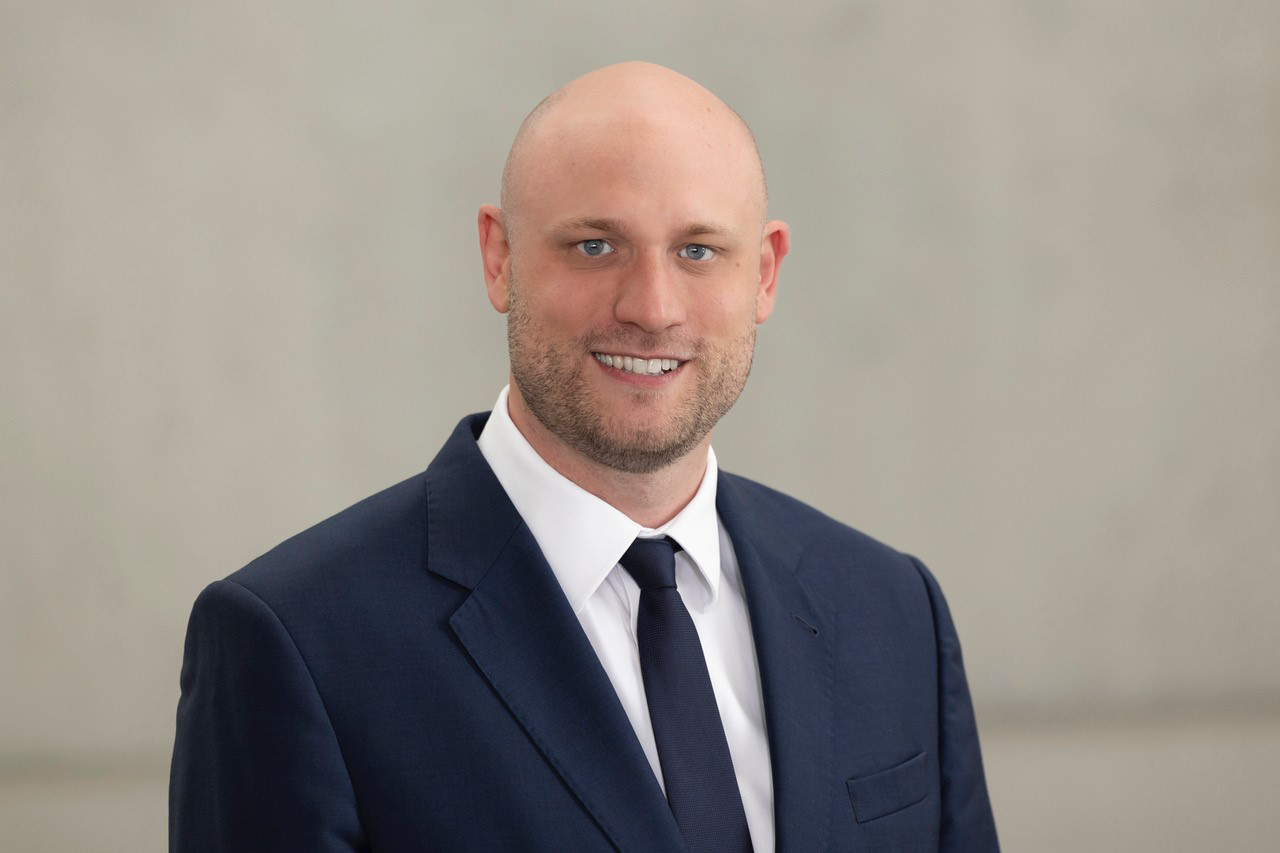
Malte Seifert, Director Metals & Autonomous, Technologies Messe Düsseldorf
AI solutions from Europe will be on display at the Düsseldorf Exhibition Centre from 24 to 26 March 2026. This is when XPONENTIAL Europe, the leading European trade fair for autonomous technologies and robotics, will take place. The focus will be on practical solutions demonstrating how AI can help with sensor data processing, object recognition, decision-making and evaluating complex scenarios in real time. It will also demonstrate how AI systems in drones, vehicles or ships can communicate with each other to operate more efficiently and safely. At the same time, the trade fair will also address Europe's responsibility: ‘Our exhibitors will demonstrate how AI is becoming a productivity factor in autonomous vehicles, service robots and security applications. We also want to contribute to the social debate: how much responsibility should be given to AI? How can we protect ourselves from cyber attacks? How should the interface between humans and machines be designed? We want to demonstrate how Europe can embrace a technological leadership role while taking on responsibility,’ explains Malte Seifert, Director of Metals and Autonomous Technologies at Messe Düsseldorf. There are currently numerous new fields of application emerging in which technology and regulation are becoming increasingly intertwined, for example in mobility, medical robotics and infrastructure monitoring. A central theme at the trade fair is confident data handling: ‘When it comes to AI, we always talk about data: how it is processed and protected. Europe must set its own standards in order to remain independent of non-European platforms,’ says Seifert.
Messe Düsseldorf is considered an early adopter in the field of artificial intelligence. An interdisciplinary working group examines potential applications, establishes standards and evaluates new tools prior to implementation. ‘We are one of the most active and systematic users of AI in the trade fair industry. We use AI for text and image production, SEO, translations, data analysis, multimedia content and programming,’ says Seifert. The results can be seen in a promotional film and two videos on space travel and defence created for an international media campaign for XPONENTIAL Europe 2026. These were produced entirely using text, image and speech AI, from the initial concept to the final implementation. Seifert sums it up: 'For us, this is not just marketing, but a statement: we are in constant dialogue with the industry and are actively shaping technological change.“ •
„we are in constant dialogue with the industry and are actively shaping technological change“
Text: Dominik Deden
Pictures: Udo Fritsch, Messe Düsseldorf / ctillmann