
“I WANT TO BRING BEAUTY INTO THE WORLD”
KUNST MEETS TINA JOKISCH
Interior designer and Düsseldorf native Tina Jokisch started out as a carpenter in a backstreet workshop on Pestalozzistraße. She later studied in New York and worked for a large interior design firm for two decades, before making a conscious decision to return to a smaller, independent structure. With VIVID editor Rainer Kunst, she spoke about craftsmanship, leadership, intuition, and the surprising connection between spaces and inner clarity.
Tina, you started out with an apprenticeship as a carpenter. Was architecture your goal from the outset?
The desire to design was always there. I grew up in a creative household; my father is a graphic and communication designer. Design, colours and shapes were part of my everyday life. I realised early on that design provides structure and creates atmosphere. However, after graduating from high school, I wasn't sure whether I wanted to go straight into architecture. So, intuitively, I started an apprenticeship as a carpenter. In retrospect, that was a great decision. I was the first apprentice at Markus Kirchhoff Holzarbeiten on Pestalozzistraße. It was an old workshop shared with an artist and there were lots of women in the business, as well as a master craftsman and several journeywomen. It was a very unique, almost family-like atmosphere. Everything was very hands-on and physically demanding. But I loved it. Woodwork requires precision. If you work inaccurately, nothing will fit together in the end. This understanding of construction, materiality and detail has stayed with me to this day.
Right after that, you went to Parsons School of Design in New York. Why did you take that step?
It was a mixture of personal and family motivations. My brother was studying in London and I was fortunate enough to have the opportunity to study abroad too. I had an American boyfriend at the time, so I thought, 'Why not New York?' I applied to Parsons and the School of Visual Arts and was accepted by both, but I chose Parsons. At the time, they didn't have a traditional campus, just three high-rise buildings. A professor there once said, ‘New York City is your campus.’ That was a pivotal moment for me. I bought a racing bike at a flea market and began systematically exploring the city neighbourhood by neighbourhood.
What impact did those years in New York have on you?
A great one. You're thrown in at the deep end. New language, new culture, new standards. Some of my closest friends, who I'm still friends with today, came from Colombia, Russia and Israel. There were four of us, from different countries, and we were all very lively – and are still friends today. These encounters broadened my horizons. In New York, history, identity and migration are not abstract concepts, but personal stories shared over a meal. Professionally, I learnt one thing in New York: just do it! Be brave! Mistakes are part of the process. This 'just do it' attitude has stuck with me. It has helped me to take on responsibility, even in large organisations.
When you returned to Düsseldorf, you first worked in your father's office and opened a small gallery there. Why?
Before moving to New York, I did a gallery internship at ‘Hans Mayer’. My father also worked with many artists. The gallery on Lindenstraße was established on the premises. The office was at the back and it was there that I got the idea for the gallery at the shopfront. I then organised several exhibitions there. When my father had to step back from his career for health reasons, a lot changed. The office closed, as did the gallery, and I focused entirely on interior design. Shortly afterwards, I started working at Schwitzke & Partner.
You were there for almost 20 years, the last eight years as managing director. What did that time teach you?
Above all, I learnt a great deal about leadership and organisation. The leap from project management to departmental management, and then to executive management, is enormous. Suddenly, it's not just about design, but also about strategy, personnel, and economic responsibility. At the same time, I was able to build up an international network. I worked on projects in Paris, Zurich and London, immersing myself in other markets and mentalities. At the same time, I had the beautiful city of Düsseldorf as a home base. It gave me everything I needed.
Since 2025, you have been running your own architecture firm, which is deliberately smaller, together with Marie Dorenz. Why did you take this step?
We simply didn't want a large organisation anymore, and we wanted to be closer to the projects. There are currently six of us, and we work with freelancers on a project-by-project basis, only accepting commissions that we can identify with. We now want to focus even more on the residential sector. However, retail remains an important field. We are currently designing stores in Munich and Frankfurt for Westwing, and we recently opened LFDY's new store in Paris. We are also working with Ariane Ernst.
What makes a space successful in your opinion?
For me, a truly successful space evokes something. An experience. A mood. A memory. This is when the sense of space, through proportion, material and light, forms a harmonious — and perhaps even memorable — composition. Ultimately, it's an intuitive process driven by a vision.
How do you typically approach such a design process?
With an intensive exchange at the beginning. Some clients have clear ideas, while others need guidance. However, even precise ideas can change during the process. Budget, timeline and material availability all influence the design. For me, it's important to have a clear decisionmaking structure. When too many people have an equal say, the result is often an unsatisfactory compromise and that you can see. Good projects require courage and trust. In my experience, projects become particularly powerful when a client has a strong vision and is prepared to pursue it consistently.
Is digitalisation changing spaces?
In retail, definitely. Today, stores are no longer warehouses, but experience spaces. ‘Endless aisle’ concepts, monitors, and cashless payments also influence dramaturgy and space planning. In private life, however, technology should remain as invisible as possible. Smart home systems and lighting control are useful, but they should not take centre stage. The space should have an atmospheric feel, not a technical one.
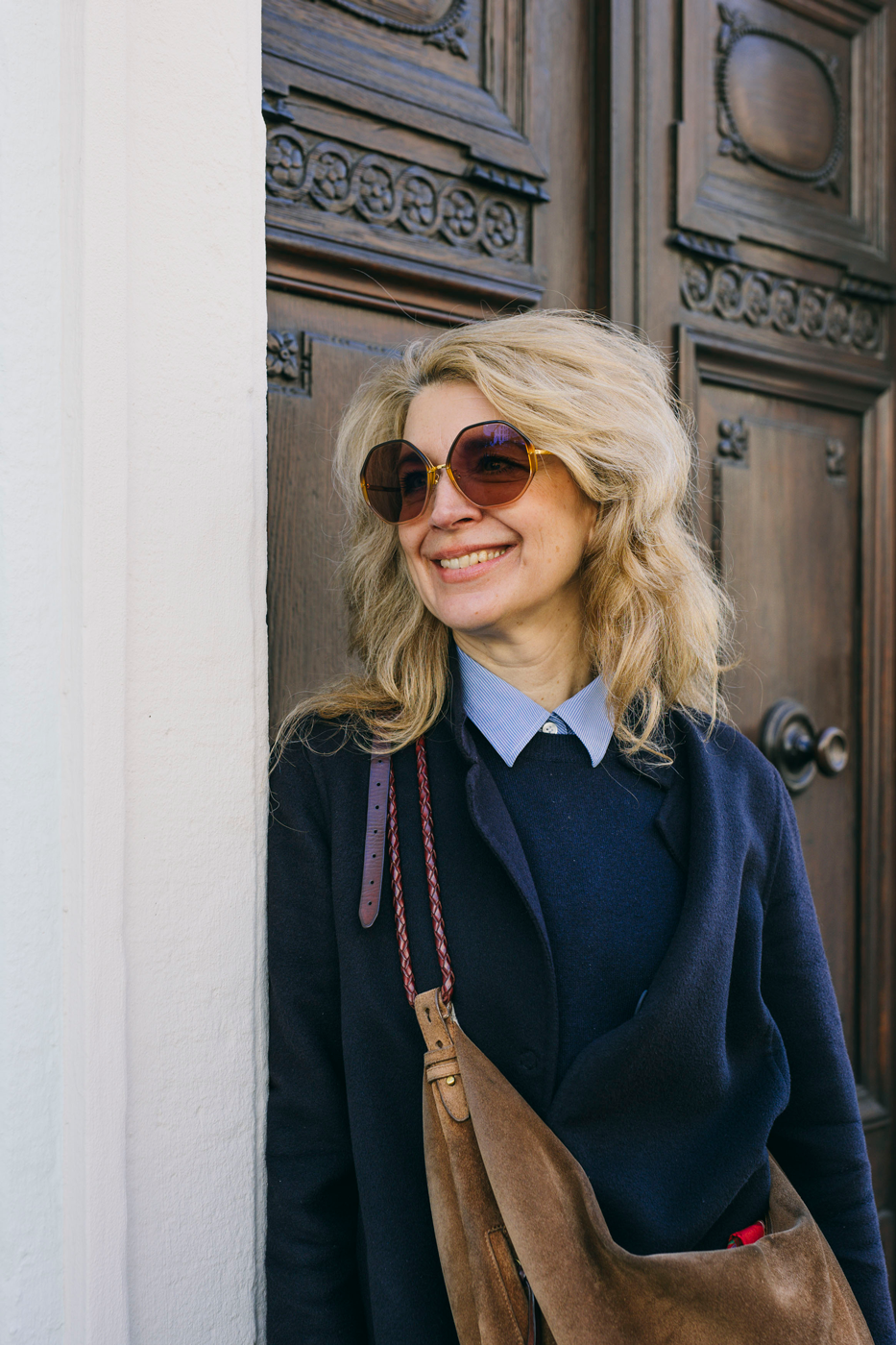
ABOUT TINA JOKISCH
• 1993: A-levels
• 1993 –1996: Carpentry apprenticeship
• 1996–2001: Studied interior design at Parsons School of Design, New York
• 2001–2003: S. Russell Groves Architects, New York
• 2004–2005: Freelance interior designer and gallery owner, Tina Jokisch zeigt..., Düsseldorf
• 2006–2025: Schwitzke & Partner
• Since 2025: Self-employed with Marie Dorenz at Dorenz + Jokisch
• Since 2010: Hatha yoga teacher
• Since 2022: Kundalini yoga teacher
You start every day with one to two hours of yoga.
What role does that play in your work? I practise every morning, usually from 5am, and I also teach Kundalini yoga. Breathing, meditation and movement help me to achieve mental clarity. I call this process 'opening up the inner space'. This gives me more breadth and focus, which carries over into my design work. Today, I think more in terms of reduction. I don't mean radical minimalism; personal items are relevant in my view, but we need less excess and clearer structures. Architecture can calm the eye and organise the mind in a world of constant sensory overload without losing your soul.
What is beauty to you?
It's something that touches my heart. We live in a time when the focus is very much on the negative. Yet beauty can be found in materials, encounters and spaces. I try to focus my attention on these things consciously. Perhaps that is my role as an architect: to create spaces that facilitate this mindset. Spaces that provide clarity and courage. Ultimately, I want to bring beauty into the world, and that, of course, is in the eye of the beholder. •
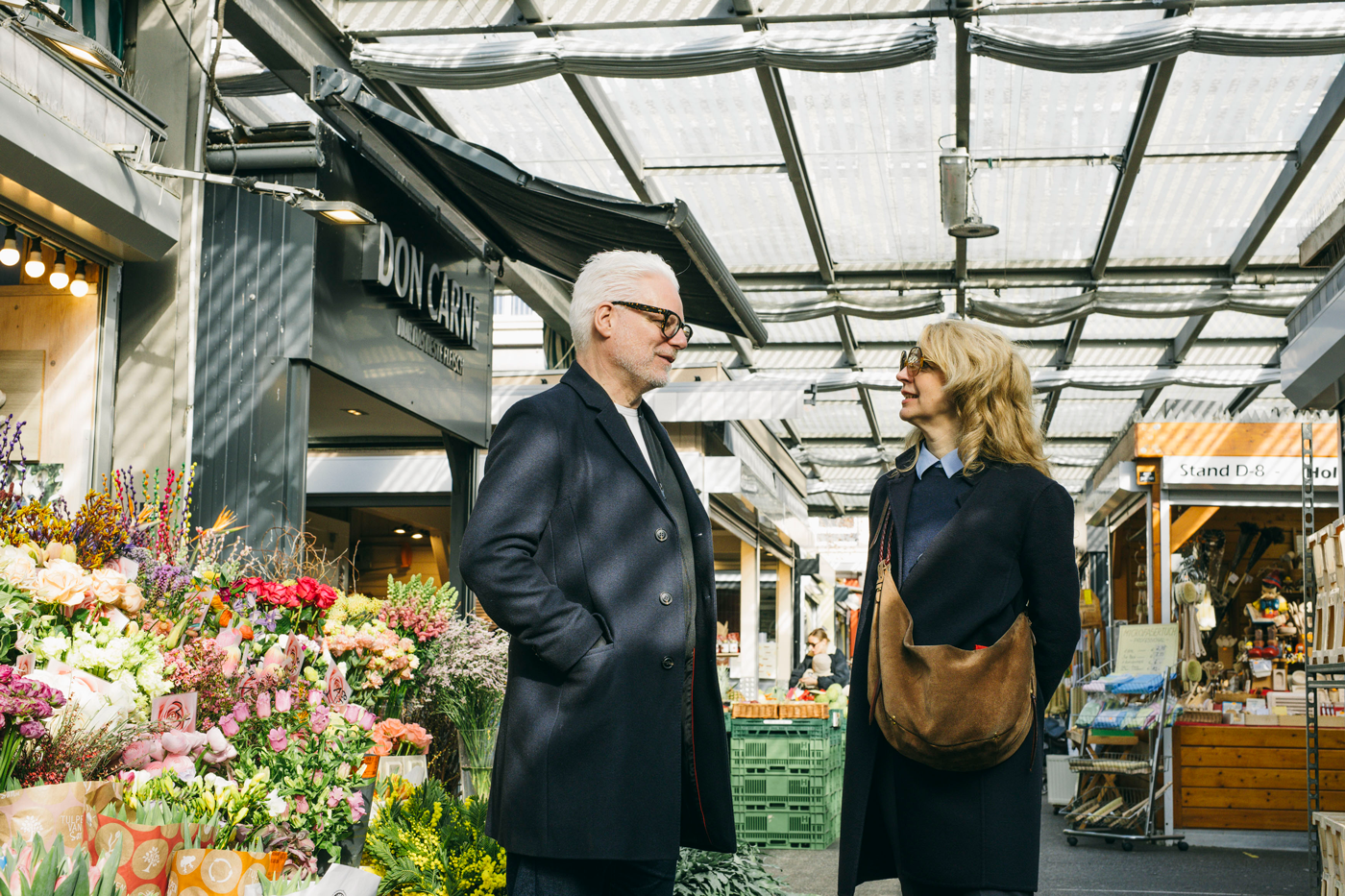
Words: Tom Corrinth
Pictures: Celine Al-Mosawi