
THE GREEN SCENE
Düsseldorf is a fashion city – and at the same time faces the question of how fashion can function responsibly, economically and aesthetically in the future. For the past three years, Sustain! has provided creative ideas in the form of a two-day event consisting of a conference and a pop-up market showcasing fair fashion and design from Düsseldorf. This initiative is also supported by sustainable retail, repair services and vintage concepts.
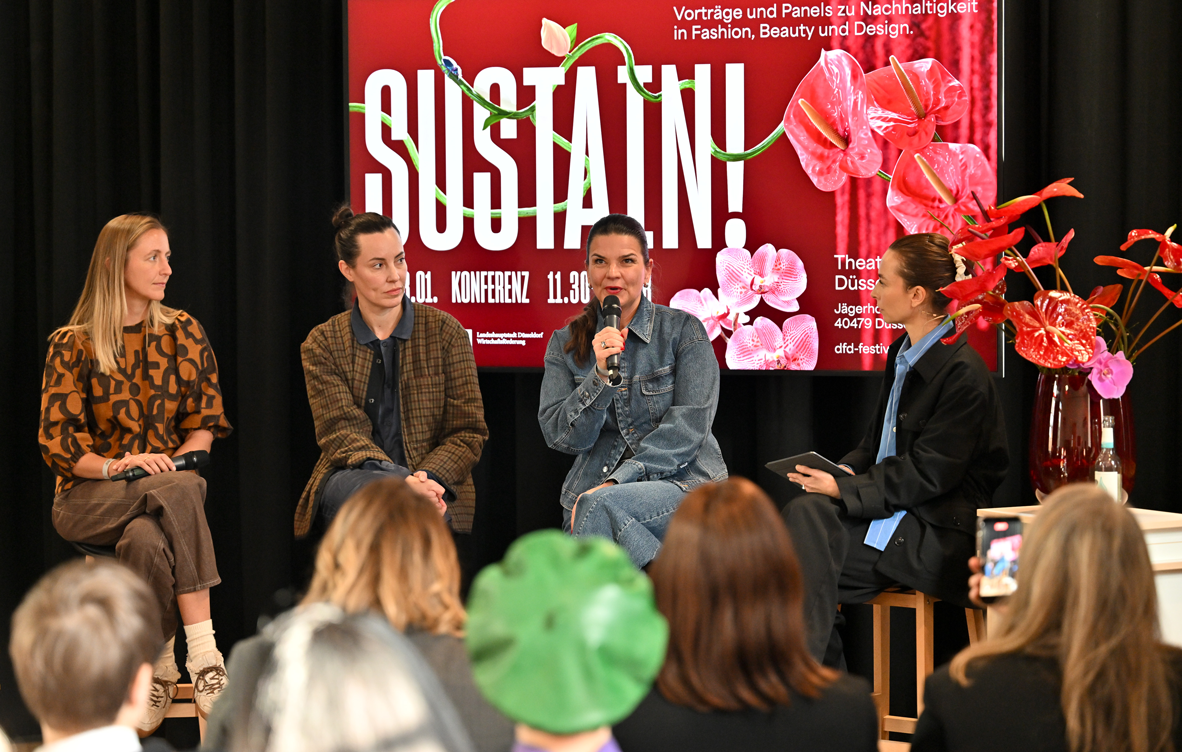
Panel discussion on sustainable business models in fashion at the Sustain! conference with representatives from Lanius, Brax and Avonté, moderated by Bianca Hauda.
Following stops at the Bilker Bunker and the Fürstenpalais, Sustain!'s third edition took place at the Theatermuseum Düsseldorf for the first time in January 2026, underscoring the event's commitment to placing sustainable fashion at the heart of the city's culture. Initiated by Düsseldorf Economic Development Agency and curated by The Dorf magazine, Sustain! specifically targets industry professionals and consumers. On the first day of the B2B conference, experts from the fashion and beauty industries discussed the current state of sustainability in lectures and panel discussions. The following day, the market opened to showcase the unique working methods of local and regional labels. This reflects local perspectives and opens up the discourse. Speakers at the conference included Ninu Dramis from Fabric.Lab Hamburg and Fashion Changers activists from Berlin, who discussed new industry standards. Fortuna Düsseldorf also presented its social and sustainability commitment with 'Fortuna for Everyone'.
The Sustain! pop-up market demonstrated the diversity of these concepts in practice. Around 25 local and regional labels presented their collections and working methods, showcasing everything from established sustainable fashion by Lanius and upcycled bags by Freitag, to young designer brands such as Studio Rosa, Toni and Hausehauser, as well as vintage concepts like Two Brothers Vintage and Untold. As well as fashion, accessories and jewellery, there were interior design concepts and even food concepts, such as Matchasome and evesfermentationlab, which provided a snapshot of what sustainable business can mean today. The curation was based on clear criteria: design and quality standards, a sustainable approach, the degree of innovation, and economic viability. ‘The focus is not on showcasing fully sustainable concepts,’ emphasises Tina Husemann, curator from The Dorf, ‘but on inspiration and the creative application of sustainable practices.’ This can be seen in small editions, local production, the use of deadstock materials (unused fabric or material remnants from overproduction), upcycling concepts, and the use of organic fabrics and recycled materials, such as silver. These diverse approaches are intended to encourage a more conscious and reflective approach to fashion and design.
NEXT-GEN DESIGNERS
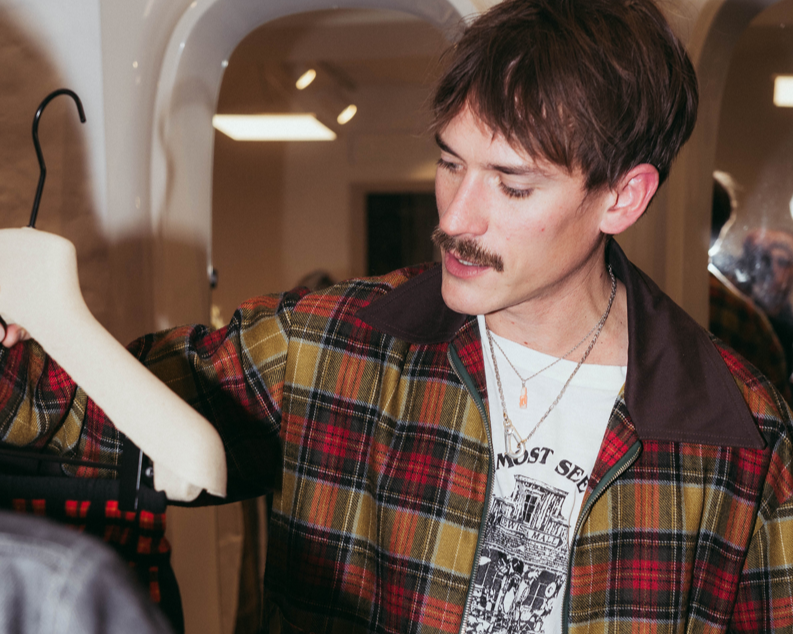
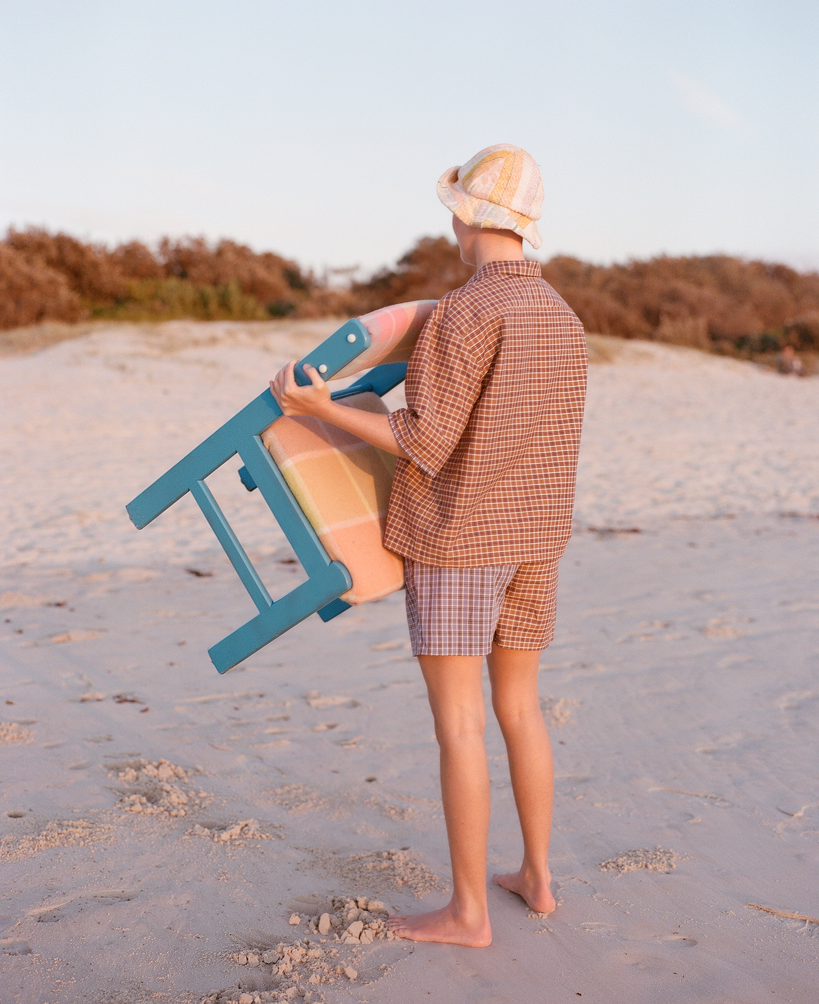
Adrian Voss from TONI transforms used blankets, linen and second-hand wool into new favourite pieces.
A younger generation is interpreting this aspiration in increasingly radical and experimental ways. Designer Nils Hauser works with deadstock fabrics and existing garments, as well as materials from completely different contexts, such as old tents and upholstery fabrics. He believes that it is precisely these limitations that drive his creativity: ‘For me, sustainable fashion means finding creative solutions within limitations — and letting new ideas emerge through material scarcity, repair and reconstruction,’ he says. Adrian Voss, who was also represented at sustain! with his label Toni, uses second-hand blankets, linen and wool sourced from flea markets. ‘I don't see repairs, signs of age or stains as flaws, but as part of the story,’ he says. For him, sustainability is less a strategy than an attitude: everything you need already exists.
VINTAGE VIBES
As a logical complement to new purchases, vintage, secondhand items and repairs are also becoming more popular. Vintage stores are booming, and new concepts are demonstrating how appealing passing things on can be. Last year's RE:LOVED vintage and second-hand market at the Areal Böhler, curated by The Dorf, was very well received and will take place twice in 2026. The Repair Rebels, a Düsseldorf-based fashion repair platform, take things a step further. Founder Dr Monika Hauck sums it up succinctly: “Repair is the new luxury.” Repair is the most direct lever for sustainability, requiring no new resources or supply chains. Dr. Hauck sees the German Sustainability Award won by her company as a sign of a fundamental shift in fashion and retail thinking. Düsseldorf stores such as Roberta The Store and Glore, which has now opened a second branch in Carlstadt after its Oberkassel location, demonstrate that sustainable fashion can be successful in retail. ‘Glore captures the spirit of the times because the topic of green fashion is conveyed here in a contemporary and aesthetic way, far removed from the traditional image,’ explains Tina Husemann. At her organic fashion store Roberta on Nordstraße, owner Daniela Perak has consistently focused on fashion from sustainable brands for ten years. ‘Overall, demand for quality has increased,’ Perak observes. Customers today specifically ask about materials, care and durability, and are open to innovations in resource-saving manufacturing processes, such as trainers made from corn waste or jeans made from recycled denim.
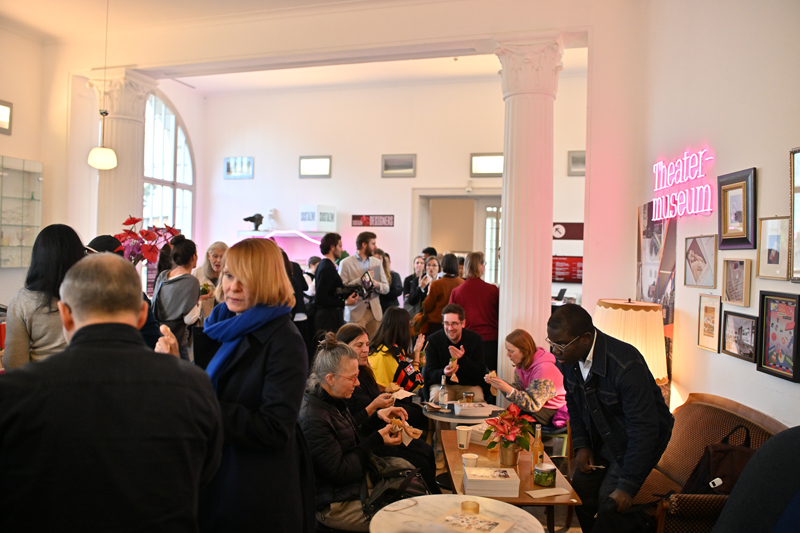
Networking at the Sustain! conference: designers, industry experts and local players exchange ideas on sustainable business models, innovations and new perspectives for the fashion industry.
CREATIVITY X RESPONSIBILITY
One of the German pioneers of sustainable fashion is Heiko Wunder, who is based in Düsseldorf and owns the label wunderwerk. He believes that sustainable fashion is currently undergoing a new phase of professionalisation. The topic of sustainability is being discussed less emotionally and more critically and economically: ‘It's less about promises and labels and more about robust concepts, transparency, and economic viability.’ Düsseldorf has the potential to take on a pioneering role in this regard. ‘A fashion city like Düsseldorf should not follow others when it comes to sustainability, but set standards.’ In recent years, sustainability has noticeably lost public attention because many people are preoccupied with existential challenges in their everyday lives. Nevertheless, it is not losing relevance, as the environmental, resource and health effects of conventional production are becoming increasingly visible. ‘The fashion industry in particular has a special responsibility here,’ says Heiko Wunder. Initiatives such as Sustain! demonstrate that sustainable fashion is a topic of the future in terms of the economy, creativity and culture. ‘If even a fraction of visitors discover a new label that inspires them, or learn about sustainable working practices that could influence their everyday lives, routines, or purchasing decisions, then a lot will have been achieved,’ says Tina Husemann. This is not moralistic finger wagging, but an invitation to look at things in a new way. •
Words: Karolina Landowski
Pictures: Toni / Rosa Spring Voss, Michael Lübke / Wirtschaftsförderung Düsseldorf, Toni / Fabian Weins,