HITTING THE JACKPOT
When the Düsseldorf-based company sino AG became the first investor in the Berlin-based startup Trade Republic in 2017, few could have imagined how rapidly it would grow to become one of Europe’s most valuable fintech companies. In this interview, sino CEO Ingo Hillen explains why it was precisely the combination of traditional brokerage experience and digital startup dynamism that laid the foundation for this extraordinary growth.
Mr Hillen, sino was the first investor in Trade Republic in 2017. For a broker focused on active traders, that was an unusual move. Why did you decide to do that back then?
My former board colleague Matthias Hocke drew my attention at the time to a small Berlin-based team that wanted to bring trading to the smartphone. Christian Hecker, Thomas Pischke and Marco Cancielleri came to Düsseldorf and after less than two weeks, I was absolutely convinced that we had to do it. The quality of the founders was as important as the idea. They showed enormous energy, clarity and a very good feel for the market. The initial investment was still in the low six-figure range. In total, we then invested three million euros step by step up to 2018.
What was the German online brokerage market like back then?
Traditional online brokerage has been developing since the 1990s. The first revolution back then was the shift away from high-street banks towards online trading – and with it, significantly lower fees – and by 2017, the core of that hadn’t really changed all that much. Anyone who used to pay 17, 18 or 20 euros in fees and other charges for buying a share still had to do so, in principle. The process had become more efficient, but not radically simpler.
And what was new about Trade Republic’s scaling logic?
Trade Republic has radically simplified the business model. The app is extremely easy to use, account opening is digital, and the entire process is streamlined. Above all, however, the 20 euros order cost became a one euro flat-rate third-party fee. That was a real game-changer. If someone invests 100 euros, 20 euros in fees makes no sense. One euro, on the other hand, does. This suddenly made the capital market accessible to far more people. The barrier to entry was dramatically lower – and that is precisely what scaling is.
Were there any decisions in this early phase that, in hindsight, were particularly important?
Yes, absolutely. One of the most important decisions was to keep the fee at one euro rather than reducing it to zero. At the time, there were voices saying: the internet means it has to be for free. I explicitly saw it differently. A saving of 95 per cent is already huge for customers; it doesn’t have to be 100 per cent. And today you can see how important that was. If, on a busy trading day, there are perhaps more than a million transactions, then that one euro makes an enormous difference. You could say, somewhat flippantly: at Trade Republic, we saved the euro.
ABOUT INGO HILLEN
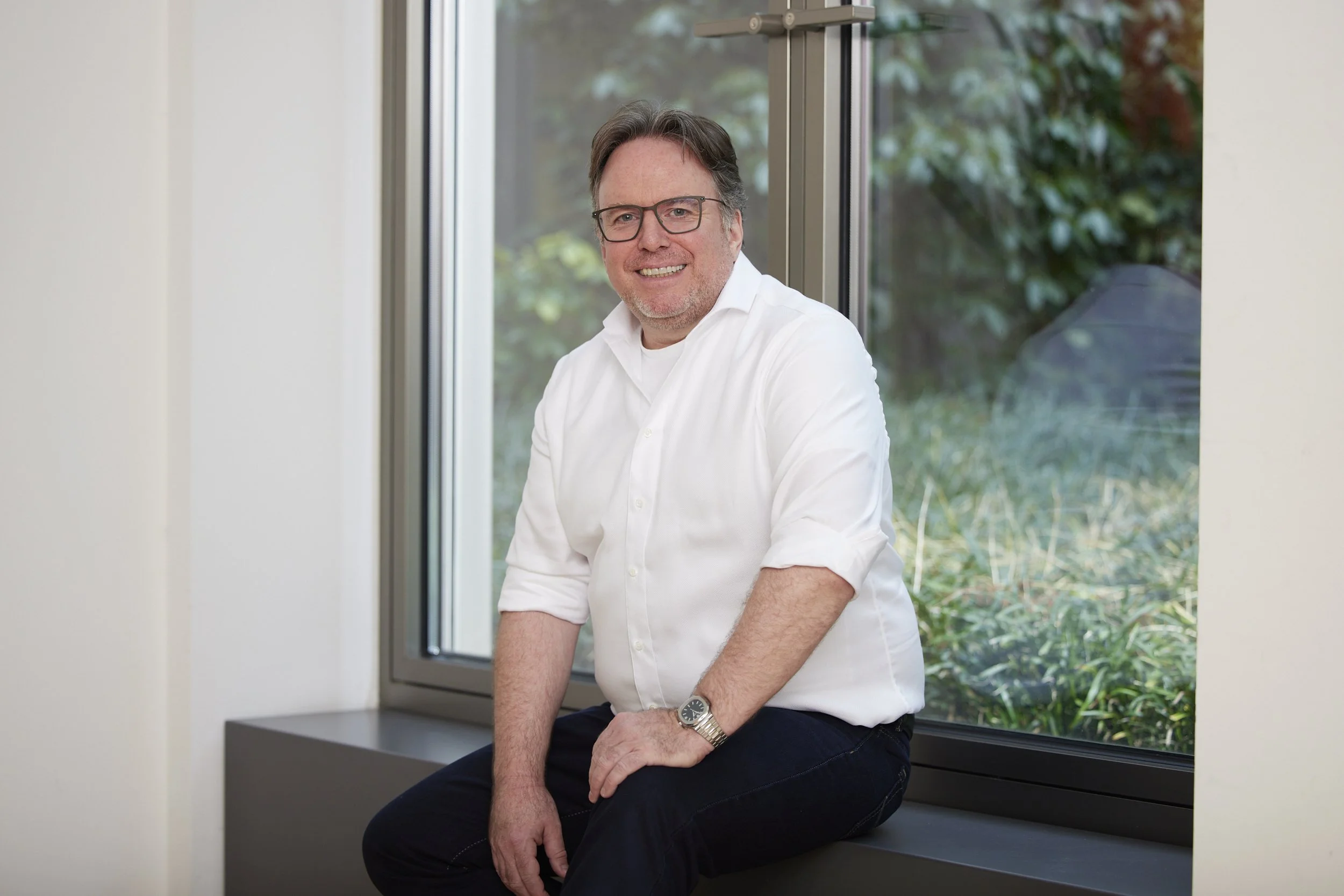
Ingo Hillen completed his training as a bank clerk at Deutsche Bank in 1990. The 1987 crash turned him into a passionate stock market trader – a passion he retains to this day. In 1998, he founded sino Wertpapierhandelsgesellschaft with Matthias Hocke; the company became profitable in 1999, was incorporated as a public limited company in 2000, and went public in 2004. This was followed in 2002 by tick-TS, which was also successfully floated on the stock exchange. The most significant step: Hillen became Trade Republic’s first investor – even before its launch – and helped shape the fintech company until 2020 as managing director and board member. Today, sino holds a stake of around 1.77 per cent in Trade Republic, valued at 12.5 billion euros in December 2025. Business is only half the story: as co-owner of the Munich restaurant Brothers, he pursues his passion for fine wines and excellent cuisine. He stays fit by playing sports – and he loves Sylt.
How did you collaborate with the founders in the early years?
Very intensively. Christian Hecker and I were in almost daily contact. We must have exchanged around 2,000 emails in the first two and a half years. It was groundwork in the truest sense of the word. Of course, there were also differences of opinion. But always respectful and at the same time very clear. I do believe that I was able to provide considerable help in this early phase, for instance with questions about the market, partners or the connection to HSBC. At some point, however, Trade Republic had grown so rapidly. When the team quickly expanded from six people to 100 or 200, it was clear that I could no longer contribute much operationally.
In 2019, sino reduced its majority stake. Why?
On the one hand, the new venture capital investors wanted us to reduce our stake so that the founders could also hold a larger share. Looking back, we perhaps sold a relatively large stake relatively early on. From today’s perspective, I would have liked to have kept more (laughs). But that’s entrepreneurship for you. We invested around three million euros and, following the realised sales and based on the latest valuation, have earned more than 400 million euros (realised and unrealised). All in all, that’s an exceptionally successful development.
What is sino’s current stake and how do you currently value Trade Republic?
sino AG currently holds around 1.77 per cent of Trade Republic. Based on the latest valuation at the end of 2025, this corresponds to approximately 220 million euros out of over 12,5 billion euros. I am an optimist and estimate that Trade Republic could be worth significantly more in the future – perhaps even 30 billion euros in the event of a potential IPO in about two years’ time. Just imagine: they managed to switch many millions of customers to their own securities settlement system in 2024 whilst business was still running. That was an enormous technological achievement. I see a major opportunity in the new pension savings account. I believe that this part of the business alone could be worth billions in a few years’ time.
What can we learn from this about scaling? Is it tied to specific locations?
No, not at all. Of course, Berlin is a strong startup hub. But Trade Republic’s early success also shows that scaling isn’t a geographical privilege. The founders were based in Berlin. The initial capital, a great deal of market know-how, contacts with banks and operational support came from Düsseldorf. It was precisely this connection that proved valuable. If you like: the idea came from Berlin as well as the excellent execution, but part of the foundation was laid in Düsseldorf.
Could you imagine supporting another startup in a similar way?
We still hold investments today, for example in Getquin, a portfolio tracker with over 500,000 registered users. But Trade Republic was something special. That sort of thing doesn’t happen often. It’s like hitting the jackpot. •
Text: Tom Corrinth
Pictures: Judith Wagner