LEVEL UP!
How can we keep working and living well in the fast-growing city of Düsseldorf? A look at the property sector and city tourism reveals some promising solutions.
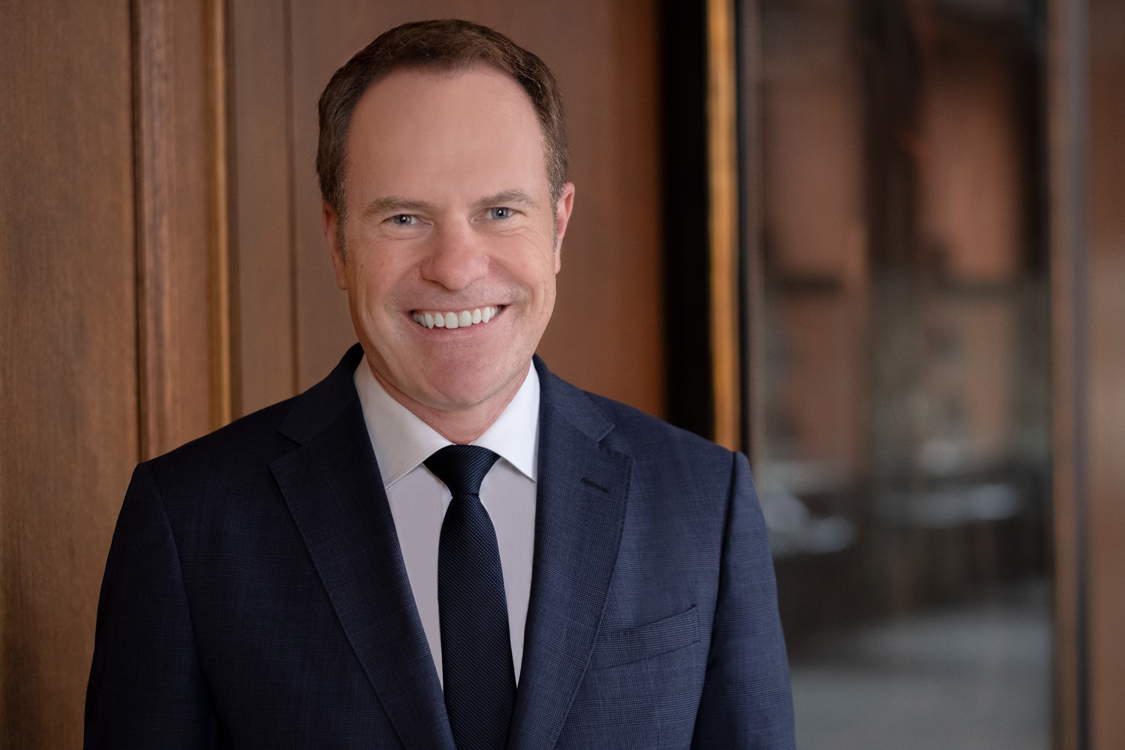
Dr. Stephan Keller, Lord Mayor, Düsseldorf
Düsseldorf is growing. According to the statistics office, the population of 600,000 was reached in 2010, and by the end of 2025 it went up to 660,000 people living in the comparatively small urban area – an increase of 10 per cent! The 700,000 mark could also be surpassed in a few years. Added to this are the tens of thousands of commuters and tourists who come here every day. Young people especially like to come to the big city to work, live or have fun here. Düsseldorf is also a soughtafter location for companies to grow and for startups to scale up.
Against this backdrop, how can we continue to strike a balance between infrastructure, living and working spaces, and leisure facilities in the future? In short, how can we plan 'smartly'? By ensuring that growth is conceived and supported primarily in a qualitative and sustainable manner. In March, Lord Mayor Dr Stephan Keller presented his vision for achieving this from a property sector perspective at the international property fair MIPIM in Cannes. Under the title 'From Spaces to Places', he demonstrated how Düsseldorf is developing existing spaces and creating new places that will have a positive long-term impact on the economy and urban planning. 'Anyone investing in property today is not just investing in square metres. They are investing in stability, future viability, and long-term value growth. This means transforming central locations into high-quality places. It means developing buildings that retain their value over decades. It means securing industrial strength as the backbone of the city. It means using infrastructure and mobility as value drivers, and creating mixed-use neighbourhoods that function both economically and socially.‘
Growth: In the traditional business sense means: when a certain amount of resources, such as money and staff, is invested, turnover grows in a relatively proportional manner. To generate yet more turnover, you have to put in even more effort. Example: a supermarket chain opens additional branches so that even more people buy its products, thereby increasing turnover and customer loyalty.
Scaling: Scaling means, by contrast: turnover increases with little or no additional effort. Digitalisation, AI and automation are the main drivers of this effect. An example: streaming services that offer films and series to millions of people without requiring significant resources. The so-called hockey stick effect describes the exponential growth curve (particularly in startups) – much like the shape of a hockey stick, the curve rises steeply after initial challenges.
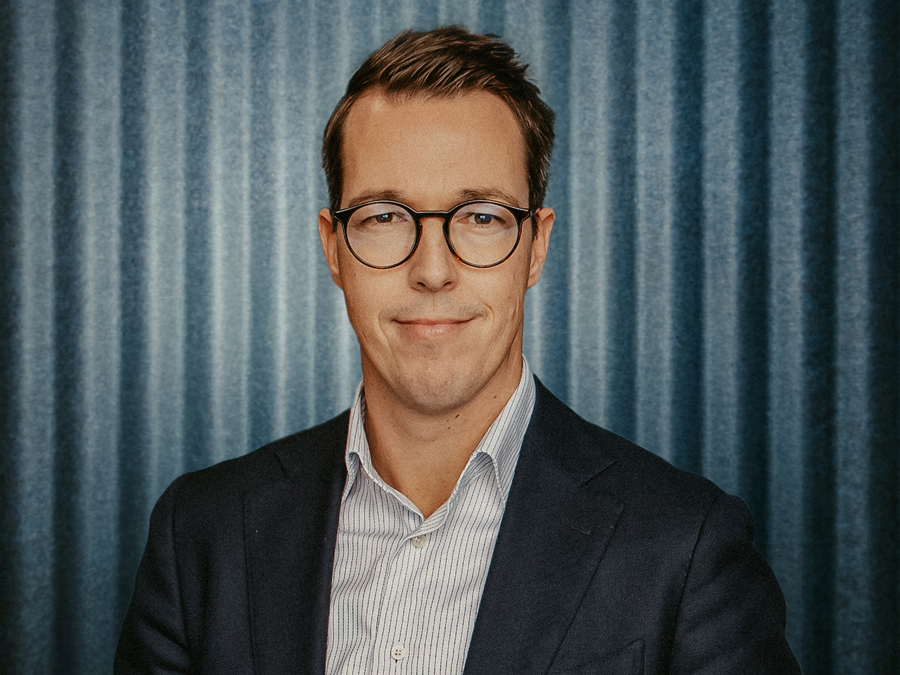
Jens Ihsen, Managing Director, Visit Düsseldorf
The Lord Mayor illustrated how these five areas of action are being implemented using specific project examples, ranging from flagship city centre projects such as Tuchtinsel (Midstad) and the Kreuzstraße/Steinstraße mixed-use project (B&L Group/ ingenhoven associates), to the Benrather Gärten residential development (Instone Real Estate Group SE). The Lord Mayor summed up: 'We are transforming spaces into functional urban building blocks and developing buildings into urban anchor points. We combine infrastructure with quality of life, ensuring value creation through sustainable quality. We give spaces meaning. Düsseldorf is growing, investing, and continuing to develop — with a clear vision of what constitutes a sustainable city.'
The city is not only growing as a residential and business hub, but also as a tourist destination. Following 5.4 million overnight stays in 2023 and 5.54 million in 2024, Düsseldorf set a new record in 2025 with 5.67 million overnight stays. ‘We had actually expected a dip following the UEFA Euro 2024 football championship,’ says Jens Ihsen, Managing Director of Visit Düsseldorf, the city’s tourism organisation. 'But our strategy of specifically targeting the German market has actually paid off, enabling us to grow once again — and at a rate that exceeds the North Rhine- Westphalia average.' With a gross value added of around 2.95 billion euros, tourism has become a significant economic factor in the city, even beyond the effects of the traditional trade fairs and events.
„Düsseldorf is growing, investing, and continuing to develop — with a clear vision of what constitutes a sustainable city“
‘It is not more people, but longer and more intensive stays that create greater value added,’ Ihsen emphasises. ‘Occasion plus experience equals added value. That is why we want to turn occasion based visitors into overnight guests.’ Currently, around 70 per cent of overnight guests are in town for business reasons, and the average length of stay for all guests is around 1.6 nights. The aim is to increase this to an average of at least two nights. Visit Düsseldorf intends to achieve this by linking the events that attract visitors to Düsseldorf with experiences. For example, they plan to offer more bespoke services to trade fair and conference guests.
The challenge lies in creating a stronger emotional bond between visitors and Düsseldorf. ‘'The vibe in the city is amazing' – we heard that time and again during UEFA Euro 2024,‘ says Ihsen. Düsseldorf scores highly for its international character, great diversity, short distances, and special urban atmosphere. In a survey conducted during the European Football Championship, 84 per cent of respondents said they wanted to return, and almost 90 per cent said they would recommend Düsseldorf to their family and friends. 'Such recommendations are a key reason for city breaks. For us, these figures also represent scalable potential,' says the managing director. The idea of combining a stay in Düsseldorf with discounted activities in the surrounding area, such as with the DüsseldorfCard Plus, is also set to be promoted more strongly. The motto is: Come to Düsseldorf and experience the rest of North Rhine-Westphalia from here!
Looking to the future, sustainable growth is also key for city tourism. The aim is to achieve economic success while remaining compatible with urban society. ’Our city-wide tourism acceptance survey showed that the vast majority of Düsseldorf residents view the number of tourists and the impact of tourism on themselves and the city predominantly positively. We are determined to maintain this balance,' concludes Ihsen.
Text: Tom Corrinth
Pictures: Michael Lübke, Visit Düsseldorf