“POLITICS MUST NOT BE CONFINED TO ONE’S OWN COMFORT ZONE”
KUNST MEETS CLARA GERLACH
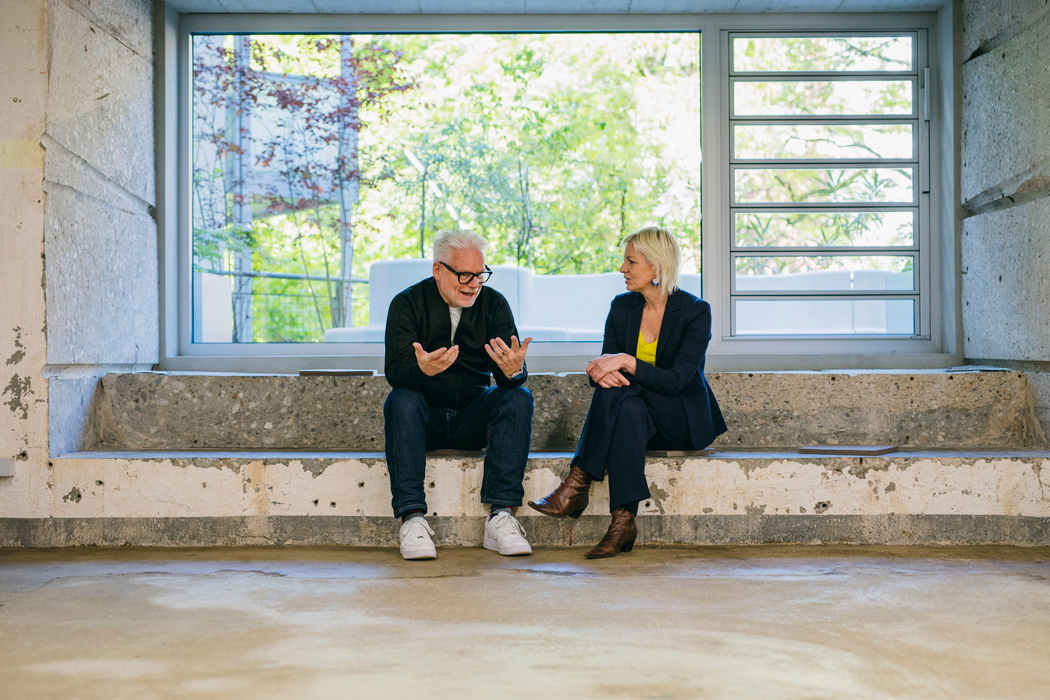
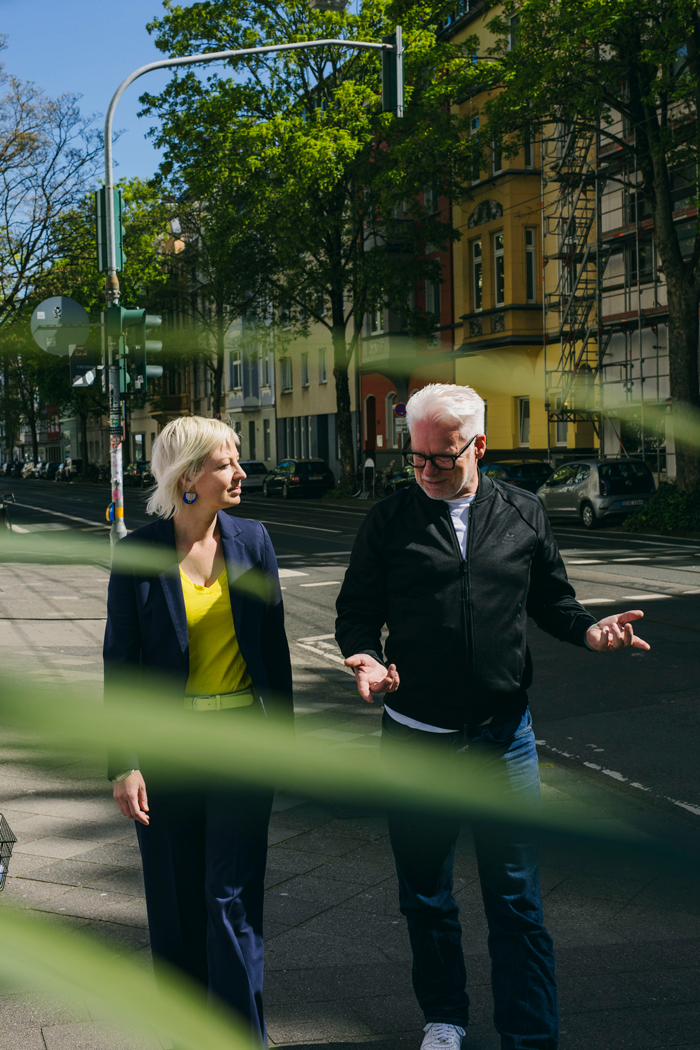
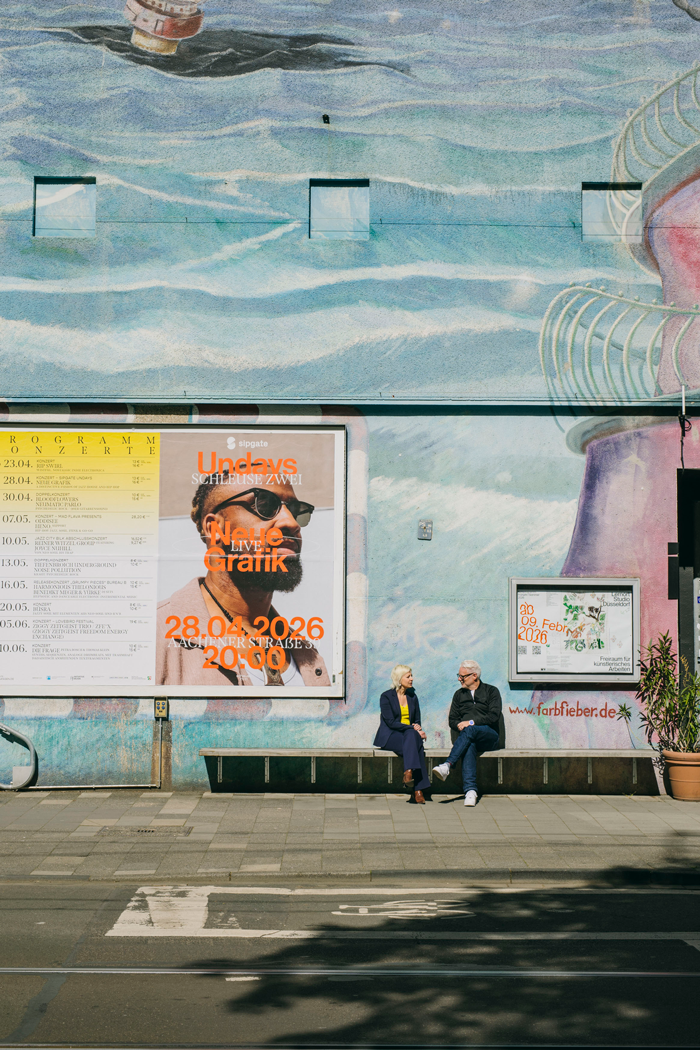
A massive concrete structure that was once a shelter and is now a venue for art, discourse and social interaction: here at the Bilker Bunker, is where VIVID editor Rainer Kunst meets Düsseldorf’s mayor, Clara Gerlach. They discuss the power of culture, political learning processes, conflicts over land use in a growing city, and how to encourage people to participate in climate action.
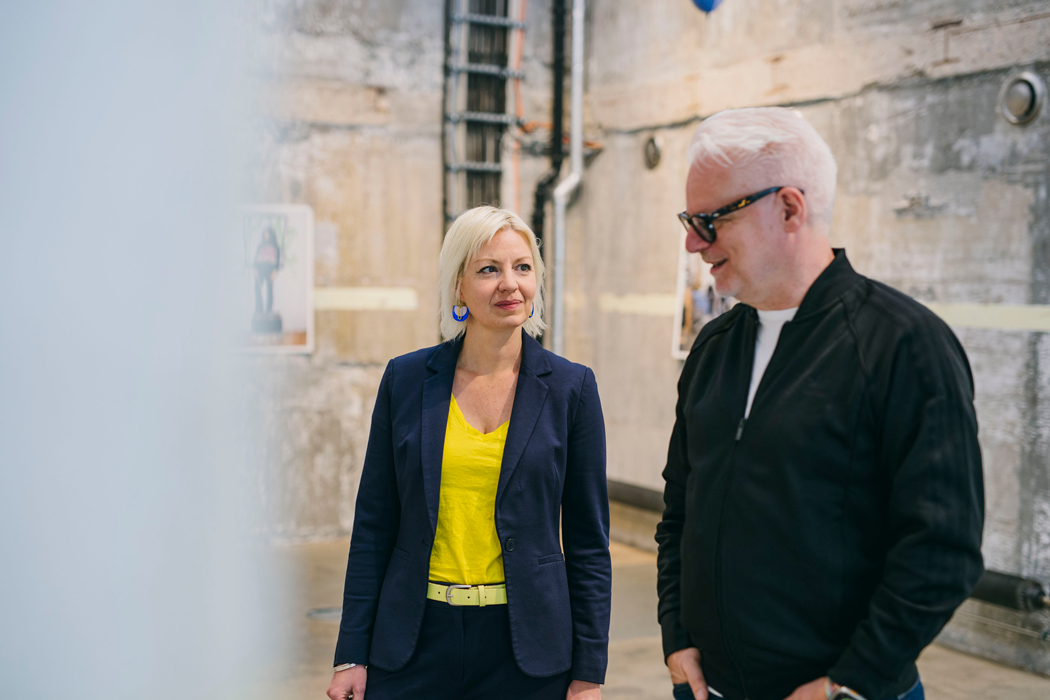
Clara, we’re sitting here in a place that symbolises change. What does this bunker mean to you?
Above all, the Bilker Bunker is a sign of what is possible when people get involved locally. It was originally due to be demolished to make way for high-end housing. The fact that it is now a cultural venue is thanks to the commitment of the local community. They wanted to preserve it, so they got organised, sought political avenues – and in the end, they succeeded. The bunker was listed as a historic monument and thus spared from demolition. To me, this demonstrates very clearly that democracy is practiced in the neighbourhoods and people are keen to contribute to the shaping of their surroundings.
And at the same time, it took an investor like Andreas Knapp to turn it into a cultural venue.
Absolutely. It wouldn’t have been possible without his courage. This combination of civic engagement and someone willing to take on a project like this, is often what’s needed. And what has emerged here shows just how valuable that can be. It is a place that preserves history whilst offering new perspectives. The city absolutely needs such urban spaces where people can come together.
What is your view on the temporary use of vacant buildings, particularly in a growing city like Düsseldorf?
I see the temporary use of vacant buildings as a great opportunity, but it is also still very complex. Currently, it is often hardly worthwhile for owners to sell or repurpose commercial properties quickly, because the legal framework favours vacancy. At the same time, the demand for housing is high, and that is fundamentally right. But when it comes to repurposing, we quickly reach our limits: certain requirements make projects expensive and time-consuming. It cannot be our aim that rents or purchase prices have to be set so high just to finance construction. We need to be more pragmatic and flexible here, without abandoning important standards such as noise protection. Every successful conversion also saves vital resources – something we must also bear in mind in times of climate change.
You were the first Green Party candidate in Düsseldorf to reach the run-off for the mayoral election. Are you still the same person today as you were before the election
campaign?
I don’t think so. An election campaign like that changes you. You cross boundaries that you may have set for yourself beforehand. You speak to a huge number of people, including those with completely different views. And that is precisely what is important. Politics must not take place within one’s own comfort zone. This experience has broadened my perspective.
Is there a moment that has stayed with you in particular?
There were many, but the discussions on housing were particularly striking. I saw just how strong the fear of displacement is. People are worried about losing their homes, and that runs very deep. Housing isn’t just any political issue; it’s something deeply personal. And I think we sometimes underestimate how much such issues can also create social tensions.
„A city only works when different people live together, not by simply outsourcing problems“
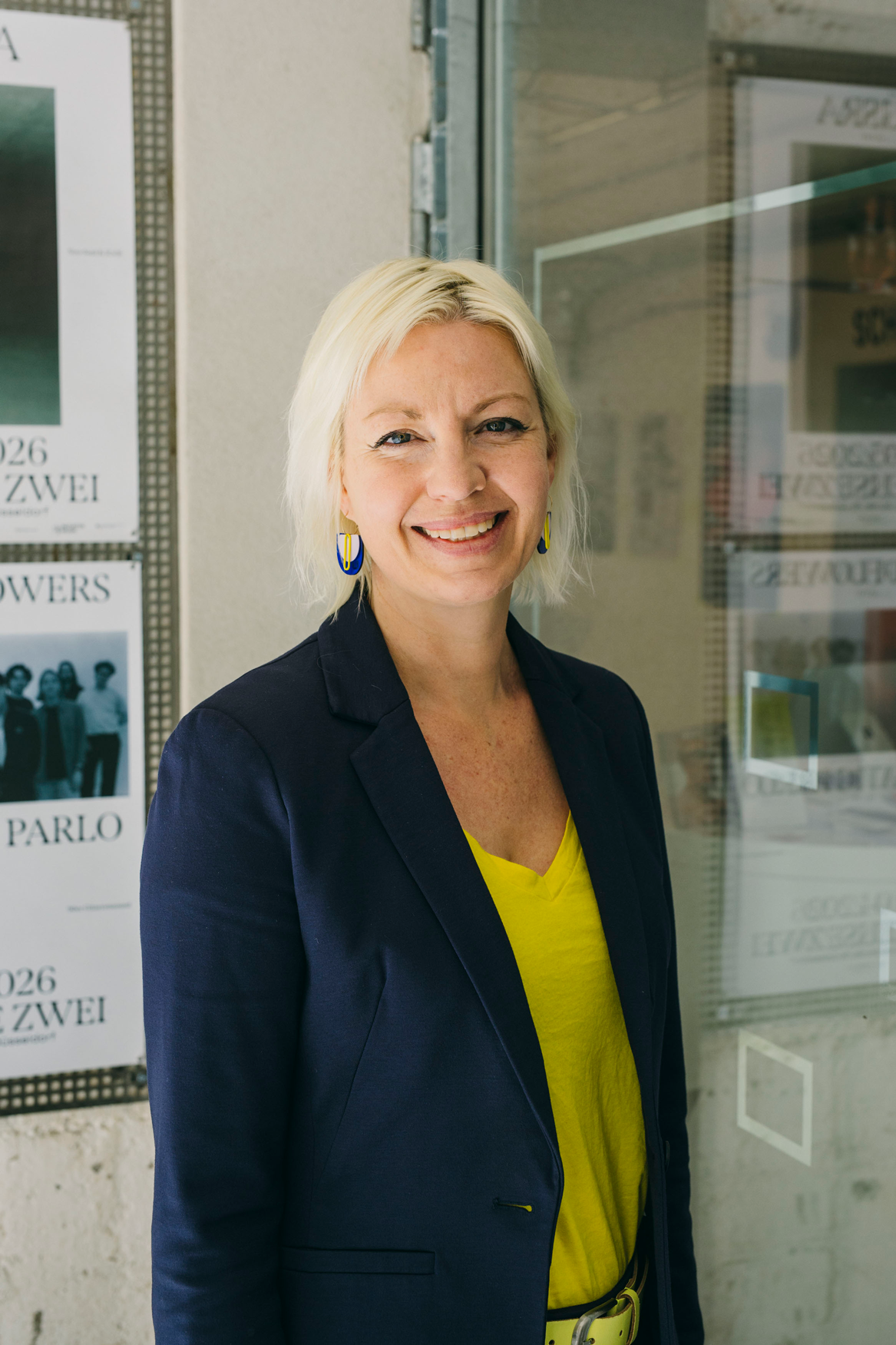
ABOUT CLARA GERLACH
Political career
• Since 6 November 2025: selected Mayor of the state capital Düsseldorf for the second consecutive term
• Since 2004: served on various committees of Düsseldorf City Council, including as cultural policy spokesperson for Bündnis 90/Die Grünen and on the Education Committee
• Since 2002: Member of Bündnis 90/The Greens
Professional career
• Since 2013: Teacher of Art and German, Secondary Levels II/I, Franz Jürgens Vocational College, Düsseldorf
• 2013: Second State Examination, ZfSL Neuss/Municipal Leibniz-Montessori Grammar School, Düsseldorf
• 2009: First state examination, Heinrich Heine University, Düsseldorf (German), University of Wuppertal (Art)
Other roles
• Chair of the Board of Trustees of the Museum Kunstpalast/NRW-Forum
• Member of the Supervisory Board of Stadtspark Düsseldorf
Married, two children
What political lessons have you taken away from this?
That we need to take a closer look. It’s not enough just to talk about new-builds. We also need to discuss how we protect existing structures and how we prevent people from being forced out of their neighbourhoods. Instruments such as neighbourhood protection by-laws aren’t perfect, but they are an important tool we can use for this purpose.
Where do you think Düsseldorf currently stands?
Düsseldorf is in a strong position. We have a very efficient and diversified economy, a high quality of life and a wide range of cultural offerings. At the same time, there are challenges we need to tackle, foremost among them the issue of affordable housing. If we don’t get a handle on this, it will be difficult to maintain the city’s inclusivity.
And then there are those who have no home at all. What approaches are you taking here?
Here, we are following the ‘Housing First’ approach, which has been championed by fiftyfifty in Düsseldorf for some time. Rather than placing people without homes into support systems first, the idea is, to provide them with a home straight away – in mixed neighbourhoods spread across the city. And then to support them so that they can find their way back to as normal a life as possible. It’s about enabling participation, not segregation. Because a city only works when different people live together, not by simply outsourcing problems.
Another issue that concerns many people is the public space around the main station.
This is indeed a major challenge. On the one hand, because many responsibilities lie with the railways. On the other hand, because we are dealing with new problems, such as drugs like crack, which very quickly put people in extremely difficult situations. We are working on redesigning the station forecourt whilst at the same time expanding social services. The new Central Library in the station area is a particularly fine example of this transformation.
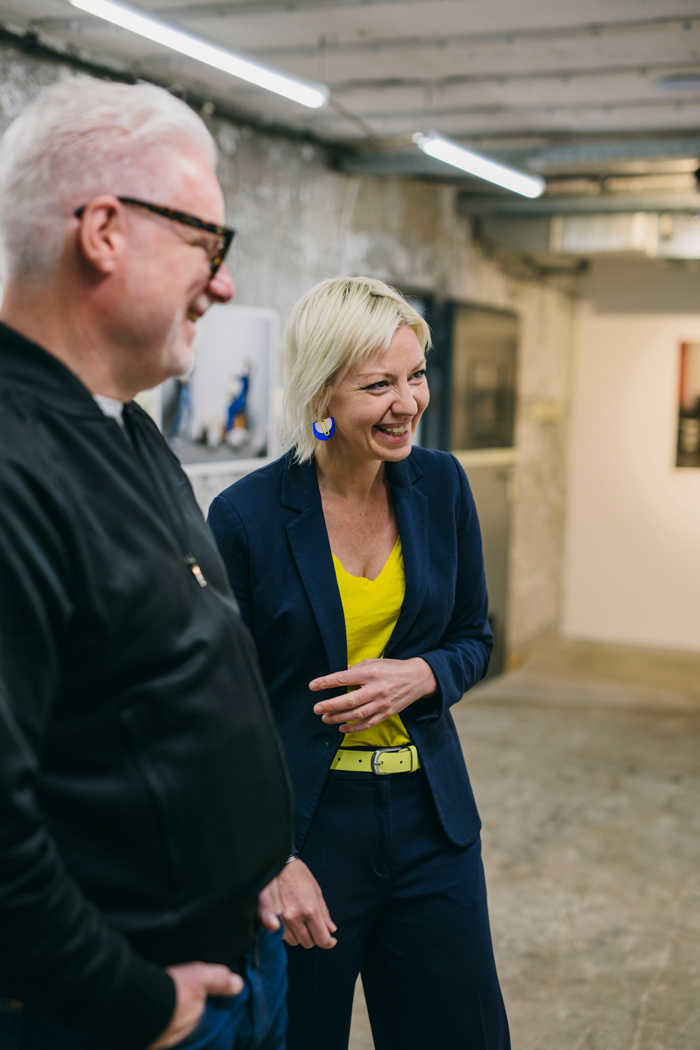
Düsseldorf is investing heavily in climate protection measures. How do you get people on board?
That is probably the crucial question. Over the next five years, we are investing around 500 million euros in climate protection and adaptation measures – that is a great deal of money. But it is not just about measures; it is also about acceptance. People need to understand why changes are necessary. And they need to feel that they themselves can be part of it. That’s why we’re also placing a strong emphasis on support schemes, for example for solar panels and energy-efficient renovations.
Nevertheless, there is often resistance.
Yes, and that’s understandable too. Change always means uncertainty at first. But that’s precisely why good communication is so important. Politicians must explain, listen and also be prepared to adapt things. It’s not about forcing everything through, but about finding solutions together.
You’re not just a mayor, but also a teacher. How does that influence you?
Very much so. Schools are incredibly important places because that’s where the future is shaped. That’s why we’ve invested around 1.3 billion euros in school construction in Düsseldorf over the last ten years. This enormous sum demonstrates our commitment to education. Good facilities aren’t a luxury; they’re a prerequisite for successful learning.
Where do you personally draw your energy from?
From encounters. I find it incredibly enriching to strike up conversations with people. My husband once said during the election campaign that I often come home with more energy than when I set out – and that’s true. I’m curious; I want to understand how things work. And this constant learning gives me a lot of strength and inspiration.
What makes Düsseldorf special to you?
The people. The openness of the Rhinelanders, their direct manner, their positive attitude. You quickly strike up a conversation and a sense of community develops. And we have enormous cultural diversity. Many people visiting Düsseldorf are impressed by the range of activities on offer here, and that’s true. Düsseldorf is a city of art and culture of the very highest standard.
Looking to the future: what makes you optimistic about our city?
Above all, it‘s the fact that there are so many people here who are committed to making a difference. Places like the Bilker Bunker demonstrate this very clearly. When people take responsibility and want to help shape their city, it creates the best foundation for a bright future.•
Interview: Rainer Kunst
Text: Tom Corrinth
Pictures: Celine Al-Mosawi