“IN MANY CASES, THE TRADITIONAL STRATEGY CONSULTANT IS BECOMING REDUNDANT”
Christian Underwood has reinvented the way his strategy consultancy operates. Instead of working with 30 consultants, he now uses AI-powered software that enables companies to develop their own strategies. In this interview, he explains why agent systems are transforming the consultancy industry and why Germany is lagging behind in AI.
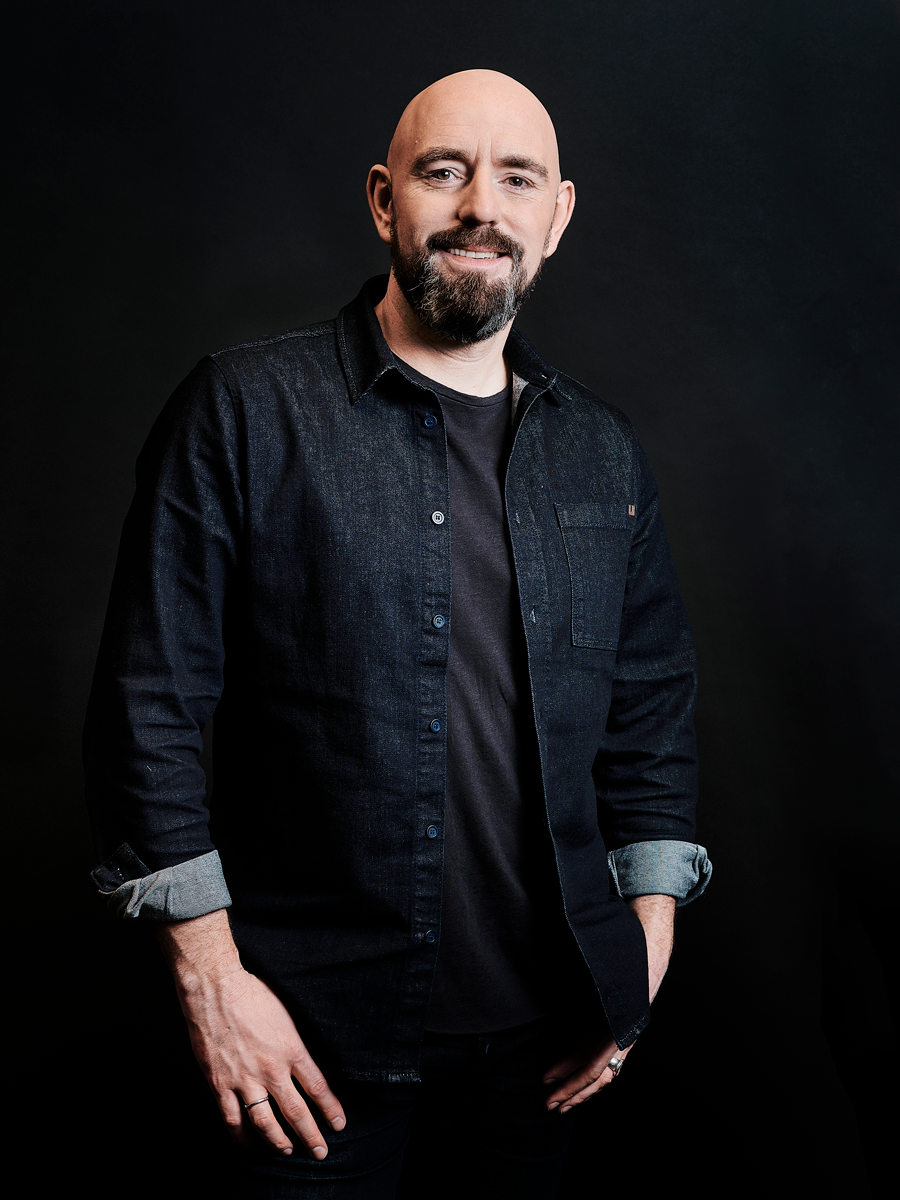
Mr Underwood, you once said that you had replaced your consultants with AI agents. Why?
That was the short version, which makes for a good headline. The longer story begins with the pandemic. The first year was the most successful in our company’s history; the second was the exact opposite – suddenly, there were no more contracts. I asked myself why we were still doing strategy consulting the same way we had been for decades. I used to work with around 30 consultants. Today, there are seven of us in a software company. Former consultants are managing the product or work in development.
What does your software do?
We have digitised the entire strategy process – from market analysis through workshops to implementation. The system researches market data, supports analysis, assists with strategic objectives, supports project management and embeds the strategy right down to every team. The key difference is that the client develops their own strategy. We provide the methods, data and process. As a result, in many cases there is no longer any need for a traditional strategy consultant.
Why is that better?
Because people implement a strategy more consistently when they have developed it themselves. We don’t tell companies what to do; instead, we give them the tools to develop their strategy independently. This makes a huge difference to acceptance. At the start of a project, we work with the senior management. These people know their industry and the competition inside out. What they often lack is a structured methodology. That’s where our system comes in.

More personal responsibility, less traditional consultancy – digital processes are transforming the consultancy business.
How did this lead to the creation of an AI company?
It all began with a book I wrote together with Prof. Dr Jürgen Weigand from WHU: ‘Hope Is Not a Strategy’. In it, we described the entire strategy process in detail. This resulted in more than 18,500 individual tasks, which we translated into software step by step. When ChatGPT was launched, we started experimenting straight away. In early 2023, we developed our first chatbot, followed shortly afterwards by an agent designed to help companies formulate their OKRs (Editor’s note: Objectives and Key Results – a method for setting and measuring business objectives). As many companies find this challenging, the agent was immediately put to extensive use. So we continued to develop the system. Today, an agent system guides companies through the entire strategy process. When we launched it, I believe we were among the first providers. Many traditional consultancies are still in the early stages.
Where is the data stored? This is a sensitive issue for many companies.
Absolutely. Data protection and information security have been our top priorities from the very beginning. We are ISO 27001 certified. Whatever we can operate ourselves runs in Nuremberg. For Frontier Reasoning, we use a certified external provider. Processing takes place within the EU, a data processing agreement has been signed and client data is not used to train the models. The question of data protection and data security comes up in every sales process. So far, we’ve been able to address this every single time with around 200 clients.
So AI is changing not only the way we work, but also the business model of consultancy.
Exactly. Many consultancies still sell time. We sell results. If we can achieve in an hour with AI what used to take a week, everyone benefits. Essentially, we sell software that companies use themselves. The price is based on company size and complexity – not on the number of users. For many clients, this is their first step into professional strategy work. Today, around half of them are already choosing to work exclusively with the software. The system has now reached a stage where many companies can go through the process independently. We only provide support where it’s needed.
But perhaps some companies are actually looking for someone to take responsibility.
That only works for those who don’t really want to change anything. We see companies that would rather commission a report than involve their managers in strategy development. Yet it is precisely these people who are crucial to future success. We want to work with companies that genuinely want to make a difference. Anyone who’s just looking for an external rubber-stamp or wants to delegate responsibility isn’t the right fit for us. It’s not the consultant who decides what a client needs – it’s the client themselves.
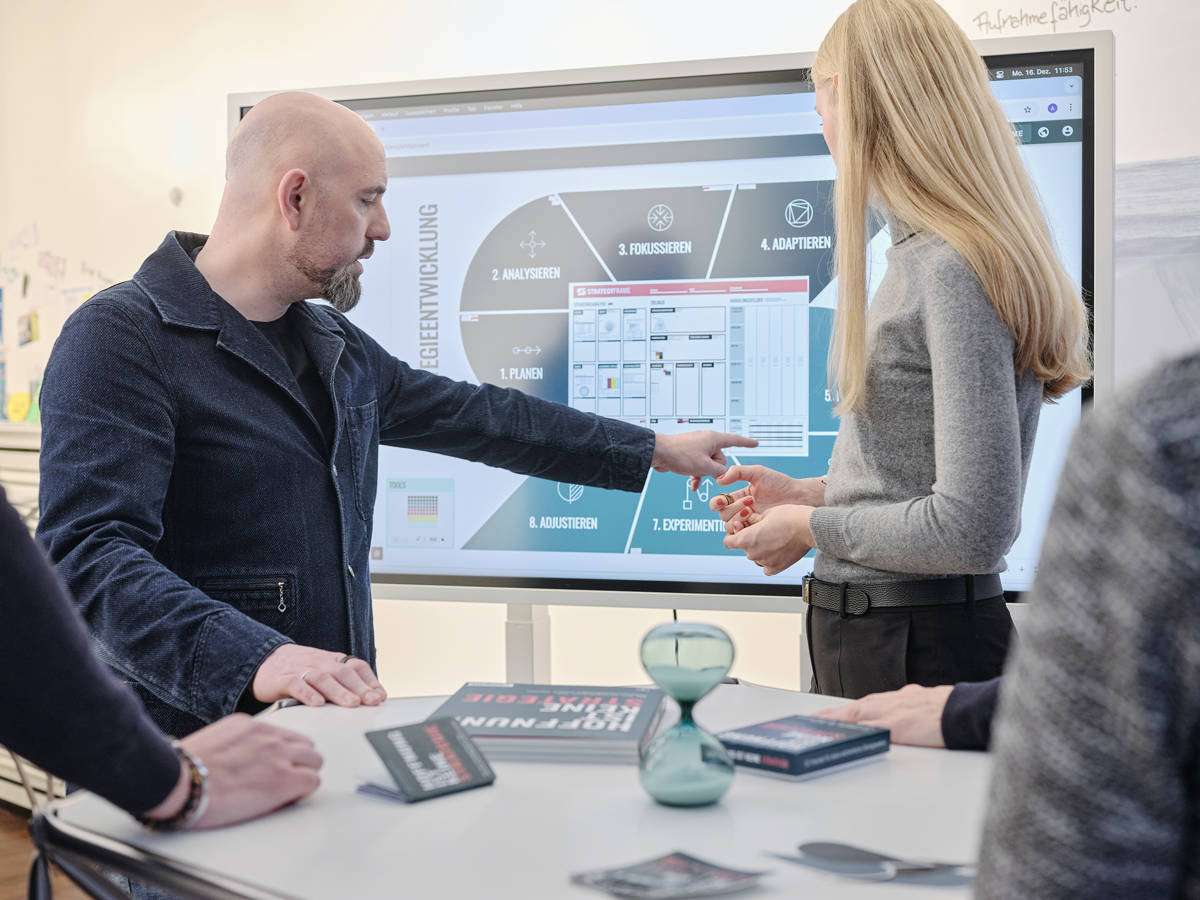
Workshops geben den Einstieg, danach übernehmen die Kunden den Strategieprozess selbst.
How do you view Germany as an AI hub?
I’ve just come back from San Francisco and was in Shenzhen last year for a strategy workshop. My impression is that Germany is falling behind, particularly when it comes to speed. We often spend time first discussing why something might not work, rather than simply trying it out. At the same time, we’re also seeing companies that are boldly forging ahead and are already working much faster and more efficiently with AI. Others remain paralysed by a sort of shock. The economic situation is difficult; many are simply putting out fires. But right now, in particular, companies need to lift their heads and look ahead strategically. I’ll put forward a bold thesis: if we still have half of our current small and medium-sized enterprises in five years’ time, we’ll be lucky. Many cannot find successors or have business models that no longer work under today’s conditions.
What does this mean for people? What skills are in demand today?
The most important skill is an open mind. Many people read about ChatGPT or other systems but never try them out for themselves. Yet it only takes a few minutes to have your first experience – and that changes you more than any article written on the subject ever could. Nobody needs to know how to code. I don’t know Python myself. What matters is something else: being able to judge whether a result is correct. A model always sounds convincing. Whether it is right is decided by a human – and that requires experience, sound judgement and the courage to disagree. That’s the good news – the skill that’s becoming important now isn’t a technical one. It lies with those who understand their business. You just have to be up to the challenge. •
Text: Lisa Maria Kunst
Pictures: MARKUS LUIGS