
MORE THAN DESKS
As part of the ‘New Work’ movement, coworking spaces have set out to revolutionise work. This article takes a look at an industry that has become professionalised, shedding light on how we want to work today.

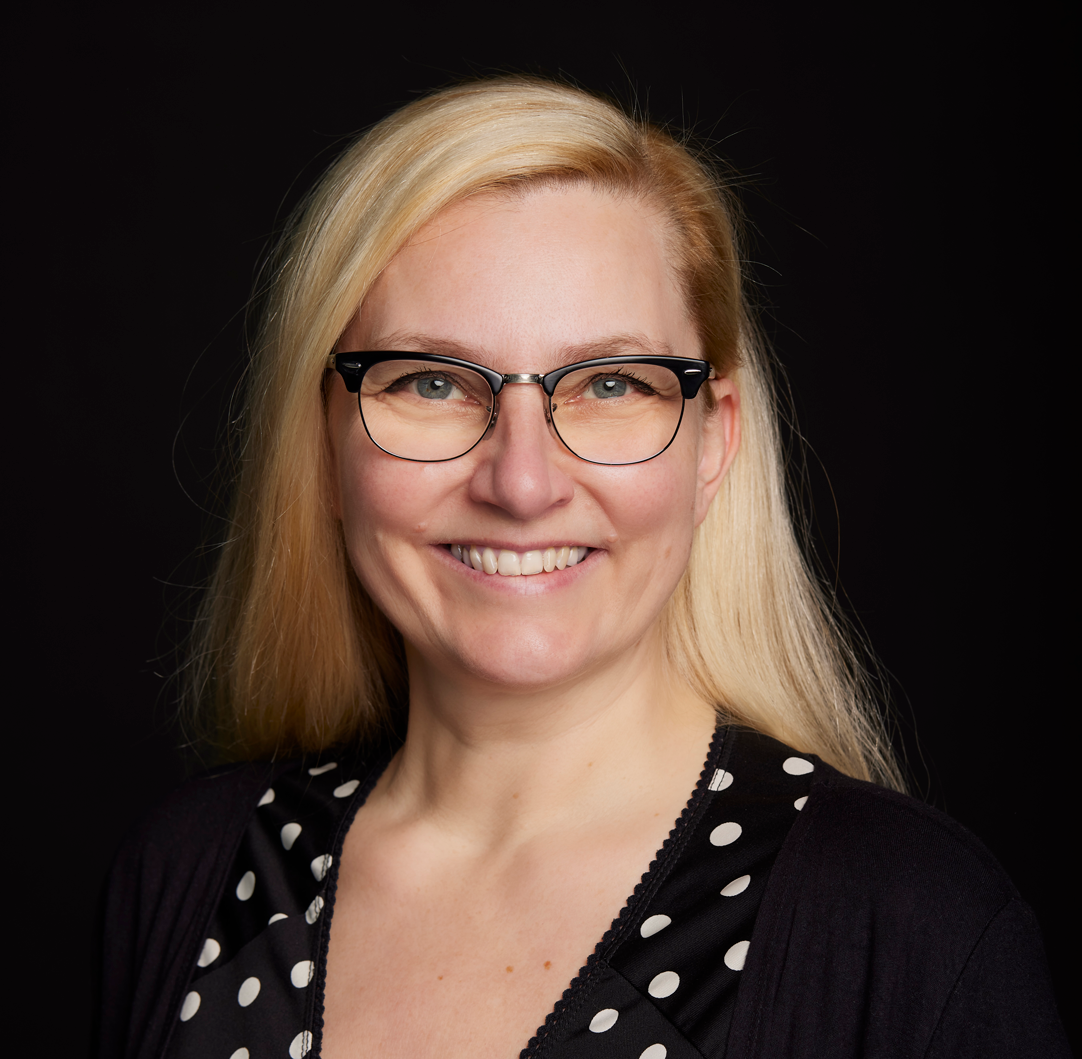
Silke Roggermann is a founding member of the German Coworking Federation.
The emergence of coworking spaces in the early 2010s was characterised by a pioneering spirit. The focus was on nothing less than rethinking work itself. Initially, these spaces were primarily created as “third places” associated with start-ups and the creative scene. These were places where people could work outside their homes or offices. In those early days, coworking meant more than just placing desks side by side; it was about sharing resources, ideas and experiences. Knowledge, contacts and infrastructure — from Wi-Fi to coffee machines — were shared. Sharing and community were the driving forces behind it all. ‘Sharing knowledge and contacts has always motivated me more than just sharing space,’ says Silke Roggermann. As the founder of Gewächshaus Düsseldorf and Super7000 coworking spaces, she is one of the pioneers of Düsseldorf's coworking scene. Both spaces were founded in the 2010s and have now closed. However, as a founding member of the German Coworking Federation e.V., she still cares about the industry, particularly exchange and networking. ‘People want to belong somewhere. That's no different for freelancers and solo self-employed people. That's why the goal was to bring people from related or diverse industries together to initiate joint projects.’ Coworking spaces are no longer solely aimed at solo self-employed people and freelancers. Instead, a wide range of services has developed to meet every demand.
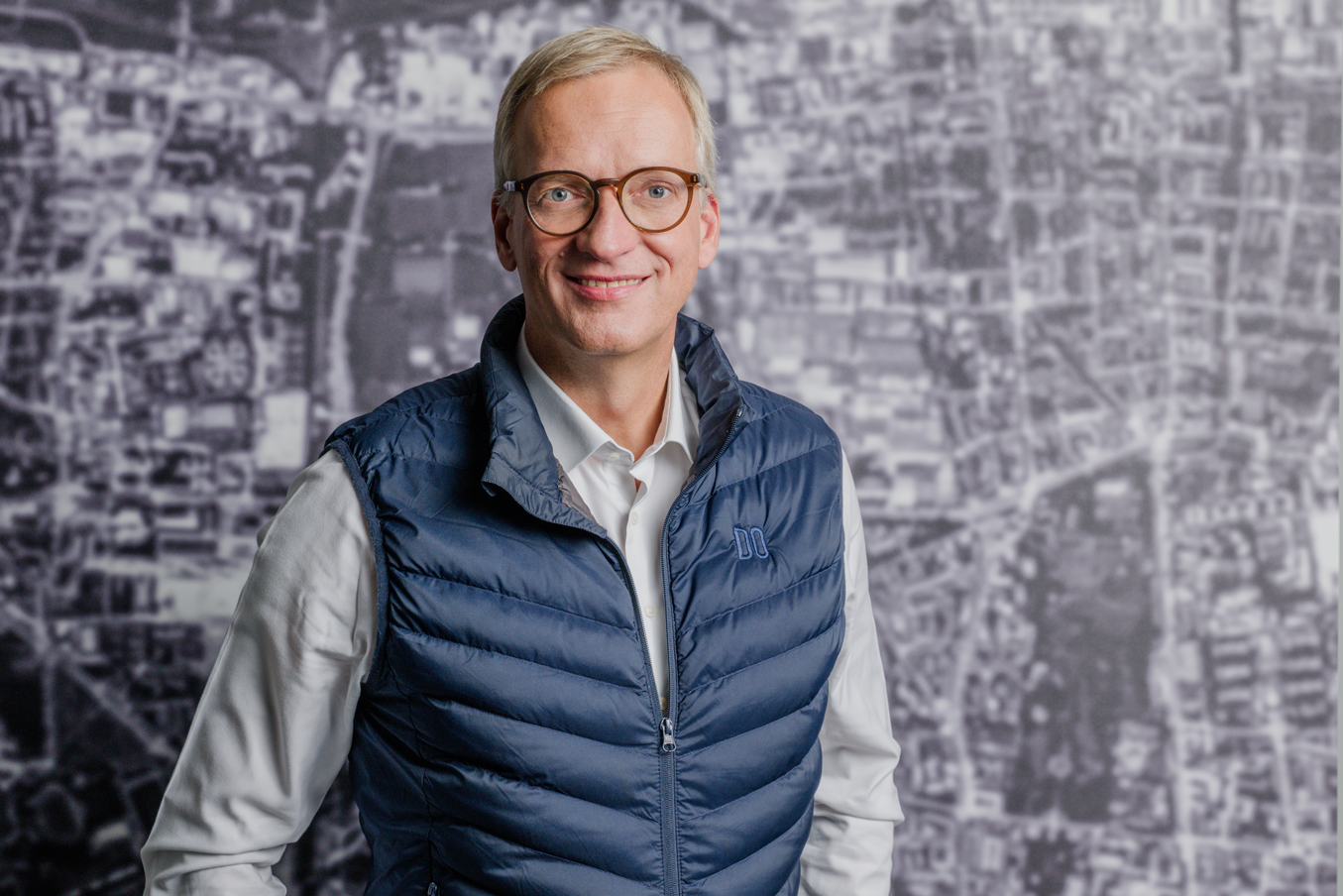
Dr Joachim Gripp, CEO Design Offices
Spanning over 70,000 square metres, Düsseldorf's more than 40 coworking spaces and business centres offer services tailored to various needs and target groups. Shared or flexible desks allow people to sit together in a community, and workspaces can be rented on a permanent basis or billed by the hour, day, or week. Entire areas can also be rented by individual companies. One such coworking space is Design Offices, which has three locations in Düsseldorf. 'Around 60 per cent of our space is dedicated to team spaces for companies – this has been our core business since our foundation in 2008. Flexible workspaces, often referred to as 'co-working', are deliberately integrated into our lounge areas and make up only a very small part of our business,' says Dr Joachim Gripp, CEO of Design Offices. The target group for the offices consists of teams from medium-sized companies, international project groups, and hybrid structures of larger companies. This is particularly evident in cities such as Düsseldorf, which have high international appeal. ‘Forty percent of our space is designated for communal areas such as lobbies, lounges, pantries and meeting rooms – spaces that are deliberately designed to promote interaction, whether for classic meetings or larger events such as conferences, seminars and offsites,’ says Dr Gripp. ‘Renting out larger spaces for events has already generated almost half of Super7000's revenue,’ adds Silke Roggermann. However, this offering has suffered significant losses for the owner-managed coworking space during the pandemic. Overall, the pandemic was a remarkable turning point for the industry. It was not just a matter of temporary revenue losses, but a radical change in business models and in the world of work as a whole.
Many companies realised at that time that traditional office models were no longer appropriate. Flexibility, hybrid working models and the need-based use of space are now an expectation, not an option. At the same time, the pandemic has shown that community and interaction cannot be replaced by digital alternatives. While video conferences can be efficient, they do not foster emotional connections. Coworking spaces have been able to fill this gap by providing places where physical proximity, spontaneous interaction and a sense of community can flourish once more. All the while offering maximum flexibility.
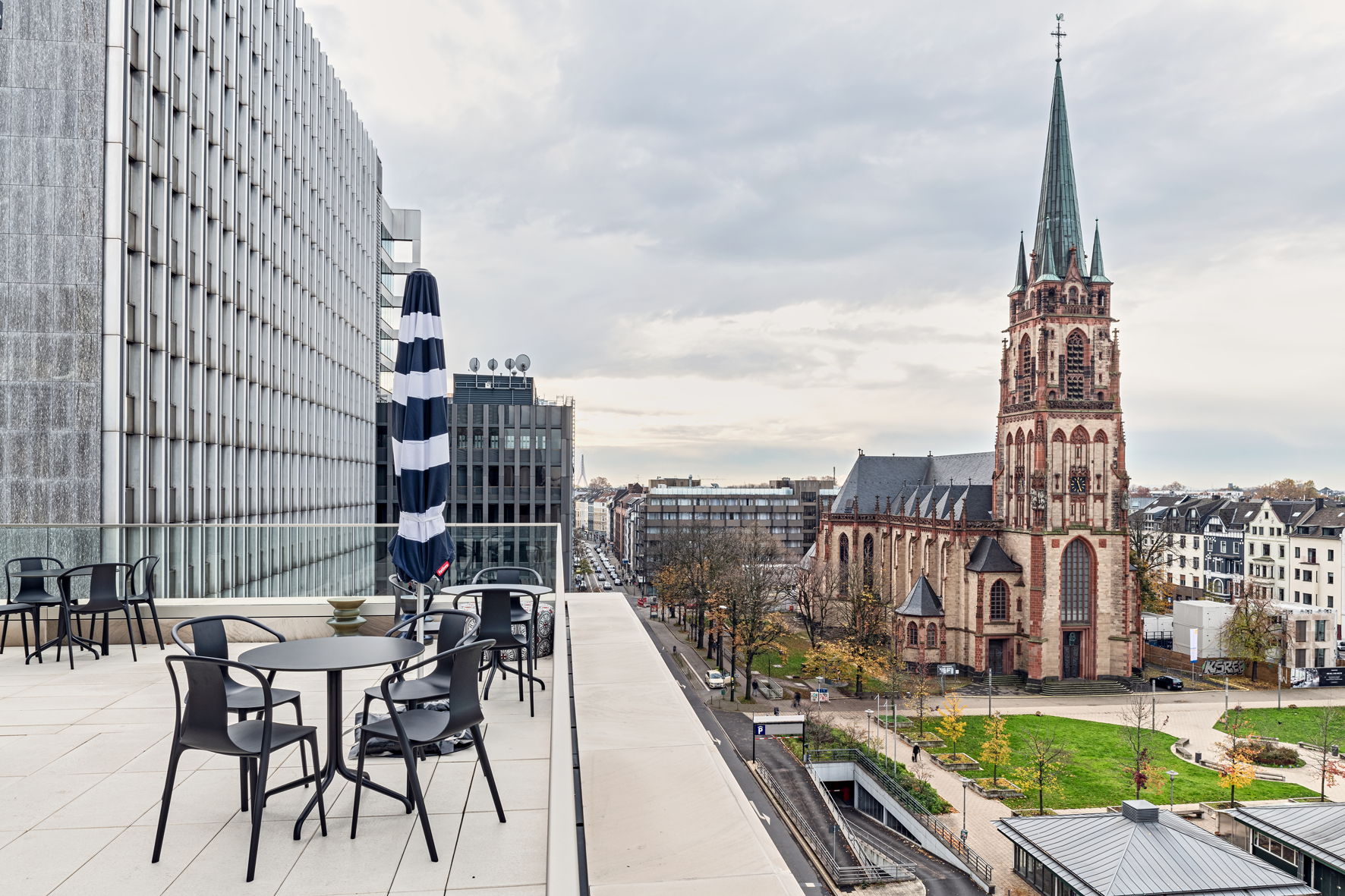
Whether it's a terrace or a lounge, quality of stay is central to the success of modern working environments. Like here at Design Offices.
SELECTIN OF COWORKING SPACES IN DÜSSELDORF
• Family Hub kiwifalter, Kalkumer Schloßallee 100, 40489 Düsseldorf, www.kiwifalter.de
• Mindspace Grünstraße stilwerk, 3. OG Grünstraße 15, 40212 Düsseldorf, www.mindspace.me/de
• STARTPLATZ Düsseldorf GmbH, Speditionstraße 15a , 40221 Düsseldorf, www.startplatz.de
• TechHub.K67 gGmbH, Kasernenstraße 67, 40213 Düsseldorf, www.techhubk67.de
The war for talent and the values of the new generations entering the labour market have further reinforced this development. Nowadays, if you want to attract young professionals, you need to offer more than just a desk. You need flexible models, inspiring spaces, and the opportunity to adapt work to individual lifestyles. Coworking spaces have not only responded to a trend; they have also set standards that traditional companies are now adopting.

One of the first coworking spaces in Düsseldorf: Super7000 – with a swing, of course.
The industry has become more professional and created niches. While operators offer digital tools as white label solutions, ranging from room booking to event ticketing and billing, customers can choose from a variety of services, including secretarial services, complimentary drinks, showers for employees, luxurious furnishings and childcare. At the same time, new trends are emerging. In addition to coworking spaces in urban centres, those in rural areas are becoming increasingly important. These spaces combine workplaces with regional roots and become meeting places that boost productivity and enhance village or neighbourhood life.
Sustainability is also playing an increasingly important role. Not only is space shared, it is also used more efficiently. Shared infrastructure saves resources, and modern buildings meet high environmental standards. For companies that want to meet ESG criteria, coworking concepts are thus becoming a strategic building block. What unites these spaces is that community building is a top priority. After all, exchange and networking are not possible in a home office. These two factors still make coworking spaces unique today.
Is coworking a concept for the future? Dr Joachim Gripp certainly thinks so: 'Coworking doesn't go far enough. Flexible workplace concepts are what will shape the future. They meet the changing needs of the working world. Today, it's no longer just about where you work – it's about how you work and the conditions in which you work.’ Coworking reflects a broader change in perception: work is no longer viewed as a physical location, but as an interconnected relationship between people, technology, and culture. Perhaps this shows that New Work is no longer an ideal in the distant future, but has long since become part of our everyday lives.
COWORK 2026 IN DÜSSELDORF
The annual event organised by the German Coworking Federation e.V./Bundesverband Coworking Deutschland will take place on 24 April 2026 at the Kiwifalter coworking space in Düsseldorf. The event will focus on coworking, coworkation and coworking as places of learning and democracy, and will include a Barcamp, exchange and networking opportunities.
Words: Lisa Maria Kunst
Pictures: Design Offices, Michael Marczok, Super7000