
HOW DÜSSELDORF’S INDUSTRY SECURES ITS FUTURE
Industry is a cornerstone of Düsseldorf's economy. To secure its future, a strong strategy — the Industry Master Plan, which was initiated in 2011 — is being pursued jointly by all the partners involved. At the same time, it is important to maintain a work-life balance in Düsseldorf!
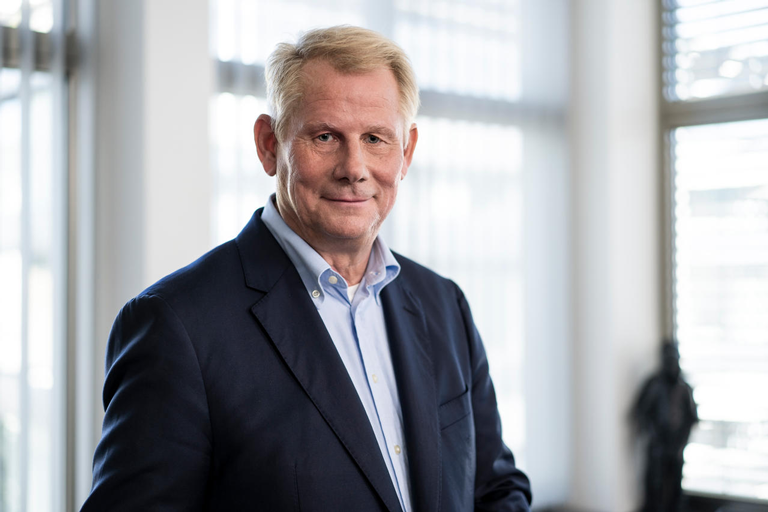
Andreas Schmitz, President Düsseldorf, Chamber of Industry and Commerce
'Desk of the Ruhr region' is a metaphor that dates back to the 1950s and 1960s, when many manufacturing companies from the Ruhr region opened their administrative headquarters in Düsseldorf. In fact, the city still has one of the highest service sector ratios in Germany today. However, many people might not realise that Düsseldorf is also one of the strongest industrial locations in North Rhine-Westphalia. In urban areas in particular, the manufacturing industry has developed into an 'industrial network' consisting of manufacturing companies, industry- related service providers, and increasingly, technology- oriented start-ups. A recent survey estimates this network to be around 100,000 jobs in scale. This makes industry a cornerstone of Düsseldorf's economic core,' explains Andreas Schmitz, President of the Düsseldorf Chamber of Industry and Commerce (IHK Düsseldorf).
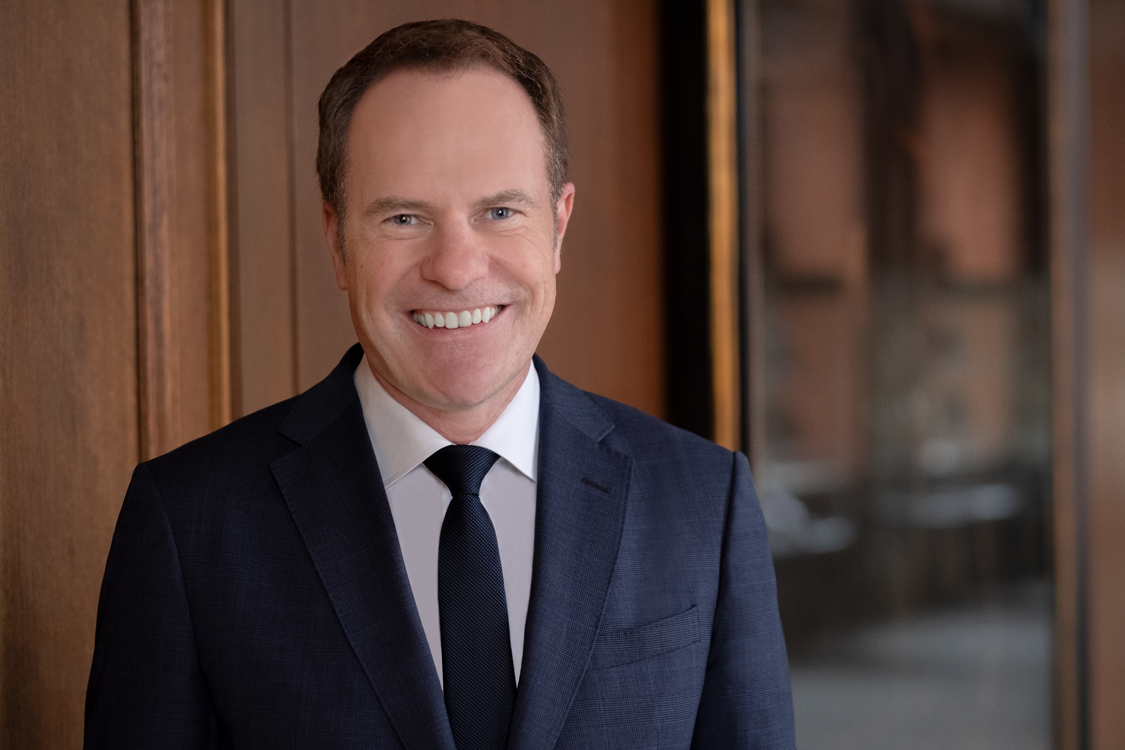
Dr. Stephan Keller, Lord Mayor, City of Düsseldorf
To strengthen and develop this core in the long term, the city, industrial companies, associations, and the Chamber launched the 'Master Plan Industry' in 2011. As a strategic instrument, the plan aims to balance competing demands for work, housing, leisure and transport; enable technology transfer from science to industry; ensure a sustainable and affordable energy supply; and ultimately promote the visibility and acceptance of industry in the city. Compared to other German cities, where industry and commerce are under pressure, this is quite remarkable. 'Düsseldorf is setting deliberately an example and has been committed to industry and commercial production as a central pillar of value creation, innovation and employment for 15 years now. In Düsseldorf, industry is not a marginal issue in urban development, but part of a sustainable city,’ says Lord Mayor Dr Stephan Keller.
The core zone map plays a key role in this, clearly defining which areas are reserved for industry and manufacturing. ‘This creates planning security for companies and protects these areas from competing uses,’ he adds. The fact that urban planning and economic development work together illustrates the importance of this. The IHK president also emphasises the strong signal sent by the master plan: ‘Düsseldorf is and will remain a location where existing companies can grow, and where industrial settlements are expressly welcome.’
There are several successful examples of this. For instance, the ‘Tube’ project has been developed on the former Vallourec site in the south of Düsseldorf. Another example is the commercial space of the former pipe factory on Theodorstraße in the north of Düsseldorf, which is currently being developed. Former industrial sites are also being used effectively and in a contemporary manner at Segro Park in Flingern. ‘These developments are all taking place within the core zones, demonstrating that sites previously used for commercial and industrial purposes will continue to be locations for such companies in Düsseldorf in the future,’ explains the Lord Mayor.
'In the coming years, Düsseldorf will continue to focus consistently on securing land, reliable planning, and close cooperation with the business community. As a city, we are thus securing commercial and industrial space in the long term and actively managing space to make better use of existing potential. We are also ensuring transparent and reliable approval procedures,' he adds. At the same time, the city is strengthening industrial networks, innovation and technology clusters, and exchanges with universities (see info box). The continuous expansion of transport and digital infrastructure is also being promoted for this purpose.
‘For the future of the industrial location, it is crucial for us to enable innovation specifically in this location. We are seeing substantial investments in highly innovative fields across all sectors, from key technologies to modern production and service models,’ says IHK President Schmitz. Cooperation in committees and networks such as the IHK Industry Committee, the Düsseldorf Industry Circle, the Master Plan Industry Process and ‘Future through Industry’ is crucial in this regard. 'This form of cooperation strengthens Düsseldorf's long-term competitiveness,' he adds.
HOW TECH AND KNOW-HOW TRANSFER WORKS IN INDUSTRY
· The state capital Düsseldorf provides support by utilising innovation centres, university transfer offices, specialised networks and event formats. This initiates cooperation and facilitates the exchange of scientific knowledge into economic practice.
· Heinrich Heine University and Düsseldorf University of Applied Sciences have their own departments for technology and knowledge transfer. A good example is the cooperation between the Economic Development Agency and the ZDD (Centre for Digitalisation and Digitality) at Düsseldorf University of Applied Sciences. Together, they offer formats for the business community to provide insights, stimulate innovation and initiate cooperation.
· At the EUREF Campus Düsseldorf, practical study programmes, real-world laboratories and innovation partnerships help to quickly translate research results in the fields of energy, mobility and sustainability into marketable solutions. ‘As a city, we want to support the local ecosystem in this endeavour and promote exchange among its members by providing the appropriate framework conditions,’ says Lord Mayor Dr. Stephan Keller.
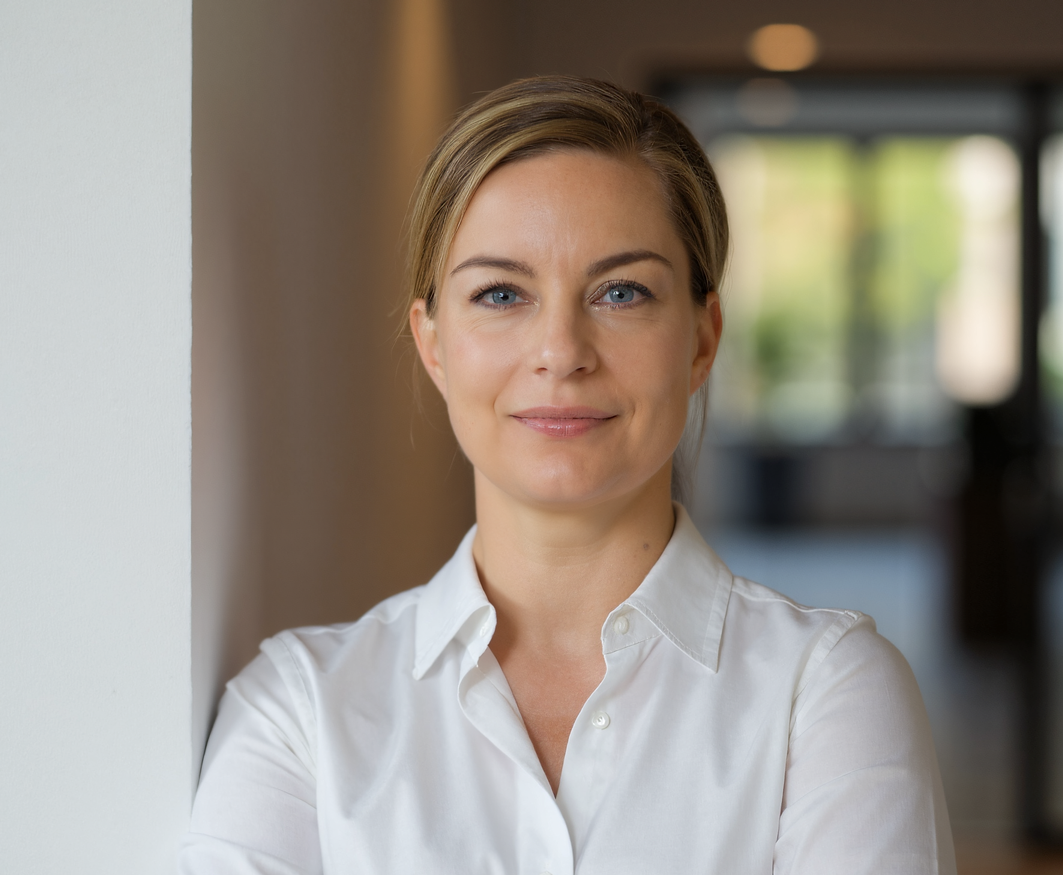
Annette Karsten, Managing Director, Zukunft durch Industrie e.V.
The Future through Industry (ZdI) association is a prime example of this. Its more than 100 members include SMEs, corporations, Chambers of Industry and Commerce from across the Rhineland, universities, and even some private individuals. ‘Future through Industry sees itself as a bridge between industry and society. We demonstrate the importance of a strong, innovative and sustainable industry for prosperity, climate protection and technological progress,' says Managing Director Annette Karsten. The association's work focuses on four areas: promoting dialogue, raising the profile of industry, inspiring young people to pursue careers in industry and networking stakeholders from business, politics, science and education. The aim is to make industry more understandable, build trust, and highlight opportunities.
‘Many young people have little contact with industry. That's why we arrange early encounters with companies and provide direct insights into modern production environments,’ Annette Karsten explains. ‘This conveys the message that those who work in industry are actively shaping future issues such as the energy transition, mobility and digitalisation.’ One current example is the 'Industry Toolbox' school project, a method case developed with educational expertise that teachers can use to give their pupils a clear, practical understanding of industry. Member companies of the ZdI contribute specific problems for the pupils to work on in presentations. The flagship Lange Nacht der Industrie (Long Night of Industry) event, which has been taking place since 2010, is exciting for young people, but not only them. The idea is that, for one evening only, numerous industrial companies open their factory gates and give visitors an insight that would not otherwise be possible. What is produced here? How is it produced? What is the significance of this location? ‘This creates understanding, proximity, and often new interest in industrial professions,’ says Karsten. This year, the Long Night of Industry will take place on 24 November, marking the start of the Handelsblatt Industry Summit. 'Companies that would like to participate in the event are welcome to contact me,' says the managing director.
NEW CLIMATE COOPERATION BETWEEN HENKEL AND STADTWERKEKE
In April 2026, a flagship project will be launched in Düsseldorf: the new energy centre of Stadtwerke Düsseldorf on Henkel's premises in the Holthausen district. Previously unused industrial waste heat and heat from combined heat and power generation will then be integrated into the district heating network of Stadtwerke.
This will cover 35 per cent of the heat required for Garath and Benrath in future. This will reduce the city's CO2 emissions by around 6,500 tonnes per year. The climate cooperation between Henkel and Stadtwerke is a prime example of the interaction between industry, utilities, the city and politics.
For Henkel, the cooperation is a contribution to its own sustainability; for the state capital and the state of North Rhine-Westphalia, it is an important step towards achieving climate targets; and for the municipal utilities, it is a milestone in the further decarbonisation of district heating and security of supply. It makes the city less dependent on geopolitical challenges because less gas needs to be imported.
The additional 'Erlebnis Industrie' (Industry Experience) format is aimed at local politicians and offers targeted insights into industrial processes and relevant future topics. 'Through this, we aim to raise awareness among politicians of economic challenges and strengthen the dialogue between companies and decisionmakers. Both formats have been very well received, generating interest, acceptance, and practical exchanges between industry, politics, and society,’ says Lord Mayor Dr Stephan Keller.
Looking to the future, the Düsseldorf Chamber of Industry and Commerce plans to present an industry study this year to provide even greater transparency for decision-making purposes. ‘Against the backdrop of economic uncertainties and the further development of the Industry Master Plan and the core zones for industry and commerce, this study aims to inform the location debate with data-based insights. The aim is to quantify the importance of industry in the region using key figures, trends and drivers, derive concrete future scenarios and develop implementation-oriented recommendations for action,' explains Andreas Schmitz. The results will then be incorporated into compact scenarios for the future and recommendations for local politics. This once again demonstrates that the industry network in Düsseldorf is constantly evolving! •
CLIMATE PARTNERS FROM INDUSTRY
The ‘Düsseldorf Climate Pact with Industry’ is only a few years old – and has already reached the milestone of 100 members, known as climate partners. The initiative supports companies in reducing their energy consumption and achieving their own climate protection goals. Numerous companies from industry are also already participating:
· Teekanne
· Weiss Stahl- und Metallbau
· Weiqiao Germany
· Fortin Mühlenwerke
· Kiepe Electric
· Siemens
· Henkel
· BASF
· Konecranes
· Mercedes-Benz Werk Düsseldorf
· Dillenberg
· Schulz & Sohn Chemie-Erzeugnisse
Words: Tom Corrinth
Pictures: IHK Düsseldorf_M.Valk, Landeshauptstadt Düsseldorf_Michael Lübke, Zdl, Stadtwerke Düsseldorf / Udo Geisler,