HOW CAN GERMANY’S ECONOMY GROW AGAIN?
Jens Südekum, Professor of Economics at Heinrich Heine University Düsseldorf, has been grappling with this hugely important question intensively since May 2025, when he became the personal advisor on macroeconomic development to Federal Finance Minister Lars Klingbeil. He is one of the key architects of the €500 billion Special Fund for Infrastructure and Climate Neutrality.
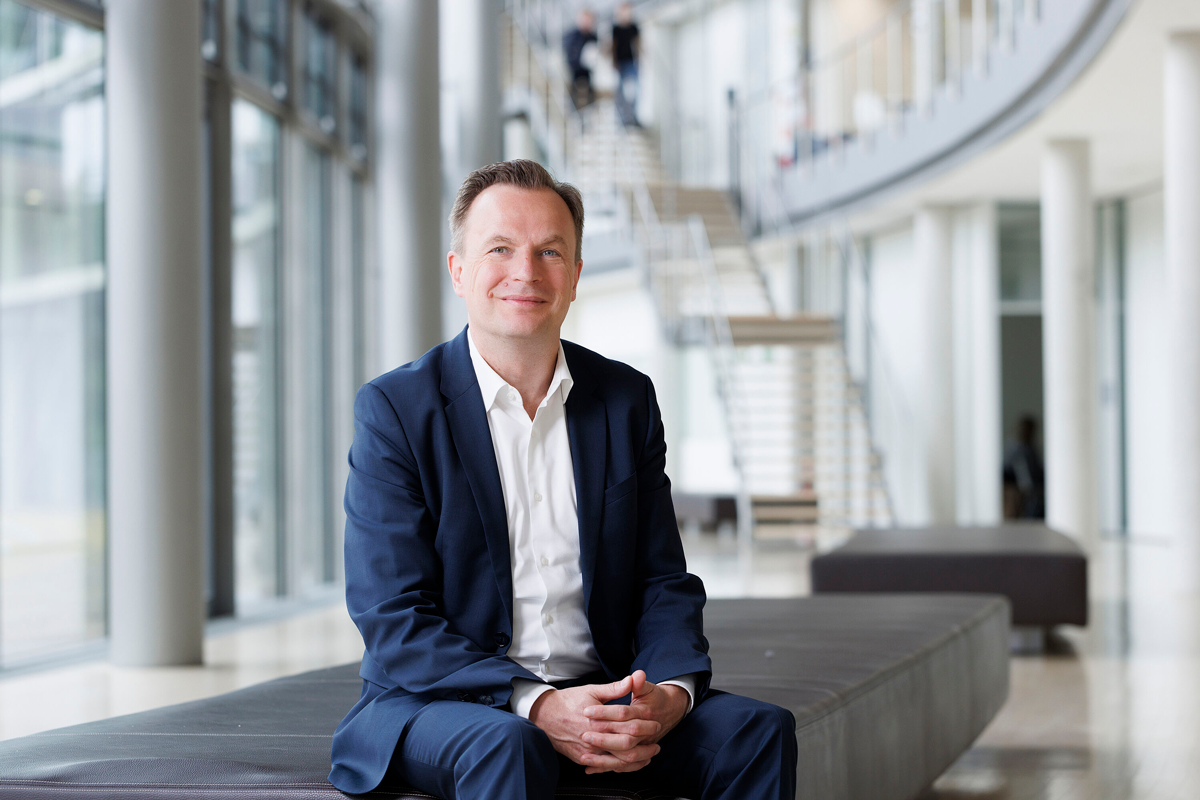
Professor Südekum, what growth impetus do you expect from the Special Fund over the coming years? And how should its impact be measured, beyond mere outflow statistics?
Overall, growth forecasts have been revised downwards due to the war in Ukraine. Yet the Special Fund remains a driver of growth. Its economic impact is estimated to be around 0.5 per cent in 2026 alone. The crucial thing is that this results in tangible modernisation, such as renovated bridges, more efficient railway lines, improved digital infrastructure, and modernised schools and nurseries. For the first time, binding funding has been specifically earmarked for the approximately 400 motorway bridges in Germany that are currently in urgent need of renovation. Success should therefore be measured not by the outflow of funds, but by whether projects are implemented more quickly, whether bottlenecks disappear, and whether Germany’s competitiveness as a business location increases noticeably.
At last year's Düsseldorf Real Estate Dialogue, you called for this outflow of funds to be closely monitored. What is the situation today?
Until now, information on infrastructure projects was often collated separately within individual ministries or at state and local government levels. While the federal government provided the funds, it had no central overview of which specific projects were being implemented or what effects resulted from them. This is precisely what is now changing with the development of the current monitoring system. For the first time, the Ministry of Finance is collating data on which projects have been funded, what stage they are at, and the economic effects they can achieve, such as reducing traffic congestion or CO2 emissions. Initial overviews featuring hundreds of specific projects are already available on the ministry's website.
However, studies show that the transformation is proceeding very differently across German regions. Why is that?
Because a large part of public infrastructure is the responsibility of local authorities. Of the 500 billion euros, 100 billion is earmarked for federal states and local authorities, including around 22 billion for North Rhine-Westphalia. This covers schools, nurseries, roads and public buildings – in other words, the infrastructure that people experience directly in their everyday lives. Whether the investment drive is perceived as a success will depend on whether schools are modernised, bridges are renovated, and digital services are improved locally.
Energy-intensive industries and new major consumers, such as hyperscalers, are currently deciding where to invest. What must the Rhineland metropolitan region offer to succeed in this competition?
In the competition for energy-intensive industries or hyperscalers, far more than just the price of electricity matters. The decisive factor is the overall quality of the business region as a location. Many large businesses require land and infrastructure, which tends to be developed in surrounding areas – yet the entire region, centred on Düsseldorf, benefits from this. This is because such investments bring jobs, tax revenue and highly qualified workers, many of whom wish to live in Düsseldorf. The region has many strengths: a high quality of life, excellent transport links, a large pool of skilled workers and cultural amenities, as well as a major airport. However, it also depends on how quickly and pragmatically politicians and administrators act. Those who swiftly provide investors with land, permits and infrastructure will gain a clear advantage in the international competition for business locations.
Alongside the multi-billion-euro investment package, what additional growth initiatives should the federal government launch?
Investments in infrastructure and defence are important, but they alone are not enough to secure Germany’s long-term competitiveness. The current business model, which relies on strong industry, car exports and global markets, is under increasing pressure. I see great potential, for example, in combining industry with artificial intelligence. Germany has an advantage here, as industrial production processes and technical expertise are already in place. Facilitating private investment will be crucial, for instance through tax incentives, faster approvals and regulations that enable innovation rather than stifling it at an early stage. •
Text: Tom Corrinth
Pictures: Ivo Mayr