HR IN THE TIMES OF AI
Skilled labour shortages, (geo-) political uncertainties, trade barriers and the rapid development of AI: how does all this affect the job market and the recruitment of talent? And what countermeasures can an international and economically strong metropolis such as Düsseldorf take?

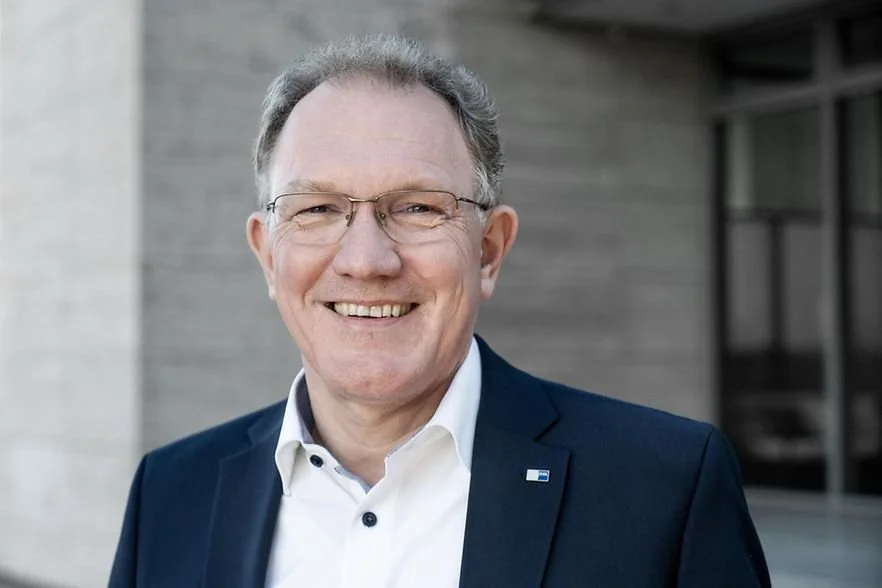
Gregor Berghausen, General Manager Düsseldorf Chamber of Industry and Commerce (IHK)
In its Skilled Workforce Monitor, the Düsseldorf Chamber of Industry and Commerce (IHK) has projected that 28,300 jobs will remain unfilled in Düsseldorf and the district of Mettmann by 2035. This accounts for around four percent of the total workforce and is roughly equivalent to the population of the Düsseltal district. For the majority of companies, the shortage of skilled workers is one of the most serious risks to business development, as revealed, for example, by the special analysis of the DIHK Economic Survey Autumn 2025. ‘The shortage of skilled workers can only be overcome through long-term, joint action by the business community, politicians and all educational and labour market institutions. The future viability of our region depends crucially on well-qualified employees,’ emphasises Gregor Berghausen, Chief Executive of the Düsseldorf Chamber of Industry and Commerce (IHK). The measures to counter this range from strengthening the education market through tailored qualification and further training programmes to the integration of international skilled workers and employees. And then there remains the big question of what role AI will play in all of this.
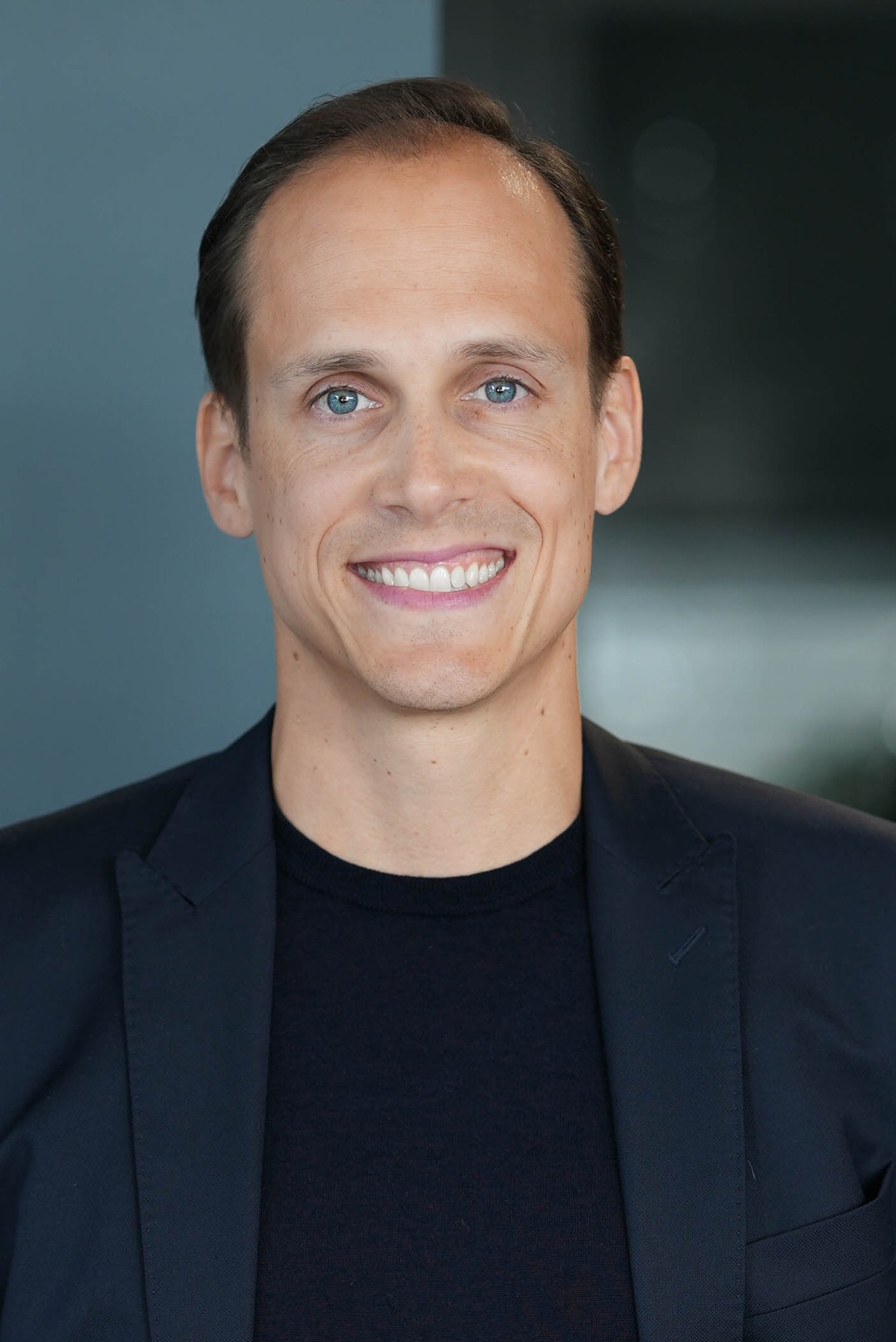
Jan Neumann, Managing Director DACH, Stepstone
A glimpse into the day-to-day operations of Stepstone – one of the two major job portals in Düsseldorf alongside Indeed – reveals the current state of the job market. ‘We have never received as many applications per vacancy on stepstone.de as we have this year. Given the current economic climate, in which fewer jobs are being advertised, this comes as no surprise. But this makes it even more difficult for recruiters to identify the right talent,’ says Jan Neumann, Managing Director DACH at Stepstone. A survey by the company shows that 61 percent of jobseekers use AI in the application process, which means that more applications are being sent out in a shorter space of time. ‘Our role as a job platform has shifted: we need to do even more to ensure that companies receive the highest possible quality of applications. That is why we provide support throughout the entire recruitment process,’ said Neumann.
AI is not only playing an increasingly important role in the application process – the ability to use it proficiently has now become a core skill in many job roles. ‘Three years ago, working with AI tools was a specialised skill. The ‘prompt engineer’ was regarded as a revolutionary job role. Today, nobody talks about it anymore. Companies expect marketing professionals, engineers and consultants alike to use AI. Further training and a proficient grasp of AI applications are becoming increasingly important,’ reports Jan Neumann. An analysis of job adverts on stepstone.de shows that the demand for AI skills has long since outgrown the IT sector.
‘Science, consultancy, engineering and marketing shape this field just as much today. At the same time, AI is also a key driver for us in the further development of our products and services,’ said Neumann. What is interesting in this context is the shift regarding the skills that are in demand. A long-term analysis of all job advertisements on stepstone.de since 2019 shows that in 2025, soft skills were mentioned in 45 percent of all jobs, compared with just under a quarter in 2019. The demand for reliability rose particularly sharply – it was mentioned more than four times as often in 2025 than in 2019! In an economically uncertain and, at the same time, increasingly automated world, human skills are therefore becoming noticeably more important – and reliable and adaptable employees are in particularly high demand.
„Leaders must do even more to create the conditions that enable employees to feel connected to one another and to find meaning in their work““
SALARY TRANSPARENCY – STUDY REVEALS SIGNIFICANT SALARY INCREASES IN SOME AREAS OF THE CONSUMER GOODS INDUSTRY
Under the EU Salary Transparency Directive, companies are required, amongst other things, to provide details of the starting salary or a salary range as early as the application stage. The Nigel Wright Group, a recruitment consultancy specialising in the consumer goods industry, has analysed comprehensive market data and found that, overall, salary levels in the consumer goods industry remain largely stable. However, there have recently been significant salary increases, particularly in roles within operations, supply chain, procurement and digital.
Particularly notable salary increases in 2026 compared with 2025:
• Chief Procurement Officer: +€50,000 (€200,000 → €250,000)
• COO: +€35,000 (€215,000 → €250,000)
• Chief Supply Chain Officer: +€35,000 (€215,000 → €250,000)
• Travel & Leisure Director Operations: +€25,000 (€140,000 → €165,000)
• Fashion & Lifestyle Supply Chain Manager: +€24,000 (€96,000 → €120,000)
• FMCG Key Account Manager: +€20,000 (€80,000 → €100,000)
• Consumer Electronics Sales Director: +€19,500 (€115,500 → €135,000)
Source: Nigel Wright Salary Report 2026 – Consumer Goods Industry, Germany / Group European Business Resilience and Growth Report 2026
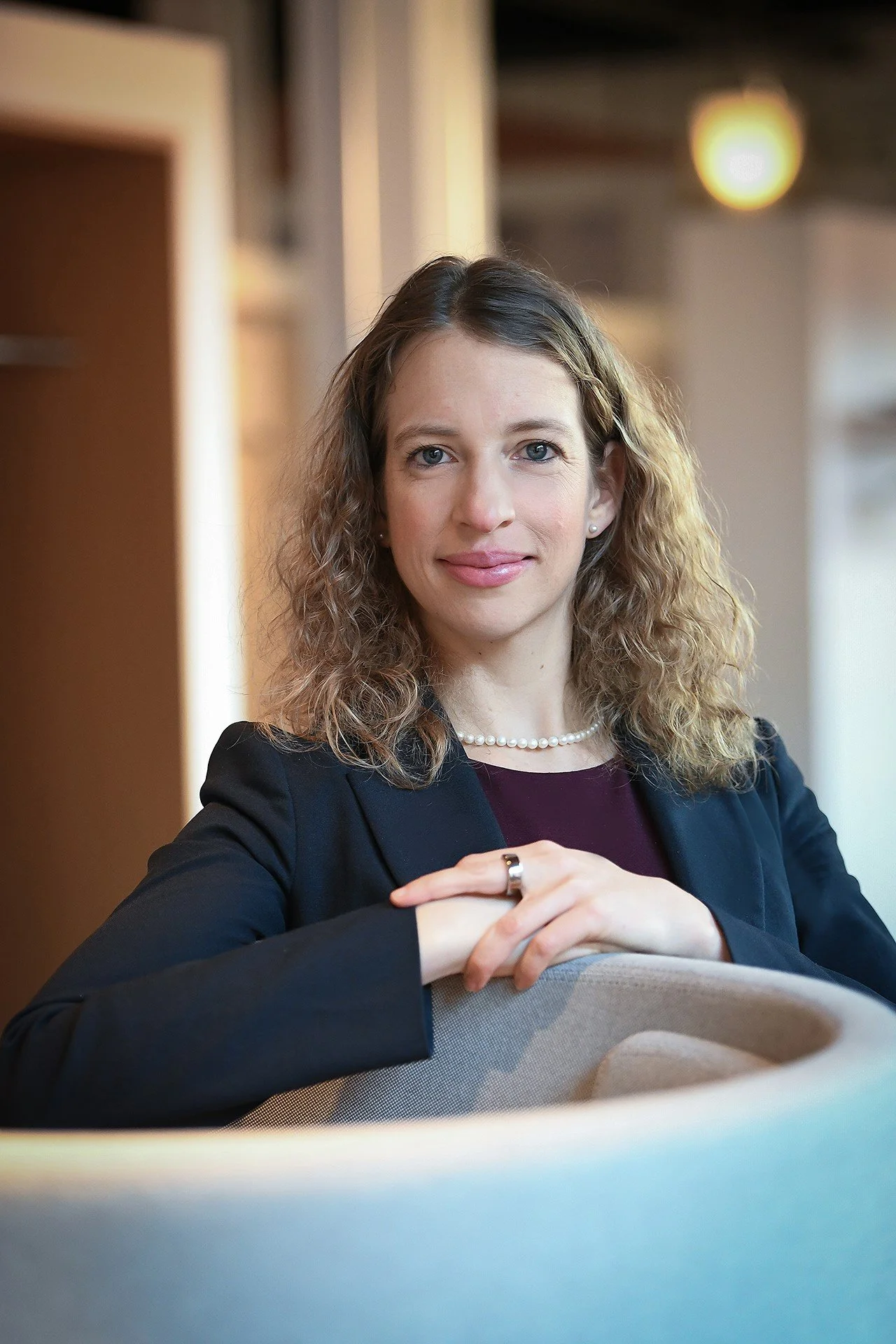
Prof. Dr. Fabiola Gerpott, Holder of the Chair of Leadership, WHU – Otto Beisheim School of Management
‘The key question is how AI is changing the way people lead and collaborate. This requires not only technical skills but also social, psychological and business management skills,’ says Prof. Dr Fabiola Gerpott, holder of the Chair of Leadership and Human Resource Management at WHU, Otto Beisheim School of Management in Düsseldorf. In a current research project, for example, she is investigating how employees and managers are reacting to the fact that AI-generated emails are increasingly replacing face-to-face communication – even when it comes to sensitive issues that actually require personal attention. ‘We’ve found that many people no longer feel seen or valued as a result, particularly in rural areas where working from home is even more common.’ Fabiola Gerpott could therefore well imagine that working in a shared office will become more attractive again as a result. ‘Face-to-face encounters and public spaces are simply essential for successful relationships, for interaction and for quality of life,’ says the professor.
She is also researching the question of what skills human leaders should possess in the future, given that leadership tasks are increasingly being supported by AI and, in some cases, have already been taken over by it. ‘Shaping identity, for example, is becoming more important – leaders must do even more to create the conditions that enable employees to feel connected to one another and to find meaning in their work. Another important task is to ensure the necessary critical distance from AI, so that employees do not simply accept AI decisions at face value, but remain capable of and eager to make their own decisions,’ says Gerpott. In her experience, many leaders currently find themselves rather isolated in the face of all these challenges. In this respect, a city like Düsseldorf has many advantages, as there are, for example, numerous business networks for regular exchange and support.
The high quality of life in the state capital is also a powerful selling point when it comes to attracting international professionals. ‘That is why we offer our Master in Finance and the MBA programme at our Düsseldorf campus – even off-campus, international students can communicate easily here and find very attractive living conditions,’ says Professor Gerpott. With regard to the skills shortage, which is set to intensify further in the coming years due to demographic change, Jan Neumann adds: ‘That is why it is so important to minimise bureaucratic hurdles, so that employers have the best possible access to talent and we can further strengthen Düsseldorf as a business hub.’
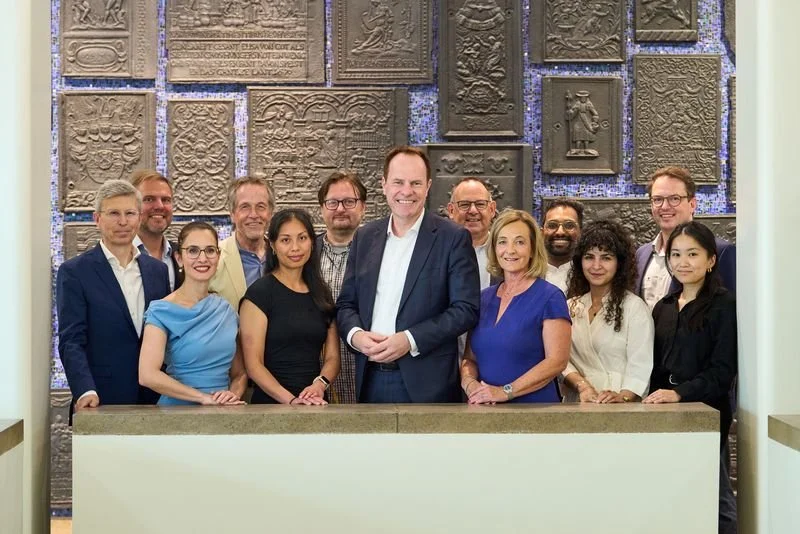
Launch event for the Deutschlandstiftung Integration Regional NRW in Düsseldorf: Mayor Dr Stephan Keller (centre), State Secretary Gonca Türkeli-Dehnert (second from left) and Dr Thomas Gauly (left), partner at DSI Deutschlandstiftung, with the DSI Regional NRW team
NRW’S YOUNG TALENT WITH MIGRATION BACKGROUND IS BEING GIVEN GREATER SUPPORT
The Deutschlandstiftung Integration (DSI), one of the leading organisations promoting education, equal opportunities and social inclusion for young people with migrant backgrounds, is now continuing its successful work in North Rhine-Westphalia. The launch event for DSI Regional NRW took place on 9 July 2026 at Düsseldorf Town Hall, at the invitation of Lord Mayor Dr Stephan Keller. Guests included representatives from businesses and institutions, as well as current and former scholarship holders from the DSI’s ‘GEH DEINEN WEG’ support programme. ‘It is a great asset for the state capital that the Deutschlandstiftung is now placing a special emphasis on our region in its work. Equal opportunities and social participation are key issues on which the Deutschlandstiftung is placing an additional special focus,’ said Stephan Keller. In addition to strengthening local networks between stakeholders and the approximately 250 qualified young talents in NRW who are supported by the Deutschlandstiftung Integration, the initiative aims to highlight the scholarship holders’ journeys as success stories, in order to demonstrate the potential that lies within a diverse society.
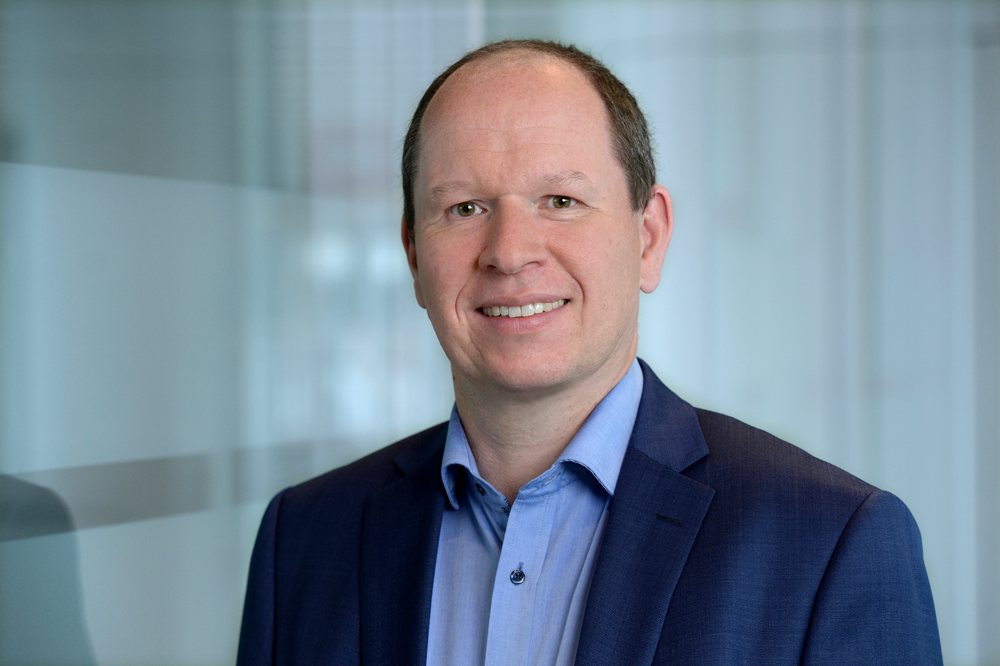
Professor Stefan Süß, Lead researcher of ProHome, Heinrich-Heine-Universität
REMOTE WORKING: IT’S ALL ABOUT BALANCE
The ProHome research project at Heinrich Heine University in Düsseldorf debunks myths about remote working and shows when working from home leads to greater productivity and job satisfaction.
Since the COVID-19 pandemic, remote working has become a standard way of working in many sectors – around a quarter of all employees made use of it last year. Since early 2026, there have also been scientifically evidence-based guidelines on how to organise it effectively: to this end, an interdisciplinary research team spent three years investigating the conditions under which working from home promotes productivity, satisfaction and health. Eight organisations in Düsseldorf, with a total of around 1,400 employees, took part in the study.
A survey conducted as part of the study also dispelled some myths about remote working. For example, under certain conditions, working from home was associated with higher job satisfaction. Employees who were able to choose their office days flexibly were particularly satisfied: their satisfaction score was 4.1 out of a possible 5, compared with just 3.8 for those with fixed office days. ‘For those who can work from home, the model is certainly a good addition. However, I would always favour hybrid models. I believe the ideal lies in the right balance – and what that is depends on the job and the individual. Our findings confirm this,’ says the study’s lead researcher, Professor Stefan Süß.
The project results can be viewed in a free final report. It also contains specific recommendations for companies on key issues such as: How can certain interventions be implemented in practice? How can remote leadership be successful? What does an optimal remote workspace look like? •
Here is the link to the final report
Text: Tom Corrinth
Pictures: IHK Düsseldorf/ Felix Gemein, The Stepstone Group/ Benjamin Simon, Anna Kaduk, Landeshauptstadt Düsseldorf/ Claus Lange