”A GOOD EVENT HAS TO SPARK SOMETHING IN PEOPLE“
KUNST MEETS PETRA SCHLIETER GROPP
For over twenty years, Petra Schlieter-Gropp has worked with Schlieter & Friends to create events that bring people together, ranging from the Lovebird Festival to corporate events and new festival formats. VIVID editor Rainer Kunst speaks to the event manager about good ideas, working as a married couple, viewing crises as opportunities, the importance of Düsseldorf's creative industries and why face-to-face encounters are becoming increasingly important in the digital age.
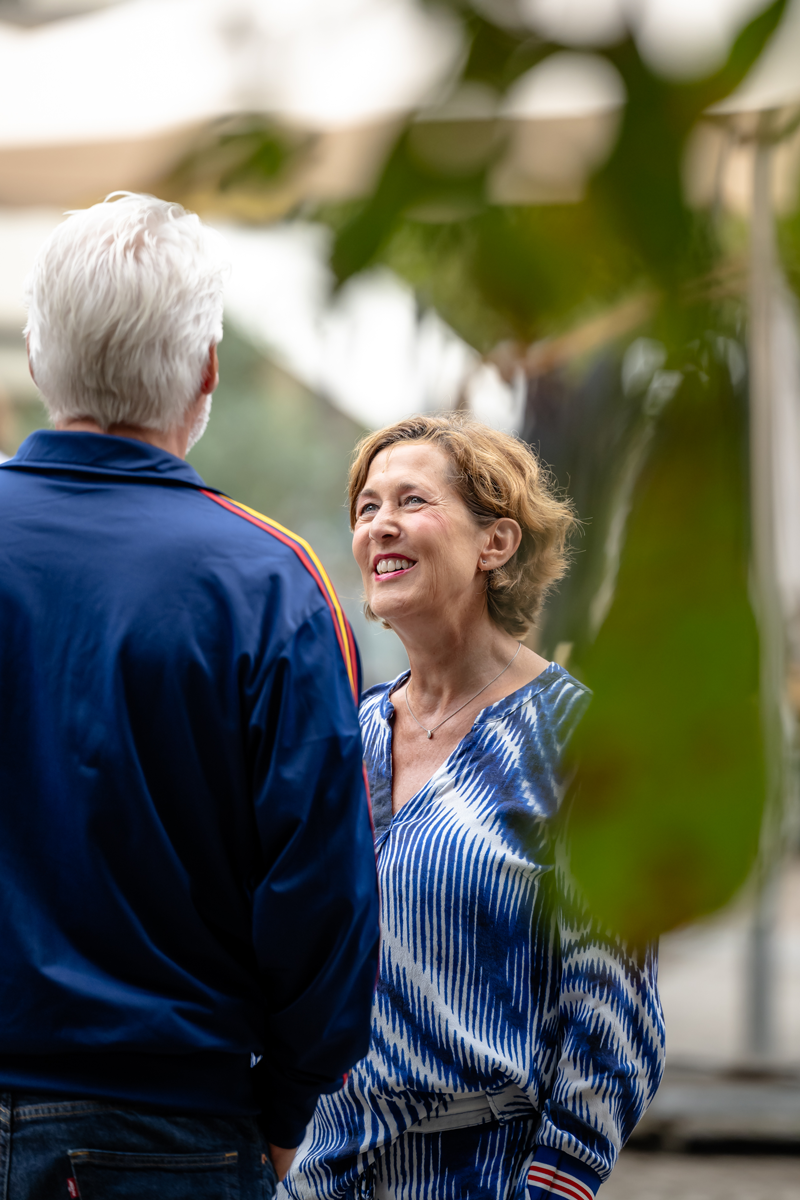
Petra, what actually makes a good event?
A good event has to spark something in people. It’s not about whether the stage is perfect or the décor is spectacular. Of course, everything has to be professional and fit together. But what’s crucial is that something happens: people are moved, they have fun, they strike up conversations with one another, and they look back on it fondly later.
It's almost sounds like managing emotions.
For me, that’s part of it. You can have the best technology and the most beautiful venue, but if there’s no atmosphere, something’s missing. Events thrive on people. We create a setting in which encounters can happen.
What made you decide to launch your own business around 26 years ago?
The agency landscape was a dog-eat-dog world back then and I was a project manager at another events agency. A few things weren’t going quite as I’d imagined. At some point, I thought: I can do this differently. My current business partner, Nils, who was an intern at the agency back then, encouraged me. So, I took the plunge.
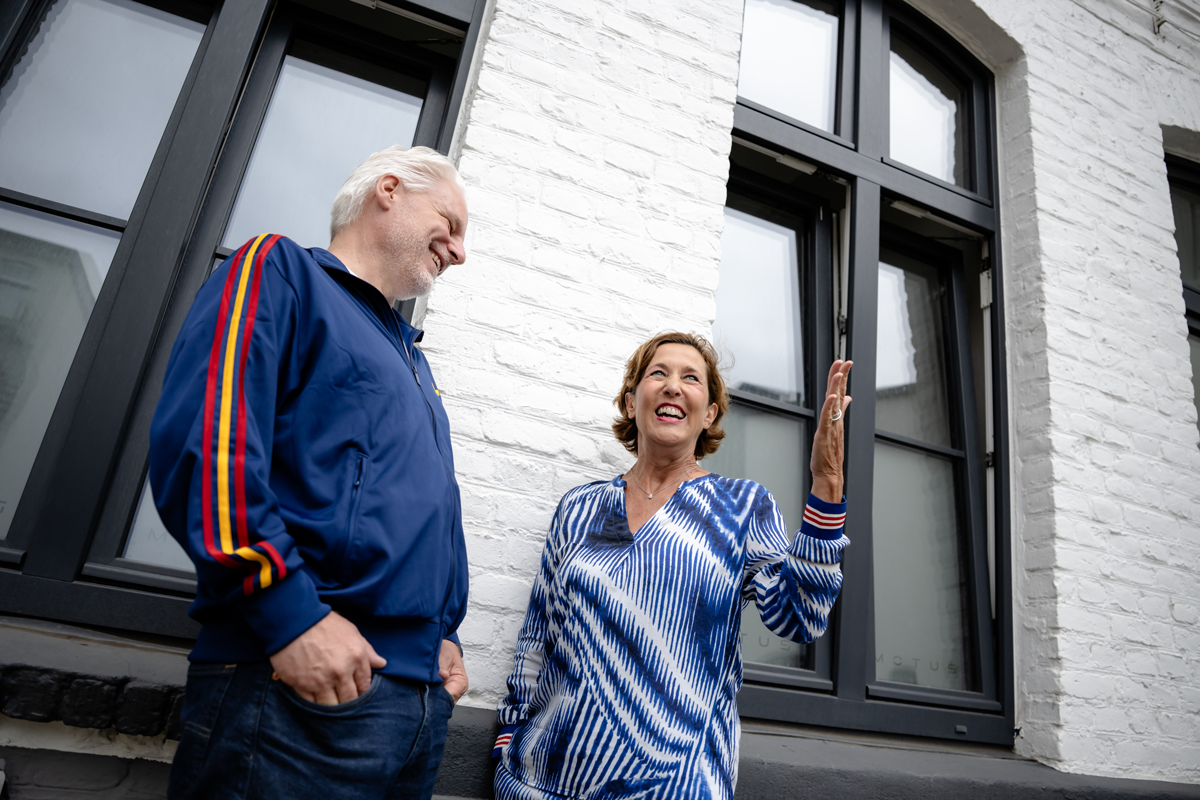
And so, Schlieter & Friends was born.
We started small, even sticking the stamps on ourselves. But we already had great clients, such as Henkel and BMW. That’s how the company grew.
You and Nils aren’t just business partners; you’re married too. How does that work?
Of course, it's not guaranteed that you can work together and have a family while still getting on well. Respect and appreciation are crucial. You have to treat this good fortune carefully and be grateful that it works out. However, we also work in different areas and complement each other well. I handle strategy, finance, HR and networking, while Nils is the creative one.
Where do you find the energy after so many years?
I love what I do. Organising, networking and seeing things come to life is my passion. My family also gives me a great deal of energy. Besides, I’m an incorrigible optimist. The best part is when you’ve spent a whole year preparing a project and then you’re standing in a venue where hundreds or thousands of happy people are enjoying it. You see their faces and you know that that's what you've been working towards.
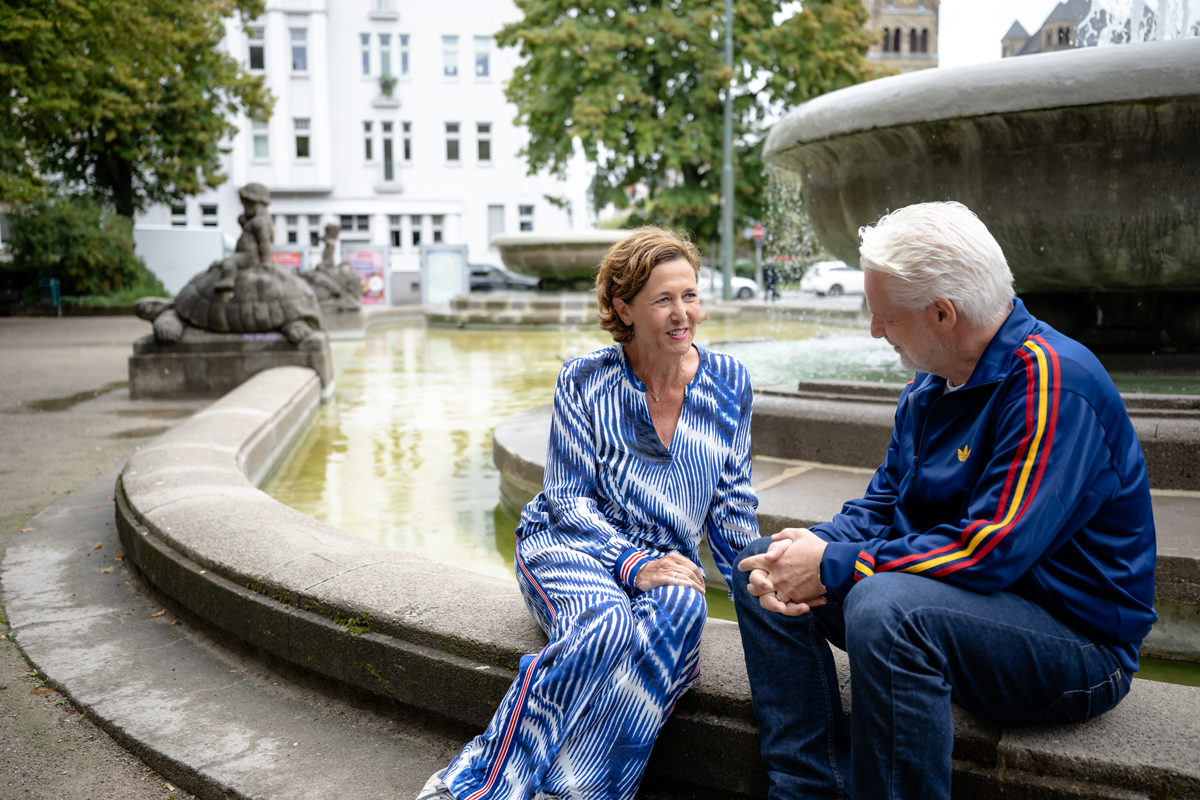
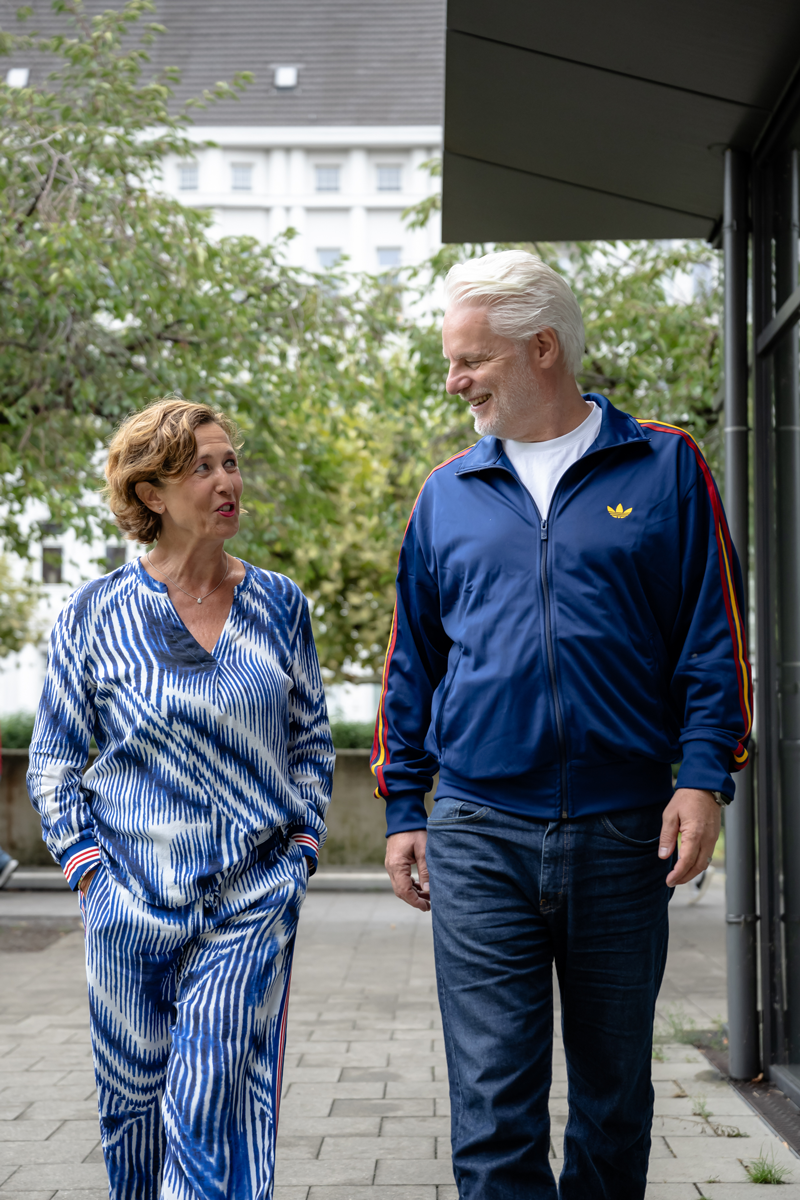
Just like with your new Lovebird Festival.
Exactly. We’ve used the contacts we’ve built up over decades with artists, booking agencies, and partners to create something new from our own cultural perspective. The Lovebird Festival brings together people of all ages and social backgrounds to enjoy music. There are also poetry slams, walking tours, karaoke at the Theatre Museum, city tours, and other collaborations. We want to bring different people together in various ways.
You even managed to achieve that during the pandemic.
Yes! Covid-19 was, of course, a shock at first. Within two weeks, practically all our bookings for the current year had disappeared. We sat down with the team and asked ourselves: What can we do instead? That’s how the ‘Hofkonzerte for Friends’ concept was born. We brought bands into courtyards, streamed the concerts, and enabled the artists to perform and earn a fee. In one courtyard, for example, there were around 200 balconies. People stood on them in the evenings and clapped. After the last song, someone shouted from a balcony, 'Thank you for the music.' You never forget moments like that.
What did you learn from that period?
Our attitude has always been that we don't bury our heads in the sand. If something isn’t working, we have to consider what is possible instead. There’s almost always a way – or even several. This approach led to the creation of formats such as the Chance Festival, a francophone festival celebrating music, diversity and democracy, and the “Liebe-das-Leben-Festival” in Pempelfort.
The industry is changing due to AI and digitalisation. How are you dealing with this?
We use AI, of course. It can simplify processes, help with presentations and support us in the planning stage. It would be crazy to shut ourselves off from it. However, I also believe the more digital the world becomes, the greater the need for genuine encounters. AI can support processes. Building relationships, bringing people together, and creating an atmosphere remain human endeavours.
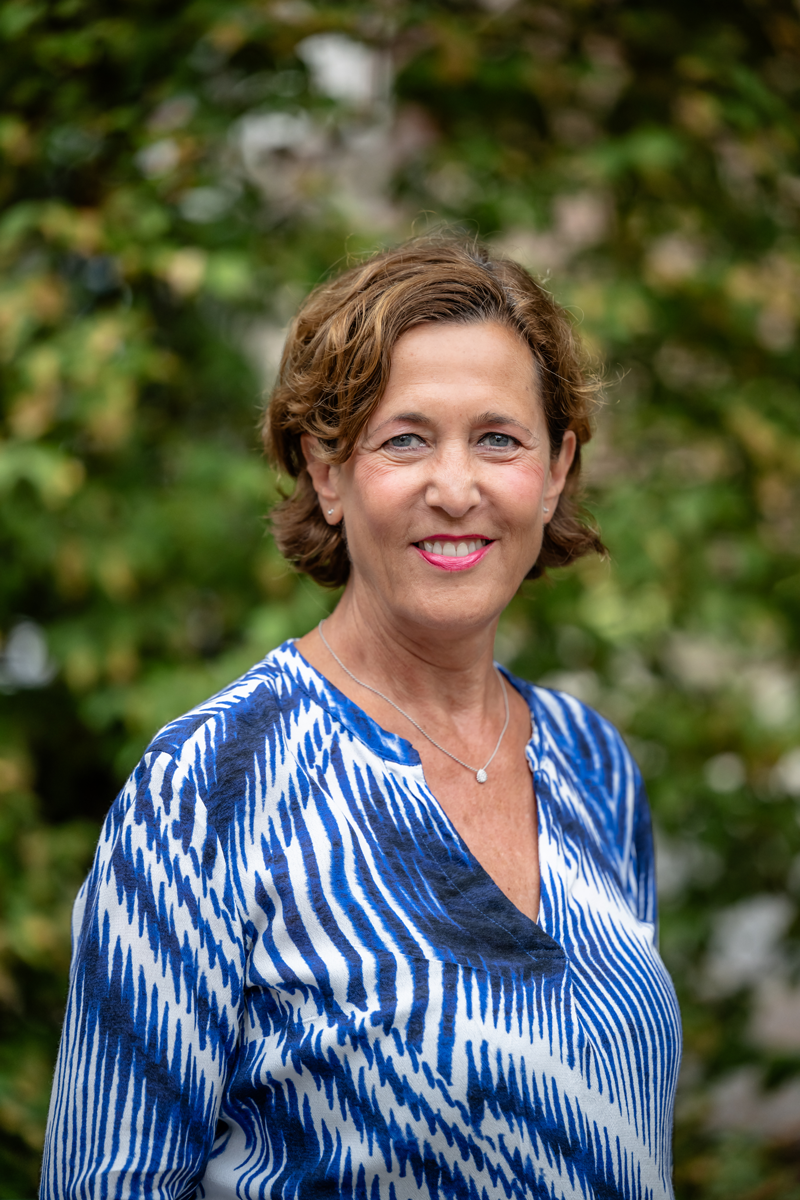
ABOUT PETRA SCHLIETER GROPP
• born in Trier, grew up in Düsseldorf
• after completing a banking apprenticeship, she studied event management, including a period abroad
• in between and afterwards, she held positions at Stadtsparkasse Düsseldorf, the CDU NRW Economic Association and Heidrick & Struggles, before finally ‘ending up’ in the events industry
• in 2000, she founded Schlieter & friends: developing and organising events and formats at the intersection of business, culture and urban society
• in her spare time, she draws strength from her family and her dog Josi; she loves flowers and her garden, and also finds relaxation through yoga and Pilates
You’re also involved in voluntary work, for example as a board member of the Community Foundation with the ‘Einmal Gastgeber sein’ initiative. What’s the idea behind it?
We give primary school children the chance to be hosts for a day. They are invited to a large hotel where they cook with the head chef and learn how to lay tables and serve. In the evening, they serve food and drinks to guests at a gala dinner. Many of these children come from deprived areas and may never have been inside a hotel like this before. However, we don't want to show them a world that seems closed off to them. We want them to be right in the thick of it and realise, 'I can do this.' During a dress rehearsal, the restaurant manager told them that he had once started out as a temp himself. One of the boys immediately said, "I want to work here, too." That’s when you know why you’re doing this.
It ties in with your definition of a good event.
Exactly. A good event has to spark something in people.
You’re also a member of Kreativwirtschaft Düsseldorf e.V. If you could make one wish for the city's creative community, what would it be?
The creative industry needs to speak up more! We need more people to be heard, but we also need to be heard ourselves. We need to be taken seriously and given the opportunity to communicate with one another. That’s what I’d like to see: greater acceptance of us within city politics and society.
Do you find it hard to let go since your team can also handle events without you?
Yes, very much so. I actually prefer to be there in person for everything. But I’m learning to let go. We have a brilliant team, and I trust them completely. This year, for the first time, I wasn’t present at a major festival, and the team did an excellent job. Schlieter & Friends is firmly established in Düsseldorf.
It wouldn't be easy to build up a network like that in another city, would it?
Absolutely right. The events business is all about people, and lots of good ideas come about through networking and exchanging ideas. I think what makes Düsseldorf such a special place is how well connected we are here. I don’t think Nils and I would be able to do the same in another city. •
Text: Tom Corrinth, Interview: Rainer Kunst
Pictures: Andreas Endermann