ONE IDEA – MILLIONS OF PLAYERS (Kopie)
Almost every football fan knows Kicktipp. Very few people realise, however, that Germany’s largest football prediction platform is essentially run by just two people. This is the story of a Düsseldorf-based company that was never meant to be one – and is all the more successful for it.

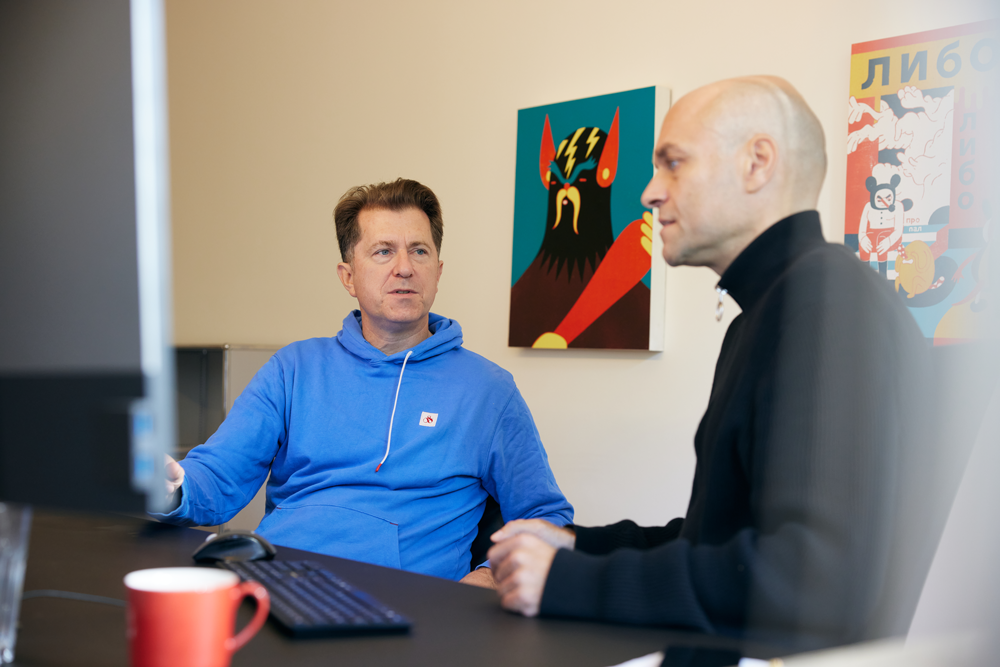
With more than seven million players, around 700,000 prediction pools and – during the 2026 World Cup month – a wider reach than “Der Spiegel” and “Die Zeit”, Kicktipp sounds like a tech giant with a huge marketing budget. In reality, the platform is run by just two people in Düsseldorf, founder Janning Vygen and developer Peter Buning. Vygen takes this success in his stride with remarkable composure. If he wants to know how much turnover Kicktipp has generated in a month, he has to actually look it up first. “There are just the two of us and we’ve got other things to do. We focus on the product,” he says. A product that practically everyone knows who has ever taken part in a football prediction pool with colleagues, friends or family.
Vygen and Buning see themselves as “tinkerers” – they tinker, automate and improve the platform. Once a task has been solved in such a way that it generates no further work, it feels to Vygen like having solved a Sudoku puzzle. This principle has given rise to an unusual company story – without a business plan, investors or a master plan with the goal to reach millions.
FROM FRIENDS TO A PLATFORM
In the mid-1990s, Janning Vygen was studying law. His first computer coding as a teenager was done on a Texas Instruments TI-99/4A. When his circle of friends scattered across Germany after leaving school, he wanted to keep the group connected digitally and programmed a sort of chat service. However, there was hardly ever anyone online at the same time. So, in 1996, Vygen developed a football prediction game, even though not all his friends were football fans. At some point, a stranger ‘stumbled across’ the site and wanted to use the software for his own prediction group. Vygen rewrote the programme so that several groups could play on the same platform. One prediction group became two, then more and more. Nevertheless, he didn’t register the domain kicktipp.de until 1999. There was no rush.
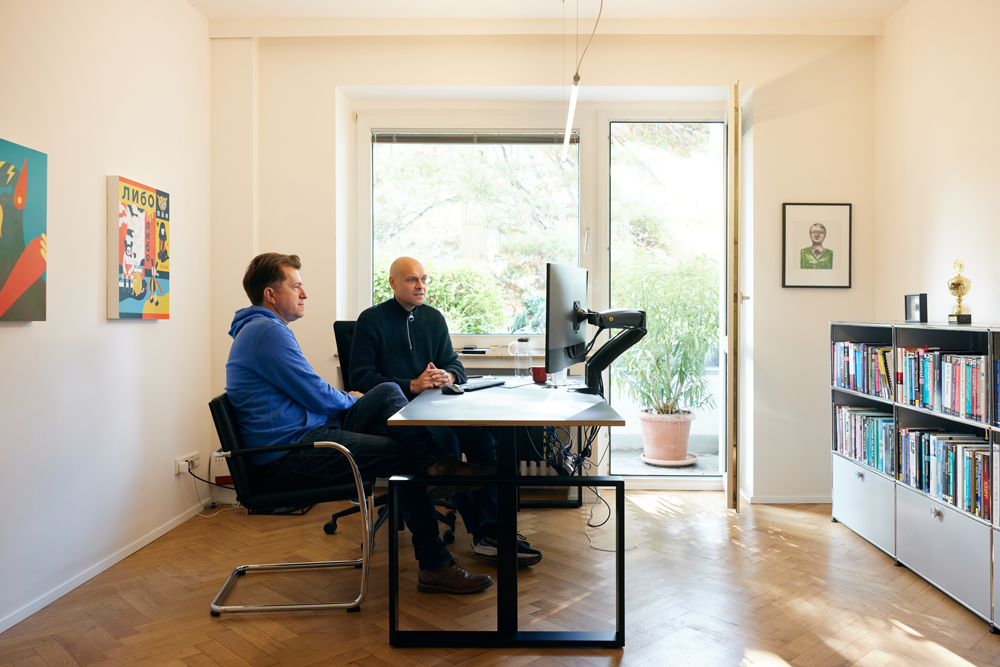
After his law degree and having completed his legal training in Düsseldorf, Vygen founded the web agency Planwerk 6 with a partner. Kicktipp initially ran as a side project until he eventually focused entirely on the platform. In early 2007, he took on Peter Buning. Since then, the two have become the core team based on Klever Straße – with a reach extending to canteens, pubs and living rooms across the country.
JUST MAKE YOUR PREDICTION
The principle behind Kicktipp is simple: make your prediction, collect points, check the league table and then talk about it. It is probably this very simplicity that is part of its success. Whilst other apps try to keep their users glued to their screens for as long as possible with streaks, rewards and new features, Kicktipp leaves them in peace. “I don’t want to get on people’s nerves,” says Vygen. Even the interface has only been changed very gradually over the decades. It’s not about maximising screen time, but about giving people something to talk about on Monday mornings.
This also makes Kicktipp appealing to businesses. Submitting a prediction takes just a few minutes, but the conversations about it last considerably longer. Vygen tells of a company where, on Mondays, colleagues line up to form a guard of honour for the matchday winner and welcome them with a fresh cup of coffee. For a moment, hierarchies and departments fade into the background. It’s about football – but it is just as much about socialising. The real value of Kicktipp is created mingling around the office’s coffee machine.
Vygen cannot say exactly to what extent the platform is used for employer branding, customer loyalty or influencer marketing. Most bookings are fully automated. Otherwise, it would be almost impossible for just two people to run a platform with millions of users. Sometimes he only realises there’s a Kicktipp group playing when he’s in a coffee shop.
FACTS AND FIGURES:
• Founder and Managing Director: Janning Vygen
• Head Office: Düsseldorf, Klever Straße
• Staff: 1 – Developer Peter Buning
• History: first prediction game in 1996, domain since 1999, limited liability company (GmbH) since 2006
• 2026 World Cup: more than 7 million participants, around 700,000 prediction rounds
• Revenue: around 70 to 80 percent from advertising plus premium packages
• International reach: eight languages, around 95 per cent of usage from
ADVERTISING MEETS PRO PACKAGE
Kicktipp generates its revenue in two ways. Advertising funds the free prediction rounds and accounts for around 70 to 80 percent of turnover. Vygen would prefer to do without it, but this is not economically viable. The second pillar is the Pro Package – whilst free pools are limited to 300 participants, companies, clubs, media organisations and community operators can set up larger prediction games free of adverts, integrate their logo and corporate design and promote the pool on the Kicktipp website. The clientele ranges from global corporations to the café next door.
Influencers have also discovered the model. One football creator’s prediction round recently attracted 30,000 participants. When used professionally, predictions, bonus questions and prizes become part of a campaign that brings a community together for weeks on end – without feeling like traditional advertising.
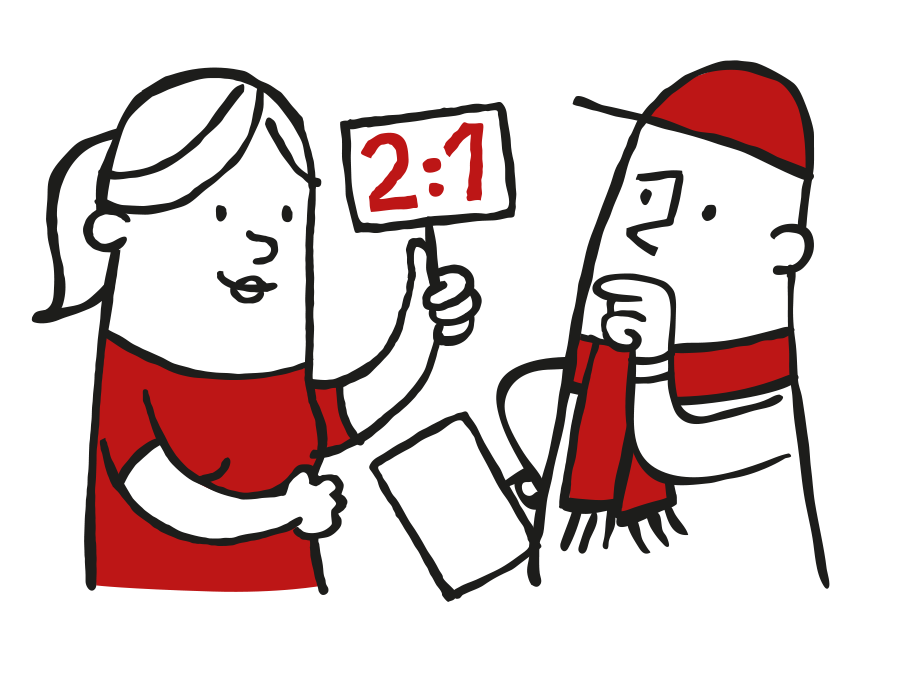
The Kicktipp characters have long since become the platform’s mascots – and feature on mugs, T-shirts and other merchandise.
NO EXIT
There has never been a shortage of prospective buyers. Once, during a stressful period, Vygen checked to see if anyone would “fetch the suitcase full of gold from the cellar“. However, the offers did not convince him. Some prospective buyers wanted to settle part of the purchase price with advertising services. Vygen took a pragmatic view – if the company could generate the same amount within five years and still belong to him afterwards – why should he sell it? This freedom, however, has come at a price. The small team keeps costs low but bears the full responsibility. Vygen and Buning answer enquiries themselves, even on Sundays – and if something goes wrong at night, one of them has to get up. In the past, the servers regularly crashed under the load and Vygen would sometimes only enter the results on Mondays. Today, however, sports data services provide the results, and live scores are processed automatically.
A professional buyer could probably monetise Kicktipp more effectively through more advertising, additional features and faster growth. But then it would no longer be Vygen’s product. “I don’t see myself as an entrepreneur at all,” he says. Otherwise, he’d have ten employees or would have made an exit long ago. His goal was different – to make a good living from Kicktipp, to work on a challenging project and to be as free as possible. By now, he adds dryly, he can actually make a very good living from it.
INTERNATIONAL BUT WITH HOME ADVANTAGE
Kicktipp is now available in eight languages, yet 95 percent of its users are from Germany. The successful model cannot simply be replicated – in England the tradition of bookmaking is stronger, whilst elsewhere there is no equivalent to the network that Kicktipp built up in this country through word of mouth in the early years of the internet. That doesn’t mean things have come to a standstill, though. On the agenda are accessibility, data protection and security, better bonus questions, new statistics and perhaps an AI prediction tool. In future, a brief note could highlight which team is strong at home or is missing key players – so that even casual fans can join in the conversation on Mondays.
As for what the technology is good for, Vygen prefers to experience it the analogue way. Ten years ago, a large betting group invited him to Magdeburg. The community has its own Kicktipp room, organises cup competitions and travels together to football matches as far afield as Brazil. A few weeks ago, Vygen paid another visit. “That’s when you see what you do every day – in real life,” he says.
Perhaps that is precisely the essence of this Düsseldorf-based company’s story – two tinkerers build a platform that keeps as low a profile as possible. And in doing so, they get millions of people talking. •
Text: Karolina Landowski
Pictures: MAX BRUNNERT