SHARED KNOWLEDGE IS FUTUREPROOF KNOWLEDGE
Millions of baby boomers are set to retire soon, digital natives are coming through and AI is gaining ever more influence. Given these developments, how can companies manage to document their knowledge, pass it on in a targeted manner and make the best possible use of it? VIVID spoke to a professor of business management, a family business in the succession process and a startup with AI-based knowledge software.

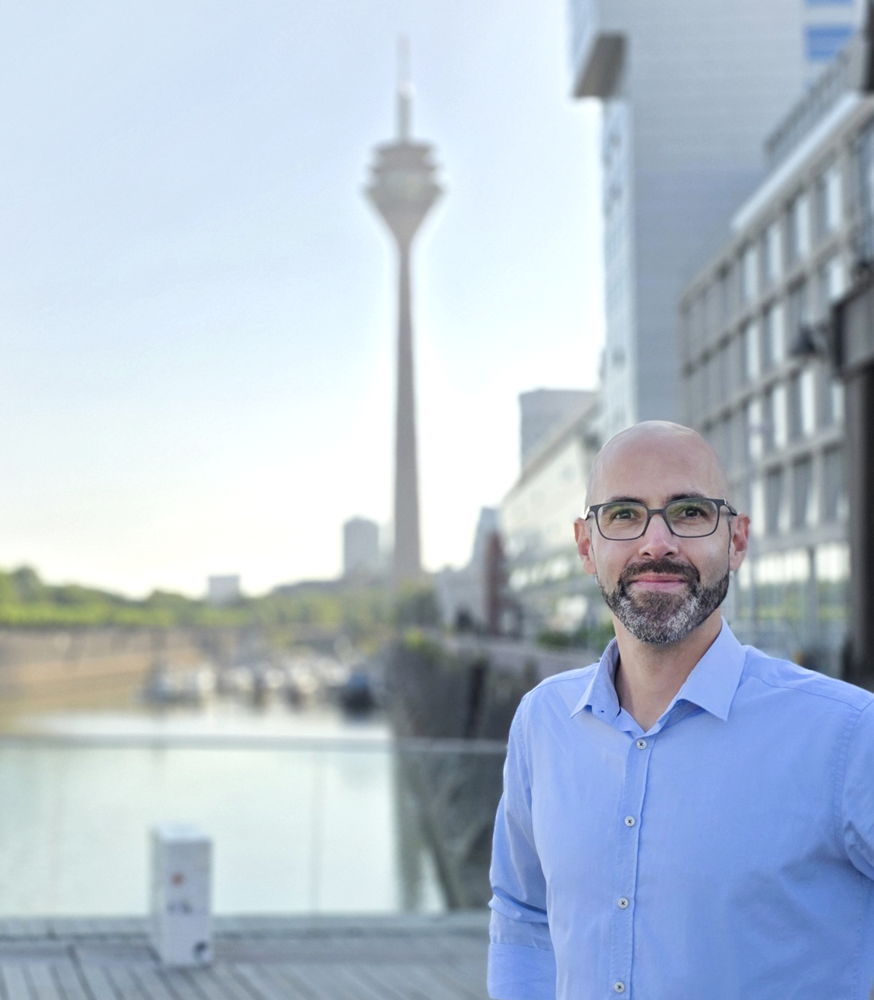
Christian Groß is managing director of the Düsseldorf-based startup RheinInsights, a knowledge management software provider.
The knowledge that has accumulated within a company – in some cases over decades – is vast. However, it is often difficult to access, as it is sometimes stored in tens of thousands of files on file servers, in wikis or other systems. As a result, the potential of one of the most important corporate resources is not being fully utilised – and this at a time when there is a shortage of skilled workers! “AI is very well suited to helping organise knowledge systematically for staff. Studies show that AI can enabl efficiency gains of more than ten percent,” explains Christian Groß, Managing Director of the Düsseldorf-based startup RheinInsights. With the help of the software, customers gain a sort of “Google and ChatGPT for their own corporate knowledge”. Employees can search internal documents in accordance with their access permissions, ask questions and receive relevant answers. The software is generally installed on the customer’s own premises, ensuring that data does not leave the company. “However, alongside documented knowledge, there is also experiential knowledge that is stored in the minds of employees – particularly among those who have been with the company for many years. Documenting this knowledge is an important cultural and organisational task, especially in view of the impending retirement of many employees,” says Christian Groß.
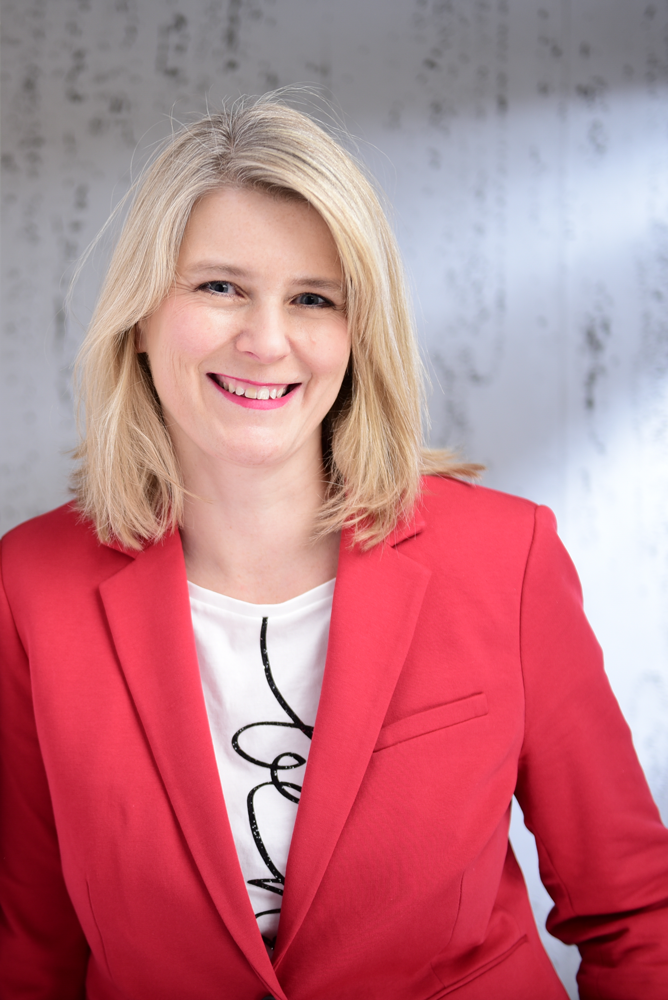
Nicole Richter is a professor of general business administration, corporate management, organisation and human resources management at Düsseldorf University of Applied Sciences.
Professional knowledge management begins as early as the onboarding stage. “A distinction can be made between technical, social and cultural onboarding,” says Nicole Richter, professor of general business administration, corporate management, organisation and human resource management at HSD, the University of Applied Sciences Düsseldorf. “Technical knowledge, for example, can be effectively imparted through e-learning programmes or AI. For social integration, on the other hand, buddy and mentoring programmes, as well as pair-based learning, are particularly important. And cultural integration often takes six to twelve months or longer and can only be implemented digitally to a limited extent.” She sees great opportunities for AI and digital tools, particularly in recording and visualising processes and in building knowledge databases. However, when it comes to experiential knowledge, which is more difficult to convey, she believes that personal interaction remains crucial.
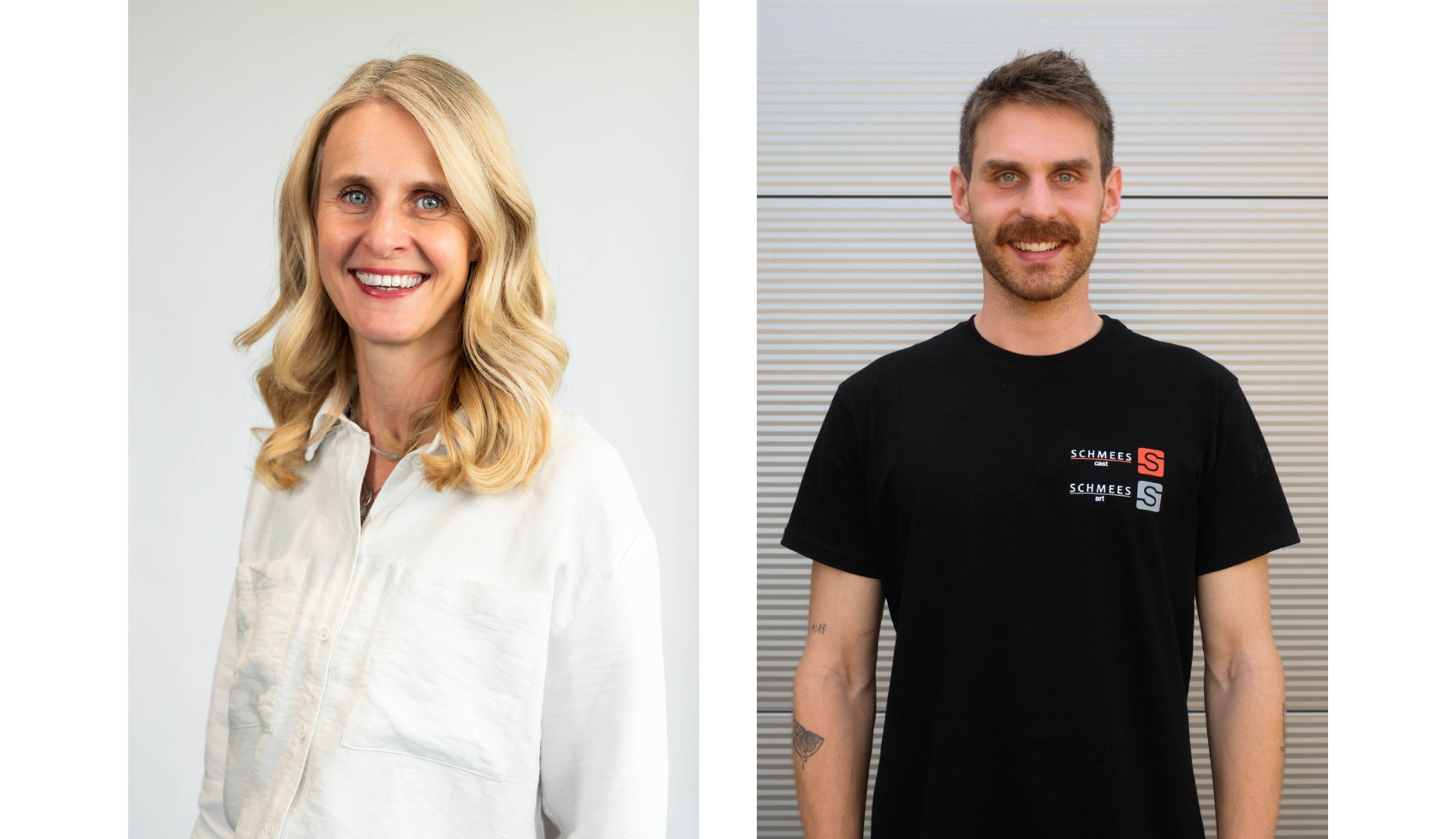
Julia Eich is co-managing director of the holding company for SCHMEES cast, a stainless steel foundry with offices in Langenfeld and Pirna.
Nicholas Schmees is currently getting to know the family business by working his way through all departments, initially as an intern.
Julia Eich and her younger brother Nicholas Schmees share this view. The two joined their father’s stainless steel foundry SCHMEES cast this year – Julia Eich as co-managing director of the holding company and Nicholas Schmees initially as an intern, where he is getting to know all the departments. The company, with sites in Langenfeld and Pirna, employs around 300 people, more than half of whom are over 50 and have often been with the company for decades. “An experienced production worker, for example, can determine exactly how the casting process should be set up based on a component that needs to be made to order. Such knowledge is almost impossible to translate into instructions. That’s why we rely primarily on ‘learning by doing’ here.” In production, experienced staff are specifically assigned to pass on their knowledge effectively and willingly – every trainee has a designated point of contact. For standardised knowledge, there is an internal wiki that documents work instructions, testing procedures, safety guidelines and machine information in detail. In addition, there is a digital materials catalogue, built up over decades, containing nearly 300 steel and stainless steel alloys. Looking into the future, it is planned to define even more clearly which specific knowledge is going to be passed on in the different apprenticeship programmes. Furthermore, the internal wiki is going to be further developed and may be linked to AI functions. “Digital tools and AI are useful additions. However, trust and direct exchange between generations remain crucial to ensuring that experiential knowledge is passed on at all,” says Julia Eich.
DEMAND FOR AI SKILLS IS RISING
The level of interest is evident from developments at the IHK Forum run by the Düsseldorf Chamber of Industry and Commerce. In early 2024, the continuing education centre launched the ‘AI Manager’ certificate course. The programme now comprises 20 different AI courses. In 2026, 53 courses will be held – 56 per cent more than in 2025. A total of 332 people are taking part this year. 187 of them are women, which corresponds to 56 per cent. The next AI Manager (IHK) certificate course will take place from 30 November to 10 December 2026, both in person and online.
When it comes to knowledge management, offboarding is often overlooked. “Yet the departure of employees is an important part of the employee experience and certainly adds value in economic terms,” says Professor Richter, who, together with her co-authors, published a book on this topic in autumn 2026. “Particularly when baby boomers leave the company, there is a risk that experiential knowledge – which is often implicitly embedded in routines, customer relationships and personal working methods – will be lost. That is why knowledge transfer should not only begin shortly before retirement.” Approaches such as pairing older and younger employees or holding regular learning meetings could help to counteract this, for example. A culture of mutual respect within the organisation is crucial here, because: “If employees do not feel valued, they may deliberately withhold knowledge or even manipulate it. Furthermore, the manner of departure influences the employer’s attractiveness,” says Richter. Given the shortage of skilled workers in particular, “boomerang rehiring” is becoming increasingly important – those who leave the company on good terms are more likely to return, bringing with them new knowledge and greater experience.”
Text: Tom Corrinth
Pictures: Rimante Groß, Picture People Foto Studio, Nicholas Schmees,